Geng Huimin, Hurtz Christian, Lenz Kyle B, Chen Zhengshan, Baumjohann Dirk, Thompson Sarah, Goloviznina Natalya A, Chen Wei-Yi, Huan Jianya, LaTocha Dorian, Ballabio Erica, Xiao Gang, Lee Jae-Woong, Deucher Anne, Qi Zhongxia, Park Eugene, Huang Chuanxin, Nahar Rahul, Kweon Soo-Mi, Shojaee Seyedmehdi, Chan Lai N, Yu Jingwei, Kornblau Steven M, Bijl Janetta J, Ye B Hilda, Ansel K Mark, Paietta Elisabeth, Melnick Ari, Hunger Stephen P, Kurre Peter, Tyner Jeffrey W, Loh Mignon L, Roeder Robert G, Druker Brian J, Burger Jan A, Milne Thomas A, Chang Bill H, Müschen Markus
Departments of Laboratory Medicine, University of California, San Francisco, San Francisco, CA 94143, USA.
Division of Pediatric Hematology and Oncology, Department of Pediatrics, Oregon Health & Science University, Portland, OR 97239, USA; Knight Cancer Institute, Oregon Health & Science University, Portland, OR 97239, USA.
Cancer Cell. 2015 Mar 9;27(3):409-25. doi: 10.1016/j.ccell.2015.02.003.
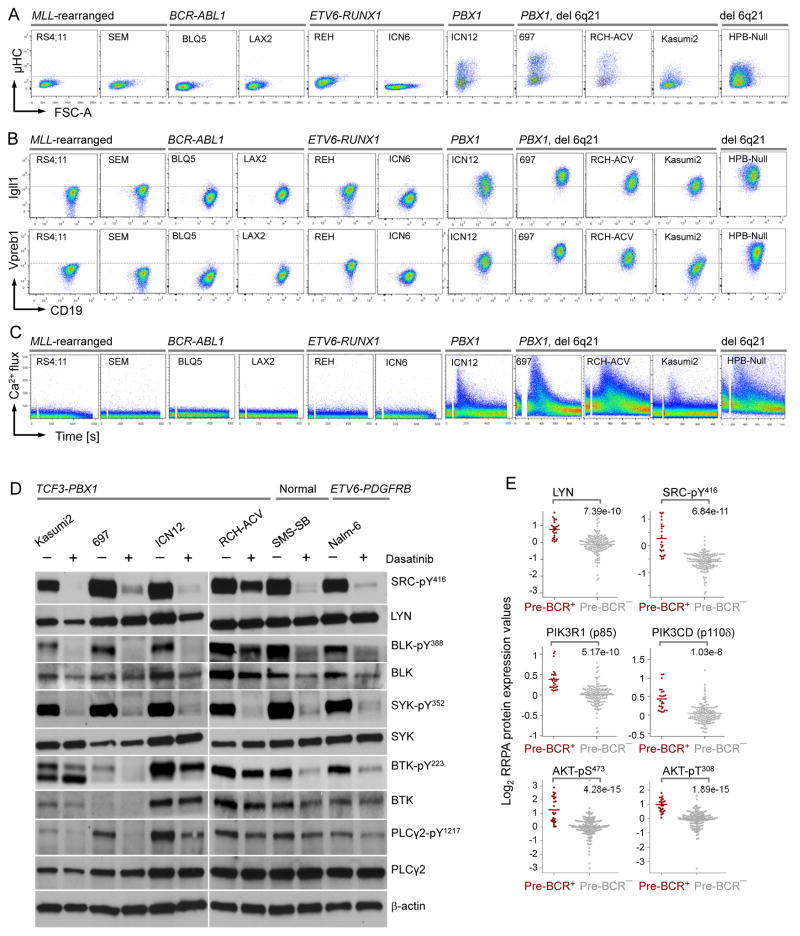
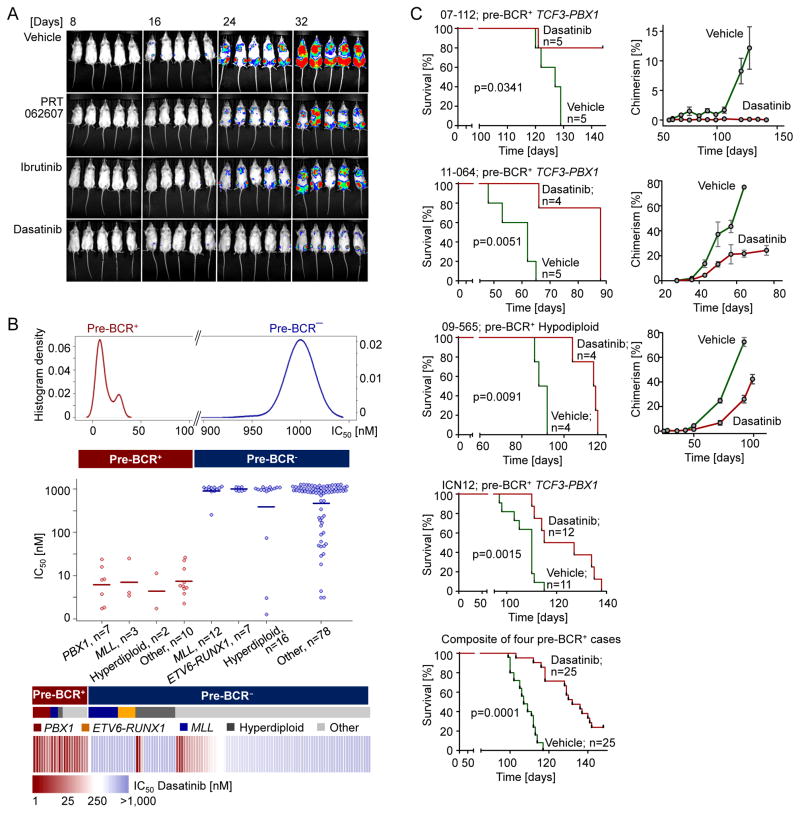
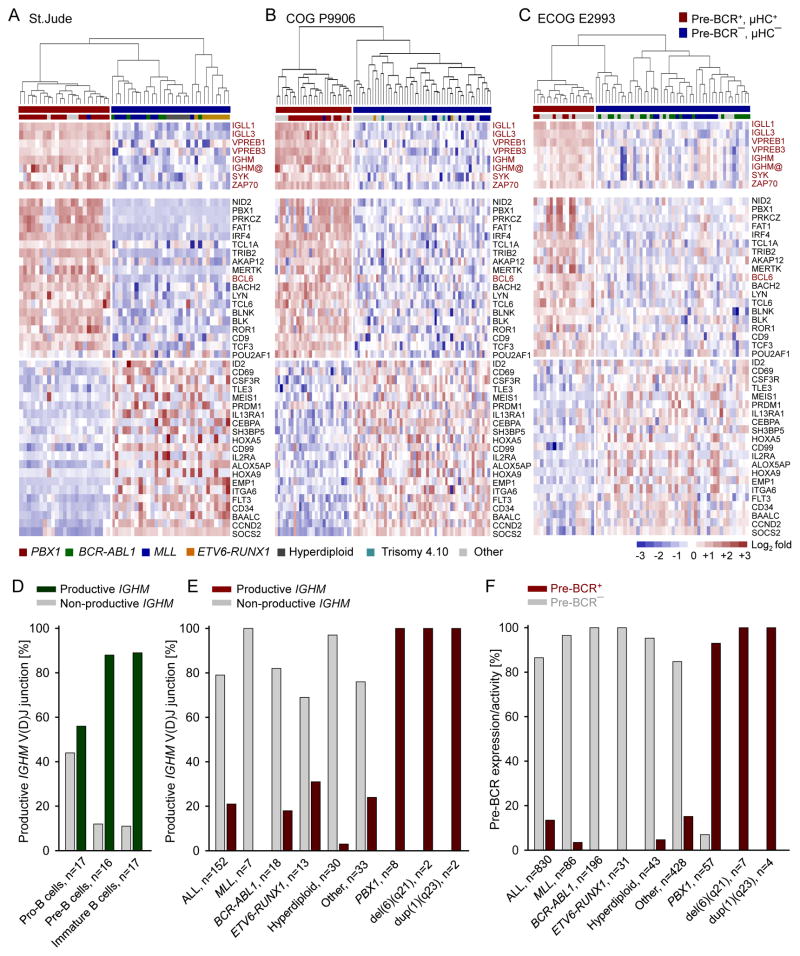
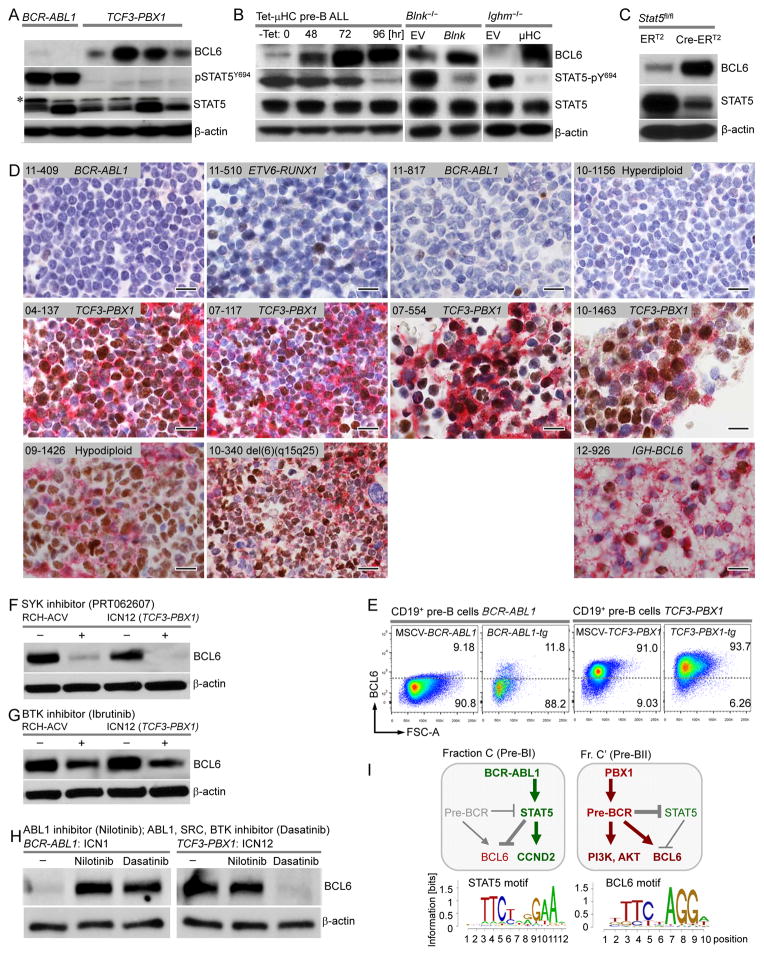
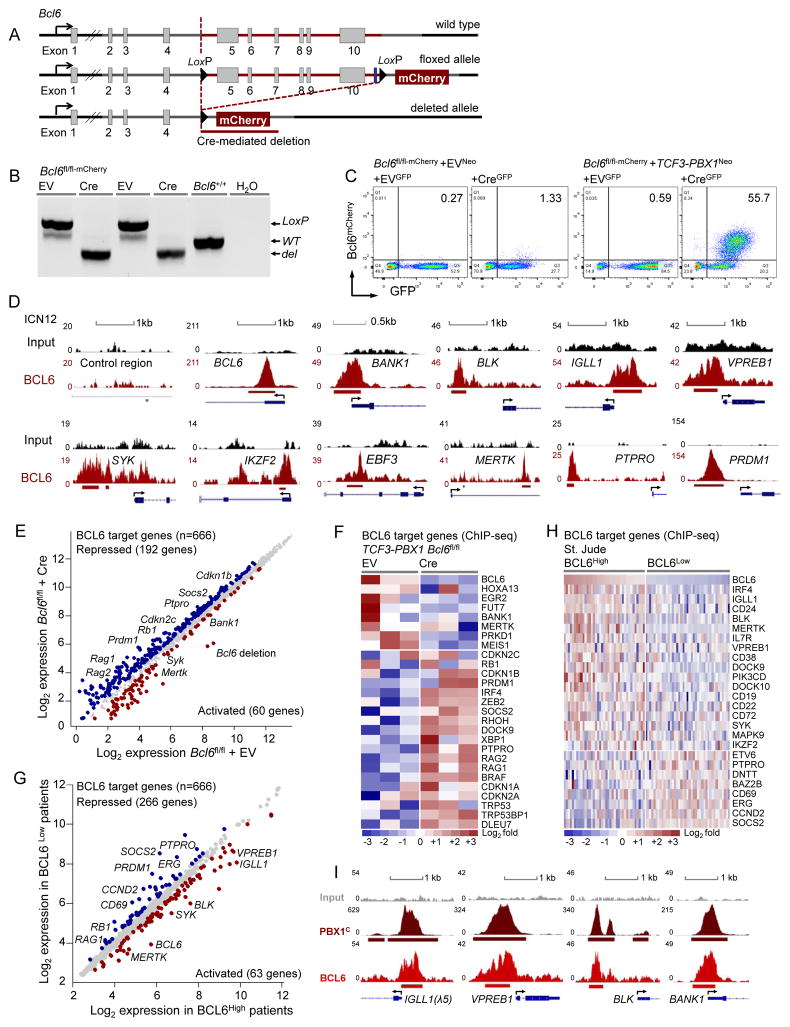
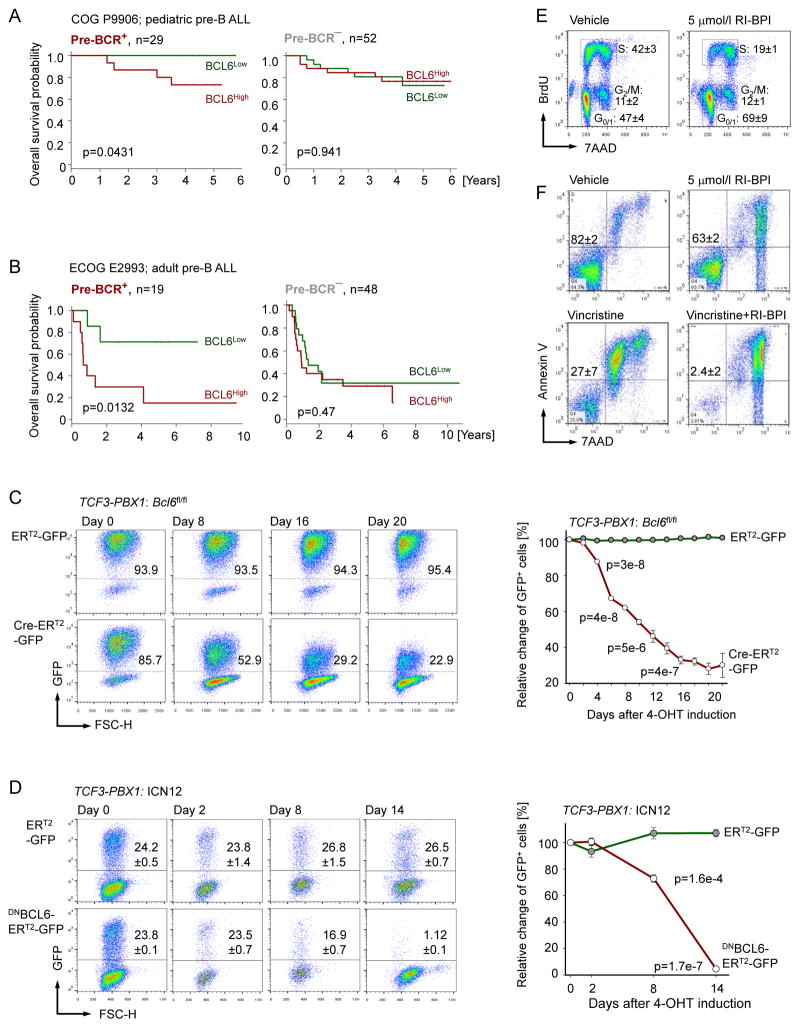
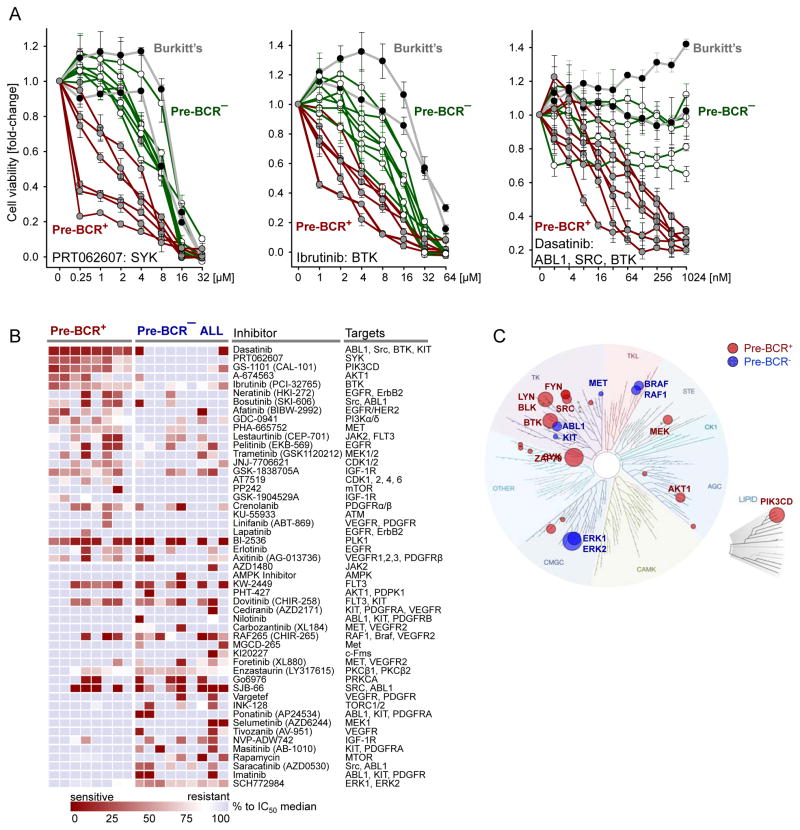
Studying 830 pre-B ALL cases from four clinical trials, we found that human ALL can be divided into two fundamentally distinct subtypes based on pre-BCR function. While absent in the majority of ALL cases, tonic pre-BCR signaling was found in 112 cases (13.5%). In these cases, tonic pre-BCR signaling induced activation of BCL6, which in turn increased pre-BCR signaling output at the transcriptional level. Interestingly, inhibition of pre-BCR-related tyrosine kinases reduced constitutive BCL6 expression and selectively killed patient-derived pre-BCR(+) ALL cells. These findings identify a genetically and phenotypically distinct subset of human ALL that critically depends on tonic pre-BCR signaling. In vivo treatment studies suggested that pre-BCR tyrosine kinase inhibitors are useful for the treatment of patients with pre-BCR(+) ALL.
在对来自四项临床试验的830例前B细胞急性淋巴细胞白血病(ALL)病例进行研究时,我们发现人类ALL可根据前B细胞受体(pre-BCR)功能分为两种根本不同的亚型。虽然大多数ALL病例中不存在,但在112例病例(13.5%)中发现了持续性pre-BCR信号传导。在这些病例中,持续性pre-BCR信号传导诱导了BCL6的激活,这反过来又在转录水平上增加了pre-BCR信号输出。有趣的是,抑制与pre-BCR相关的酪氨酸激酶可降低组成性BCL6表达,并选择性地杀死患者来源的pre-BCR(+) ALL细胞。这些发现确定了人类ALL中一个在基因和表型上不同的亚群,该亚群严重依赖持续性pre-BCR信号传导。体内治疗研究表明,pre-BCR酪氨酸激酶抑制剂可用于治疗pre-BCR(+) ALL患者。