Kuss Katarina, Falk Armin, Trautner Peter, Montag Christian, Weber Bernd, Fliessbach Klaus
Center for Economics and Neuroscience, University of Bonn Bonn, Germany ; Department of Psychiatry, University Hospital Bonn Bonn, Germany.
Center for Economics and Neuroscience, University of Bonn Bonn, Germany.
Front Behav Neurosci. 2015 Feb 24;9:40. doi: 10.3389/fnbeh.2015.00040. eCollection 2015.
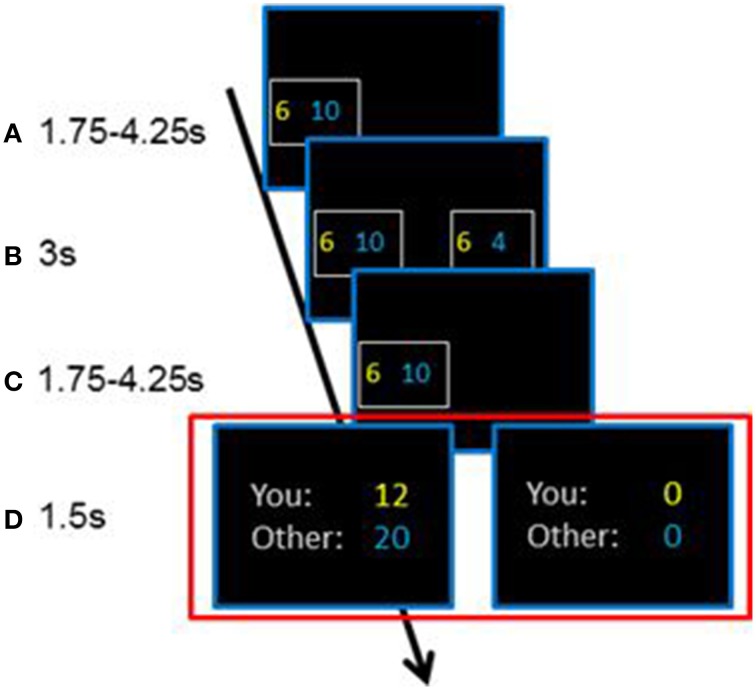
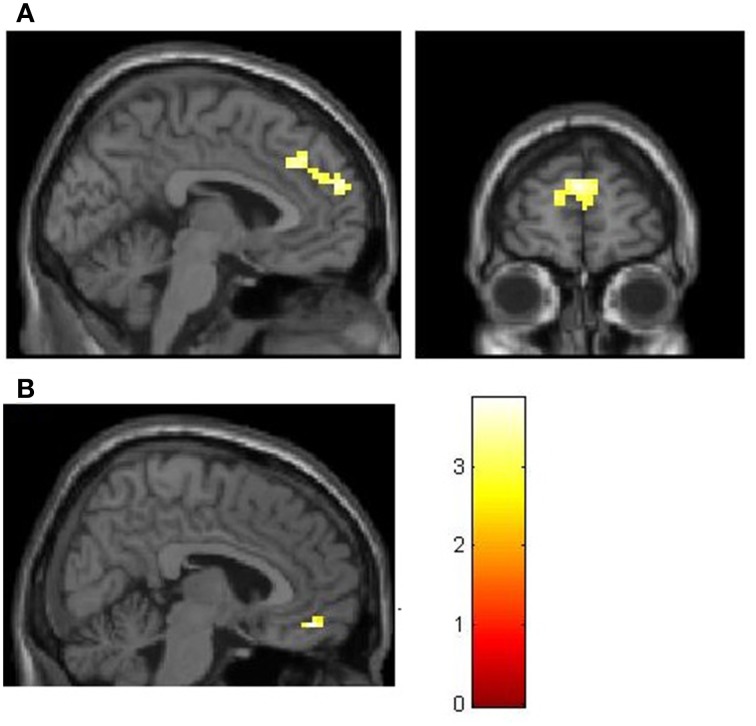
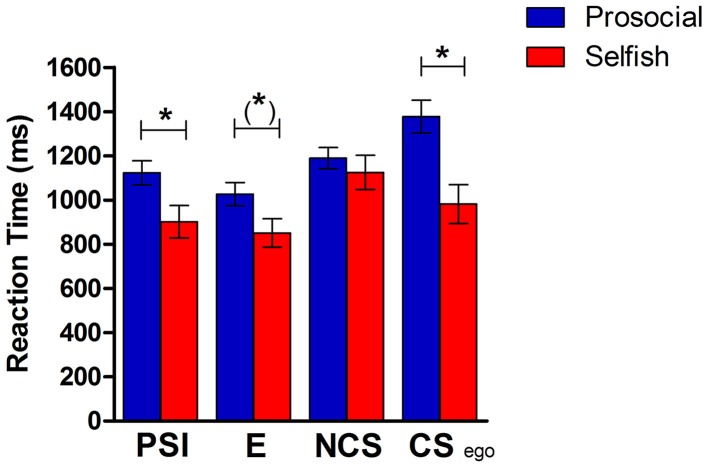
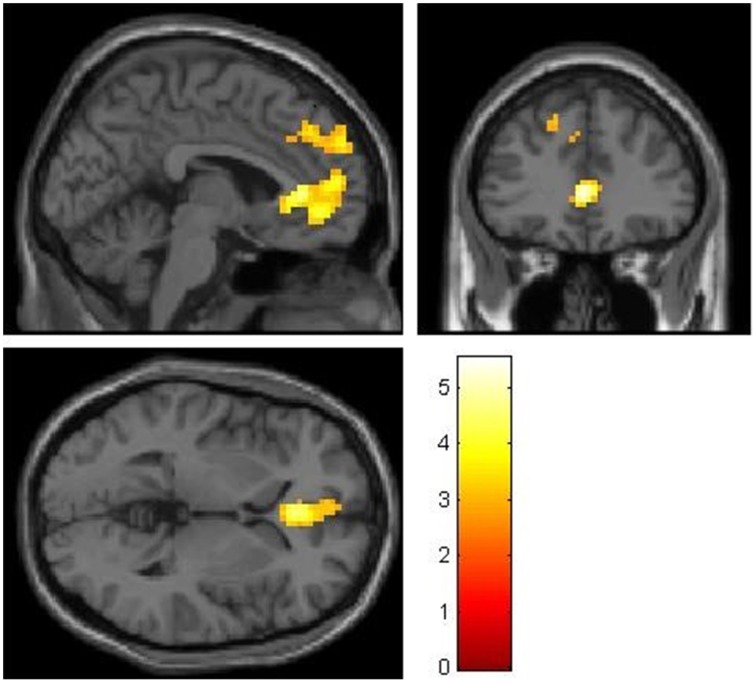
Our decisions often have consequences for other people. Hence, self-interest and other-regarding motives are traded off in many daily-life situations. Interindividually, people differ in their tendency to behave prosocial. These differences are captured by the concept of social value orientation (SVO), which assumes stable, trait-like tendencies to act selfish or prosocial. This study investigates group differences in prosocial decision making and addresses the question of whether prosocial individuals act intuitively and selfish individuals instead need to control egoistic impulses to behave prosocially. We address this question via the interpretation of neuronal and behavioral indicators. In the present fMRI-study participants were grouped into prosocial- and selfish participants. They made decisions in multiple modified Dictator-Games (DG) that addressed self- and other-regarding motives to a varying extent (self gain, non-costly social gain, mutual gain, costly social gain). Selfish participants reacted faster than prosocial participants in all conditions, except for decisions in the non-costly social condition, in which selfish participants displayed the longest decision times. In the total sample we found enhanced neural activity in the ventromedial prefrontal cortex (vmPFC) and dorsomedial prefrontal cortex (dmPFC/BA 9) during decisions that resulted in non-costly social benefits. These areas have been implicated in cognitive control processes and deliberative value integration. Decisively, these effects were stronger in the group of selfish individuals. We believe that selfish individuals require more explicit and deliberative processing during prosocial decisions. Our results are compatible with the assumption that prosocial decisions in prosocials are more intuitive, whereas they demand more active reflection in selfish individuals.
我们的决策常常会对他人产生影响。因此,在许多日常生活情境中,自我利益和关心他人的动机需要相互权衡。个体之间在亲社会行为倾向上存在差异。这些差异可以通过社会价值取向(SVO)的概念来描述,该概念假定存在稳定的、类似特质的自私或亲社会行为倾向。本研究调查了亲社会决策中的群体差异,并探讨了亲社会个体是否凭直觉行事,而自私个体是否需要控制利己冲动才能做出亲社会行为这一问题。我们通过解读神经和行为指标来解决这个问题。在当前的功能磁共振成像(fMRI)研究中,参与者被分为亲社会组和自私组。他们在多个经过修改的独裁者博弈(DG)中做出决策,这些博弈在不同程度上涉及自我和他人相关动机(自我收益、无成本社会收益、共同收益、有成本社会收益)。除了在无成本社会条件下的决策中自私参与者的决策时间最长外,在所有条件下自私参与者的反应都比亲社会参与者快。在总样本中,我们发现在做出无成本社会收益的决策时,腹内侧前额叶皮层(vmPFC)和背内侧前额叶皮层(dmPFC/BA 9)的神经活动增强。这些区域与认知控制过程和审慎的价值整合有关。决定性的是,这些效应在自私个体组中更强。我们认为,自私个体在亲社会决策过程中需要更明确和审慎的处理。我们的结果与以下假设相符:亲社会个体的亲社会决策更具直觉性,而自私个体则需要更积极的思考。