Hu Xiang, Lu Hua, Cao Sheng, Deng Yan-Li, Li Qi-Jia, Wan Qian, Yie Shang-Mian
Department of Gynecology and Obstetrics, The Second Medical College/Teaching Hospital, Chengdu University of Traditional Chinese Medicine, Chengdu, Sichuan 610041, P.R. China.
Int J Mol Med. 2015 May;35(5):1219-29. doi: 10.3892/ijmm.2015.2132. Epub 2015 Mar 11.
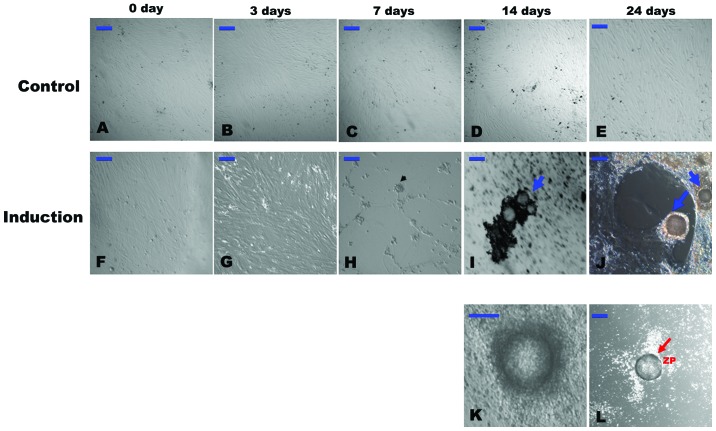
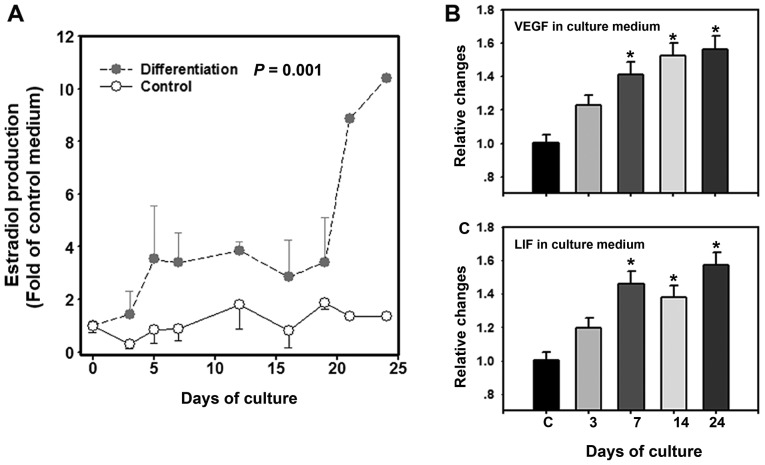
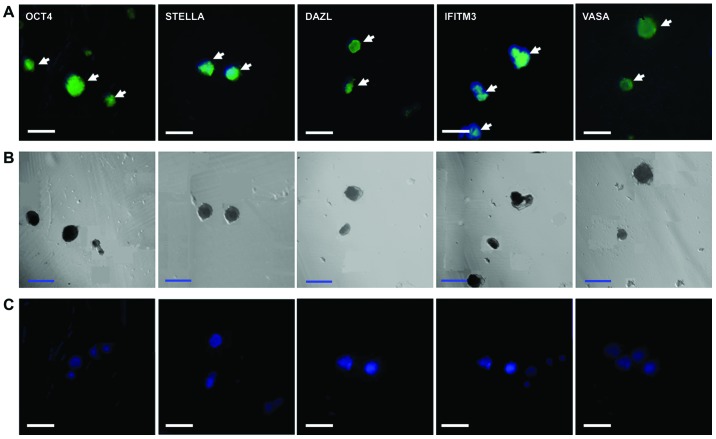
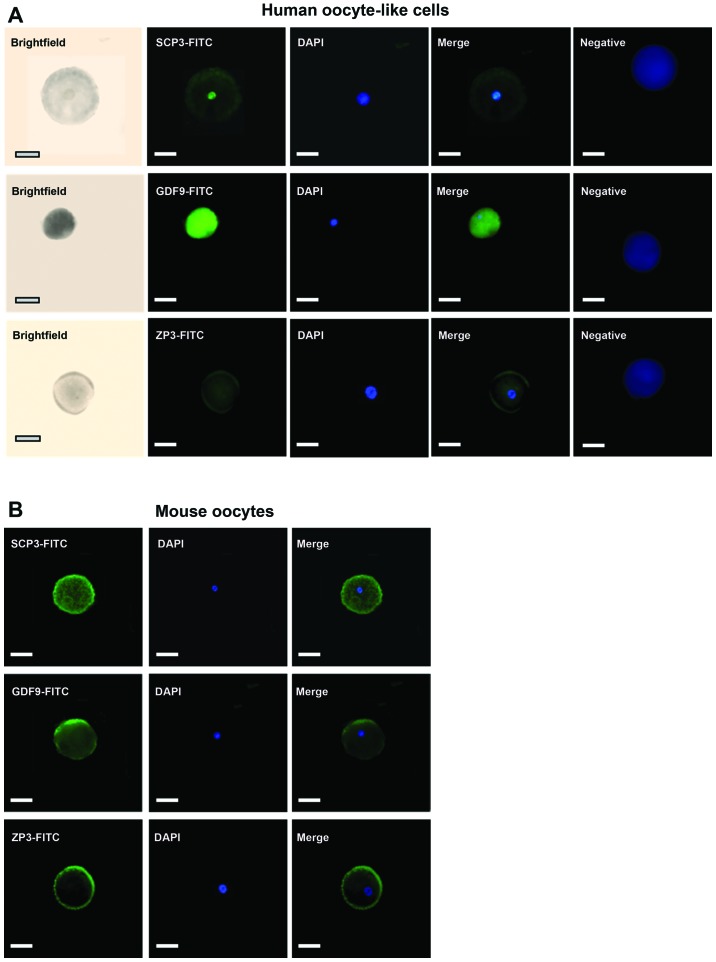
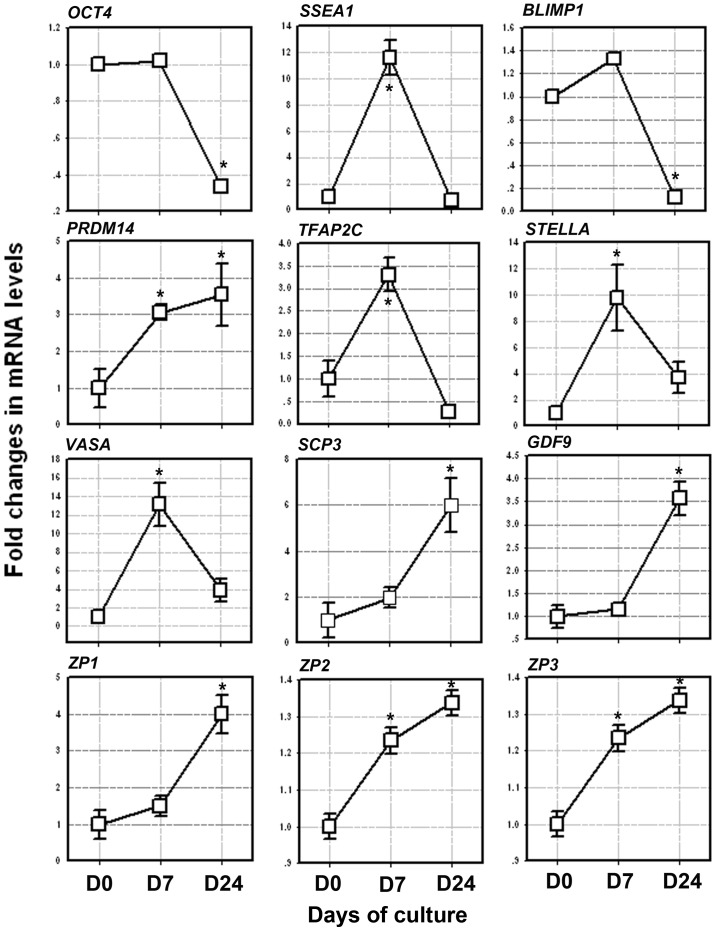
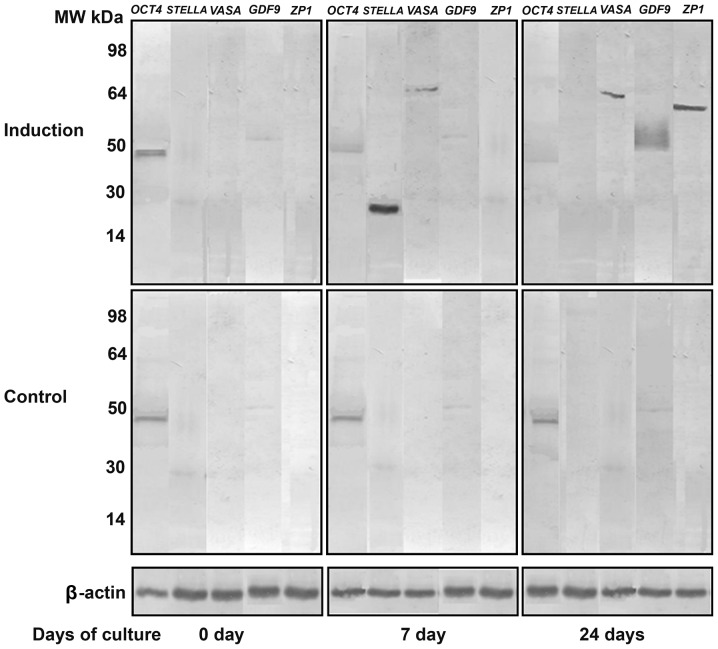
Compared to stem cells derived from human term umbilical cord, stem cells derived from human first-trimester umbilical cord (hFTUC) exhibit a significantly greater proliferative potential, and more efficiency in terms of their in vitro differentiation. In the present study, we investigated whether hFTUC-derived stem cells are able to differentiate into germ cells. The hFTUC-derived stem cells were first isolated, expanded and then cultured in differentiation medium containing human follicular fluid, follicle-stimulating hormone (FSH)/luteinizing hormone (LH) and estradiol for 24 days. During the period of induction, a subpopulation of the cultured cells appeared that had a morphological resemblance to primordial germ cells (PGCs) and cumulus-oocyte complex (COC)-like cells, and oocyte-like cells (OLCs). The PGC-like cells expressed specific markers indicative of germ cell formation such as octamer-binding transcription factor 4 (OCT4), stage-specific embryonic antigen 1 (SSEA1), B lymphocyte-induced maturation protein-1 (Blimp1), PR domain containing 14 (Prdm14), transcription factor AP-2 gamma (Tfap2C), VASA, STELLA, deleted in azoospermia-like (DAZL) and interferon-induced transmembrane protein 3 (IFITM3). The OLCs, which contained a single germinal vesicle, expressed oocyte-specific markers, such as synaptonemal complex protein 3 (SCP3), growth/differentiation factor-9 (GDF9), GDF9B and zona pellucida (ZP)1, ZP2 and ZP3. The COC-like cells secreted estradiol, vascular endothelial growth factor and leukemia inhibitory factor. Thus, our findings suggest that hFTUC-derived stem cells have an intrinsic ability to differentiate into OLCs, which may provide an in vitro model for the identification of factors involved in germ cell formation and differentiation.
与源自人类足月脐带的干细胞相比,源自人类孕早期脐带(hFTUC)的干细胞表现出显著更高的增殖潜力,并且在体外分化方面效率更高。在本研究中,我们调查了hFTUC衍生的干细胞是否能够分化为生殖细胞。首先分离、扩增hFTUC衍生的干细胞,然后在含有人类卵泡液、促卵泡激素(FSH)/促黄体生成素(LH)和雌二醇的分化培养基中培养24天。在诱导期间,培养的细胞中出现了一个亚群,其形态与原始生殖细胞(PGC)、卵丘-卵母细胞复合体(COC)样细胞和卵母细胞样细胞(OLC)相似。PGC样细胞表达了指示生殖细胞形成的特异性标志物,如八聚体结合转录因子4(OCT4)、阶段特异性胚胎抗原1(SSEA1)、B淋巴细胞诱导成熟蛋白-1(Blimp1)、含PR结构域14(Prdm14)、转录因子AP-2γ(Tfap2C)、VASA、STELLA、无精子症样缺失(DAZL)和干扰素诱导跨膜蛋白3(IFITM3)。含有单个生发泡的OLC表达了卵母细胞特异性标志物,如联会复合体蛋白3(SCP3)、生长/分化因子9(GDF9)、GDF9B和透明带(ZP)1、ZP2和ZP3。COC样细胞分泌雌二醇、血管内皮生长因子和白血病抑制因子。因此,我们的研究结果表明,hFTUC衍生的干细胞具有分化为OLC的内在能力,这可能为鉴定参与生殖细胞形成和分化的因子提供一个体外模型。