Khamis Sam, Martikaro Raz, Wientroub Shlomo, Hemo Yoram, Hayek Shlomo
The Gait and Motion Analysis Laboratory, Department of Pediatric Orthopaedics, Dana Children's Hospital, Tel Aviv Sourasky Medical Center, 6 Weizman St., 64239, Tel Aviv, Israel,
J Child Orthop. 2015 Apr;9(2):137-43. doi: 10.1007/s11832-015-0651-2. Epub 2015 Mar 19.
Crouch gait is a major sagittal plane deviation in children diagnosed with cerebral palsy (CP). It is defined as a combination of excessive ankle dorsiflexion and knee and hip flexion throughout the stance phase. To the best of our knowledge, functional electrical stimulation (FES) has not been used to decrease the severity of crouch gait in CP subjects and assist in achieving lower limb extension.
To evaluate the short- and long-term effects of FES to the quadriceps muscles in preventing crouch gait and achieving ankle plantar flexion, knee and hip extension at the stance phase.
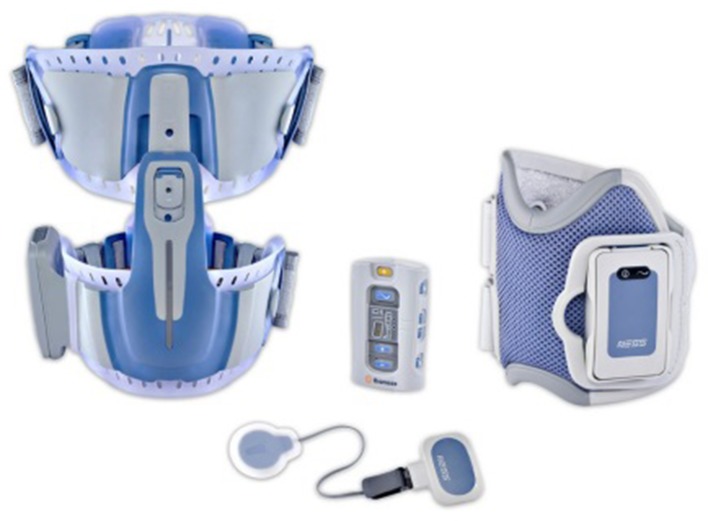
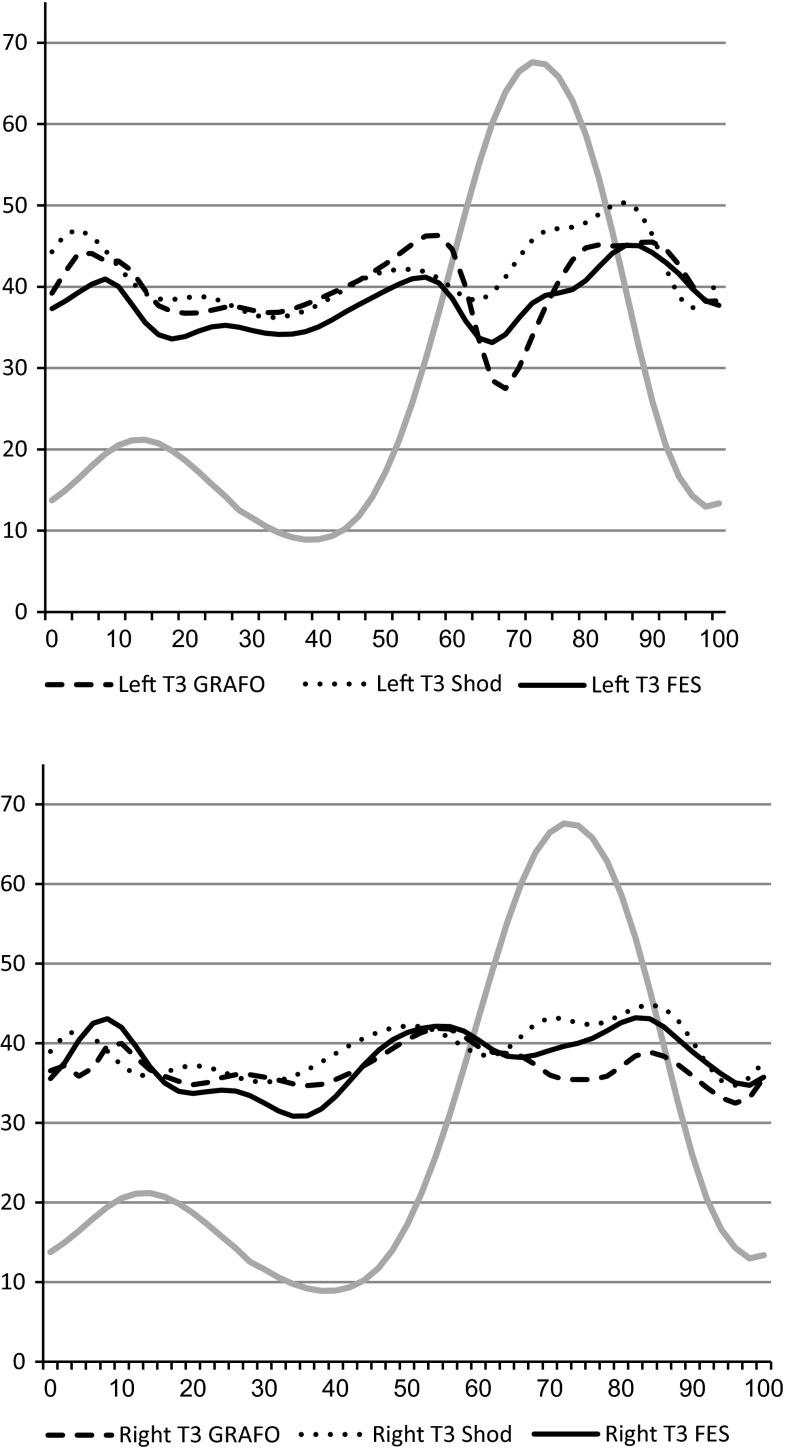
An 18-year-old boy diagnosed with CP diplegia [Gross Motor Function Classification System (GMFCS) level II] was evaluated. The NESS L300(®) Plus neuroprosthesis system provided electrical stimulation of the quadriceps muscle. A three-dimensional gait analysis was performed using an eight-camera system measuring gait kinematics and spatiotemporal parameters while the subject walked shod only, with ground reaction ankle foot orthotics (GRAFOs) and using an FES device.
Walking with the FES device showed an increase in the patient's knee extension at midstance and increased knee maximal extension at the stance phase. In addition, the patient was able to ascend and descend stairs with a "step-through" pattern immediately after adjusting the FES device.
This report suggests that FES to the quadriceps muscles may affect knee extension at stance and decrease crouch gait, depending on the adequate passive range of motion of the hip, knee extension, and plantar flexion. Further studies are needed in order to validate these results.
蹲伏步态是诊断为脑性瘫痪(CP)儿童矢状面的主要偏差。它被定义为在整个站立期踝关节背屈过度以及膝关节和髋关节屈曲的组合。据我们所知,功能性电刺激(FES)尚未用于降低CP患者蹲伏步态的严重程度并协助实现下肢伸展。
评估FES对股四头肌的短期和长期影响,以预防蹲伏步态并在站立期实现踝关节跖屈、膝关节和髋关节伸展。
对一名18岁诊断为双瘫型CP(粗大运动功能分类系统(GMFCS)II级)的男孩进行评估。NESS L300(®)Plus神经假体系统提供股四头肌的电刺激。使用八台摄像机系统进行三维步态分析,测量步态运动学和时空参数,受试者仅穿着鞋子行走、佩戴地面反应踝足矫形器(GRAFOs)并使用FES设备。
使用FES设备行走时,患者在站立中期膝关节伸展增加,在站立期膝关节最大伸展增加。此外,在调整FES设备后,患者能够立即以“一步通过”模式上下楼梯。
本报告表明,对股四头肌进行FES可能会影响站立时的膝关节伸展并减少蹲伏步态,这取决于髋部、膝关节伸展和跖屈的足够被动活动范围。需要进一步研究以验证这些结果。