Department of Biological Sciences, University of Alberta, Edmonton, AB Canada T6G 2E9.
Department of Computing Sciences, Kings University College, Edmonton, AB Canada T6B 2H3.
Plant Methods. 2015 Mar 14;11:19. doi: 10.1186/s13007-015-0062-x. eCollection 2015.
Detection of induced mutations is valuable for inferring gene function and for developing novel germplasm for crop improvement. Many reverse genetics approaches have been developed to identify mutations in genes of interest within a mutagenized population, including some approaches that rely on next-generation sequencing (e.g. exome capture, whole genome resequencing). As an alternative to these genome or exome-scale methods, we sought to develop a scalable and efficient method for detection of induced mutations that could be applied to a small number of target genes, using Ion Torrent technology. We developed this method in flax (Linum usitatissimum), to demonstrate its utility in a crop species.
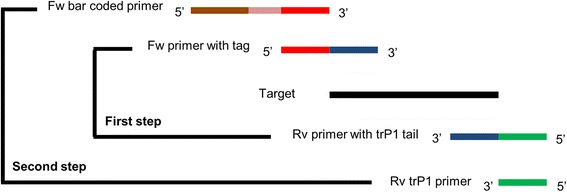
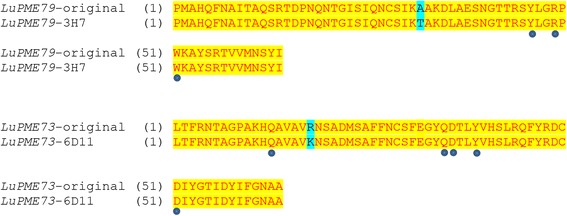
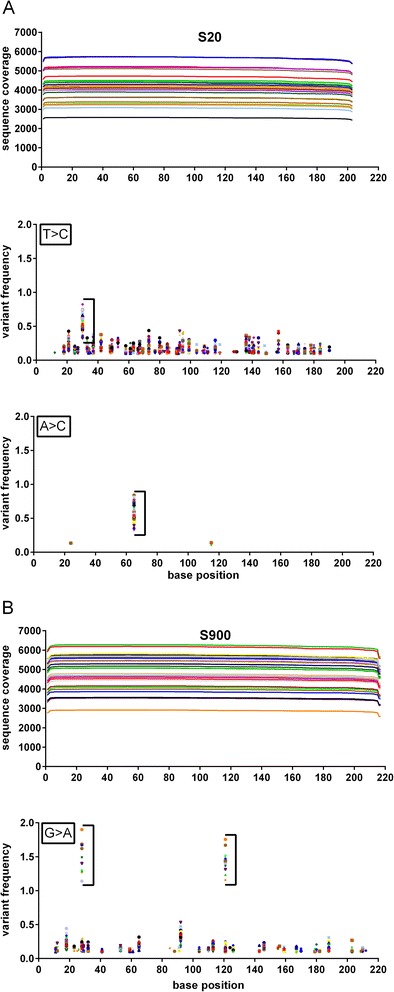
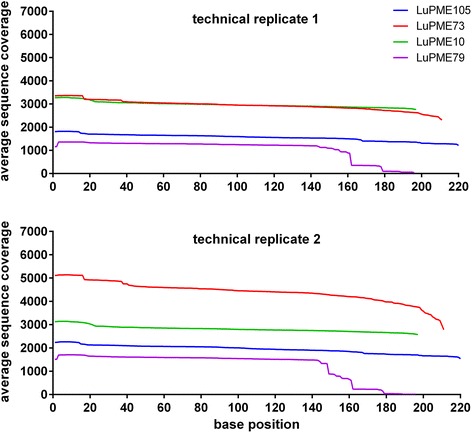
We used an amplicon-based approach in which DNA samples from an ethyl methanesulfonate (EMS)-mutagenized population were pooled and used as template in PCR reactions to amplify a region of each gene of interest. Barcodes were incorporated during PCR, and the pooled amplicons were sequenced using an Ion Torrent PGM. A pilot experiment with known SNPs showed that they could be detected at a frequency > 0.3% within the pools. We then selected eight genes for which we wanted to discover novel mutations, and applied our approach to screen 768 individuals from the EMS population, using either the Ion 314 or Ion 316 chips. Out of 29 potential mutations identified after processing the NGS reads, 16 mutations were confirmed using Sanger sequencing.
The methodology presented here demonstrates the utility of Ion Torrent technology in detecting mutation variants in specific genome regions for large populations of a species such as flax. The methodology could be scaled-up to test >100 genes using the higher capacity chips now available from Ion Torrent.
诱导突变的检测对于推断基因功能和开发作物改良的新型种质资源非常有价值。已经开发了许多反向遗传学方法来鉴定诱变群体中感兴趣基因的突变,包括一些依赖于下一代测序(例如外显子捕获、全基因组重测序)的方法。作为这些基因组或外显子规模方法的替代方法,我们试图开发一种可应用于少数目标基因的、可扩展且高效的诱导突变检测方法,该方法使用 Ion Torrent 技术。我们在亚麻(Linum usitatissimum)中开发了这种方法,以证明其在作物物种中的实用性。
我们使用基于扩增子的方法,将乙磺酸(EMS)诱变群体的 DNA 样品混合,并在 PCR 反应中用作模板来扩增每个感兴趣基因的区域。在 PCR 过程中加入了条形码,然后使用 Ion Torrent PGM 对混合扩增子进行测序。具有已知 SNP 的试点实验表明,它们可以在池内以>0.3%的频率检测到。然后,我们选择了八个我们想要发现新突变的基因,并使用 Ion 314 或 Ion 316 芯片对 EMS 群体中的 768 个个体进行了我们的方法筛选。在处理 NGS 读取后,共鉴定出 29 个潜在突变,其中 16 个突变通过 Sanger 测序得到确认。
本文提出的方法证明了 Ion Torrent 技术在检测特定基因组区域中的突变变体在像亚麻这样的物种的大群体中的实用性。该方法可以扩展到使用 Ion Torrent 现在提供的更高容量芯片来测试>100 个基因。