Gibbins Hannah L, Proctor Gordon B, Yakubov Gleb E, Wilson Stephen, Carpenter Guy H
Salivary Research Unit, King's College London Dental Institute, London, United Kingdom.
Australian Research Council Centre of Excellence in Plant Cell Walls, School of Chemical Engineering, The University of Queensland, Queensland, Australia.
PLoS One. 2015 Mar 20;10(3):e0119677. doi: 10.1371/journal.pone.0119677. eCollection 2015.
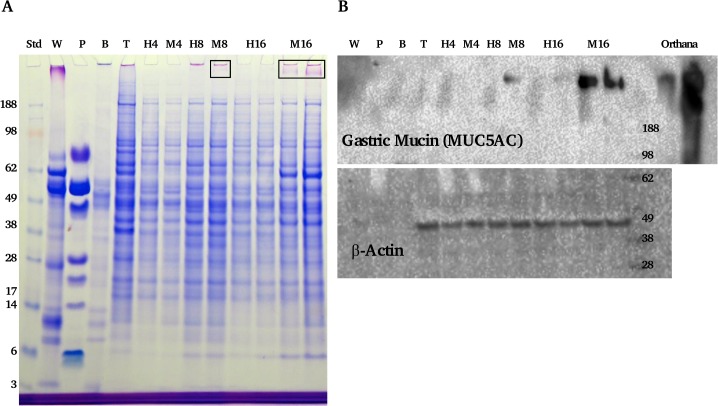
The oral mucosal pellicle is a layer of absorbed salivary proteins, including secretory IgA (SIgA), bound onto the surface of oral epithelial cells and is a useful model for all mucosal surfaces. The mechanism by which SIgA concentrates on mucosal surfaces is examined here using a tissue culture model with real saliva. Salivary mucins may initiate the formation of the mucosal pellicle through interactions with membrane-bound mucins on cells. Further protein interactions with mucins may then trigger binding of other pellicle proteins. HT29 colon cell lines, which when treated with methotrexate (HT29-MTX) produce a gel-forming mucin, were used to determine the importance of these mucin-mucin interactions. Binding of SIgA to cells was then compared using whole mouth saliva, parotid (mucin-free) saliva and a source of purified SIgA. Greatest SIgA binding occurred when WMS was incubated with HT29-MTX expressing mucus. Since salivary MUC5B was only able to bind to cells which produced mucus and purified SIgA showed little binding to the same cells we conclude that most SIgA binding to mucosal cells occurs because SIgA forms complexes with salivary mucins which then bind to cells expressing membrane-bound mucins. This work highlights the importance of mucin interactions in the development of the mucosal pellicle.
口腔黏膜薄膜是一层吸附的唾液蛋白,包括分泌型免疫球蛋白A(SIgA),附着在口腔上皮细胞表面,是所有黏膜表面的一个有用模型。本文使用含有真实唾液的组织培养模型研究了SIgA在黏膜表面浓缩的机制。唾液黏蛋白可能通过与细胞上的膜结合黏蛋白相互作用启动黏膜薄膜的形成。随后与黏蛋白的进一步蛋白质相互作用可能触发其他薄膜蛋白的结合。HT29结肠细胞系在用甲氨蝶呤(HT29-MTX)处理时会产生凝胶形成性黏蛋白,被用于确定这些黏蛋白-黏蛋白相互作用的重要性。然后使用全口唾液、腮腺(无黏蛋白)唾液和纯化的SIgA来源比较SIgA与细胞的结合情况。当全口唾液与表达黏液的HT29-MTX孵育时,SIgA的结合最为显著。由于唾液MUC5B仅能与产生黏液的细胞结合,而纯化的SIgA与相同细胞的结合很少,我们得出结论,大多数SIgA与黏膜细胞的结合是因为SIgA与唾液黏蛋白形成复合物,然后与表达膜结合黏蛋白的细胞结合。这项工作突出了黏蛋白相互作用在黏膜薄膜形成中的重要性。