Srivastava Pragya, Paluch Benjamin E, Matsuzaki Junko, James Smitha R, Collamat-Lai Golda, Taverna Pietro, Karpf Adam R, Griffiths Elizabeth A
a Department of Medicine; Roswell Park Cancer Institute ; Buffalo NY USA.
Epigenetics. 2015;10(3):237-46. doi: 10.1080/15592294.2015.1017198.
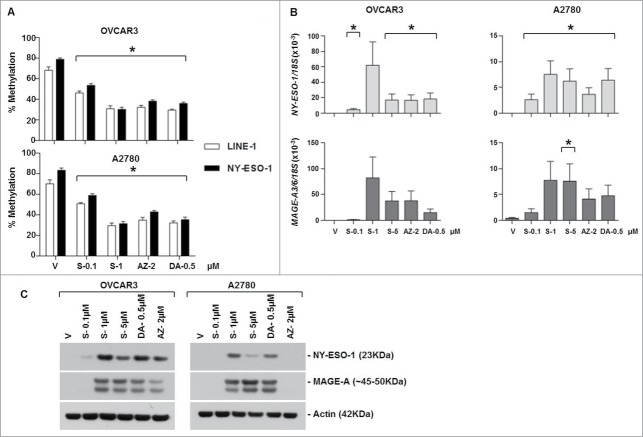
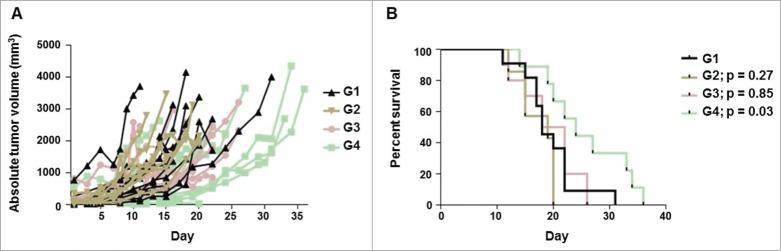
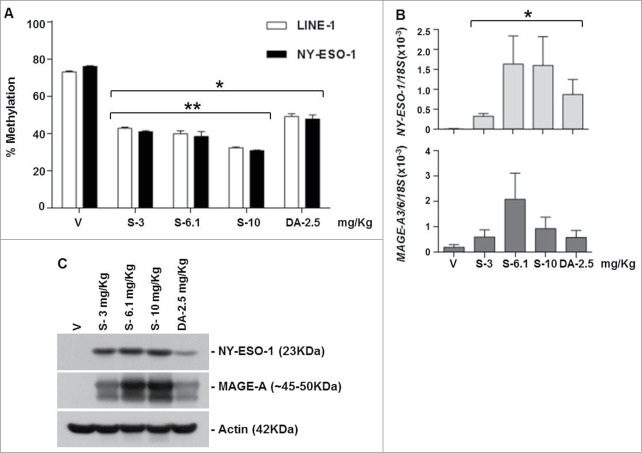
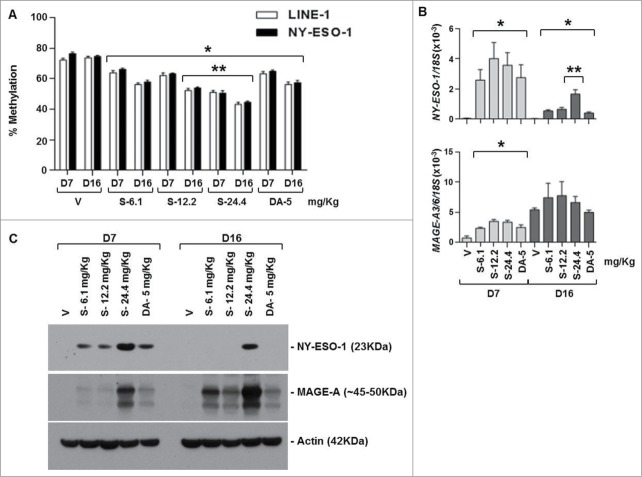
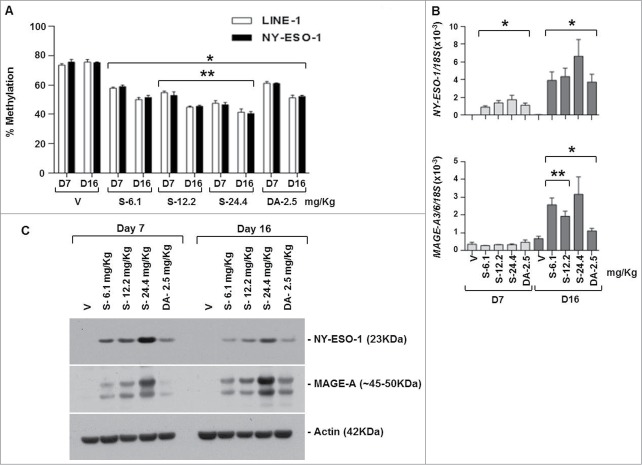
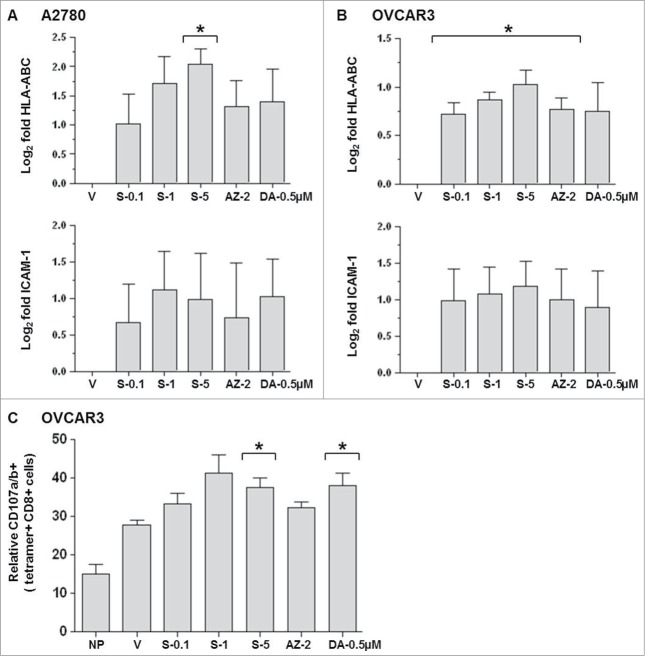
We aimed to determine the effect of SGI-110 on methylation and expression of the cancer testis antigens (CTAs) NY-ESO-1 and MAGE-A in epithelial ovarian cancer (EOC) cells in vitro and in vivo and to establish the impact of SGI-110 on expression of major histocompatibility (MHC) class I and Intracellular Adhesion Molecule 1 (ICAM-1) on EOC cells, and on recognition of EOC cells by NY-ESO-1-specific CD8+ T-cells. We also tested the impact of combined SGI-110 and NY-ESO-1-specific CD8+ T-cells on tumor growth and/or murine survival in a xenograft setting. EOC cells were treated with SGI-110 in vitro at various concentrations and as tumor xenografts with 3 distinct dose schedules. Effects on global methylation (using LINE-1), NY-ESO-1 and MAGE-A methylation, mRNA, and protein expression were determined and compared to controls. SGI-110 treated EOC cells were evaluated for expression of immune-modulatory genes using flow cytometry, and were co-cultured with NY-ESO-1 specific T-cell clones to determine immune recognition. In vivo administration of SGI-110 and CD8+ T-cells was performed to determine anti-tumor effects on EOC xenografts. SGI-110 treatment induced hypomethylation and CTA gene expression in a dose dependent manner both in vitro and in vivo, at levels generally superior to azacitidine or decitabine. SGI-110 enhanced the expression of MHC I and ICAM-1, and enhanced recognition of EOC cells by NY-ESO-1-specific CD8+ T-cells. Sequential SGI-110 and antigen-specific CD8+ cell treatment restricted EOC tumor growth and enhanced survival in a xenograft setting. SGI-110 is an effective hypomethylating agent and immune modulator and, thus, an attractive candidate for combination with CTA-directed vaccines in EOC.
我们旨在确定SGI-110对体外和体内上皮性卵巢癌(EOC)细胞中癌胚抗原(CTA)NY-ESO-1和MAGE-A甲基化及表达的影响,并确定SGI-110对EOC细胞上主要组织相容性(MHC)I类分子和细胞间黏附分子1(ICAM-1)表达以及NY-ESO-1特异性CD8+T细胞对EOC细胞识别的影响。我们还在异种移植模型中测试了联合使用SGI-110和NY-ESO-1特异性CD8+T细胞对肿瘤生长和/或小鼠存活的影响。EOC细胞在体外以不同浓度用SGI-110处理,并作为肿瘤异种移植物采用3种不同的给药方案。测定对整体甲基化(使用LINE-1)、NY-ESO-1和MAGE-A甲基化、mRNA和蛋白表达的影响,并与对照进行比较。使用流式细胞术评估经SGI-110处理的EOC细胞免疫调节基因的表达,并与NY-ESO-1特异性T细胞克隆共培养以确定免疫识别。进行SGI-110和CD8+T细胞的体内给药以确定对EOC异种移植物的抗肿瘤作用。SGI-110处理在体外和体内均以剂量依赖性方式诱导低甲基化和CTA基因表达,其水平通常优于阿扎胞苷或地西他滨。SGI-110增强了MHC I和ICAM-1 的表达,并增强了NY-ESO-1特异性CD8+T细胞对EOC细胞的识别。序贯给予SGI-110和抗原特异性CD8+细胞治疗在异种移植模型中限制了EOC肿瘤生长并提高了存活率。SGI-110是一种有效的低甲基化剂和免疫调节剂,因此是与EOC中CTA导向疫苗联合使用的有吸引力的候选药物。