Tremain B, Rance H J, Hibbins A P, Sambles J R
Electromagnetic and Acoustic Materials Group, Department of Physics and Astronomy, University of Exeter, Exeter. EX4 4QL, United Kingdom.
Sci Rep. 2015 Mar 23;5:9366. doi: 10.1038/srep09366.
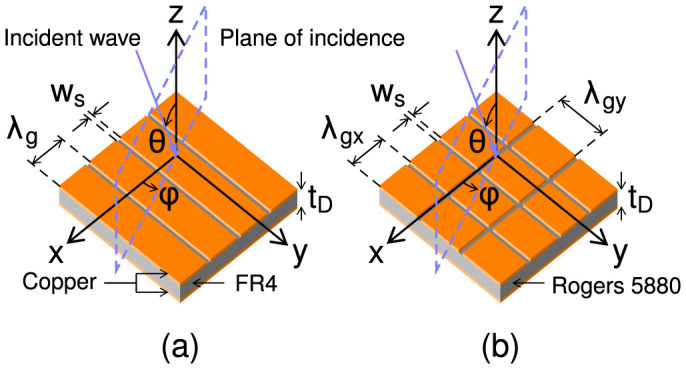
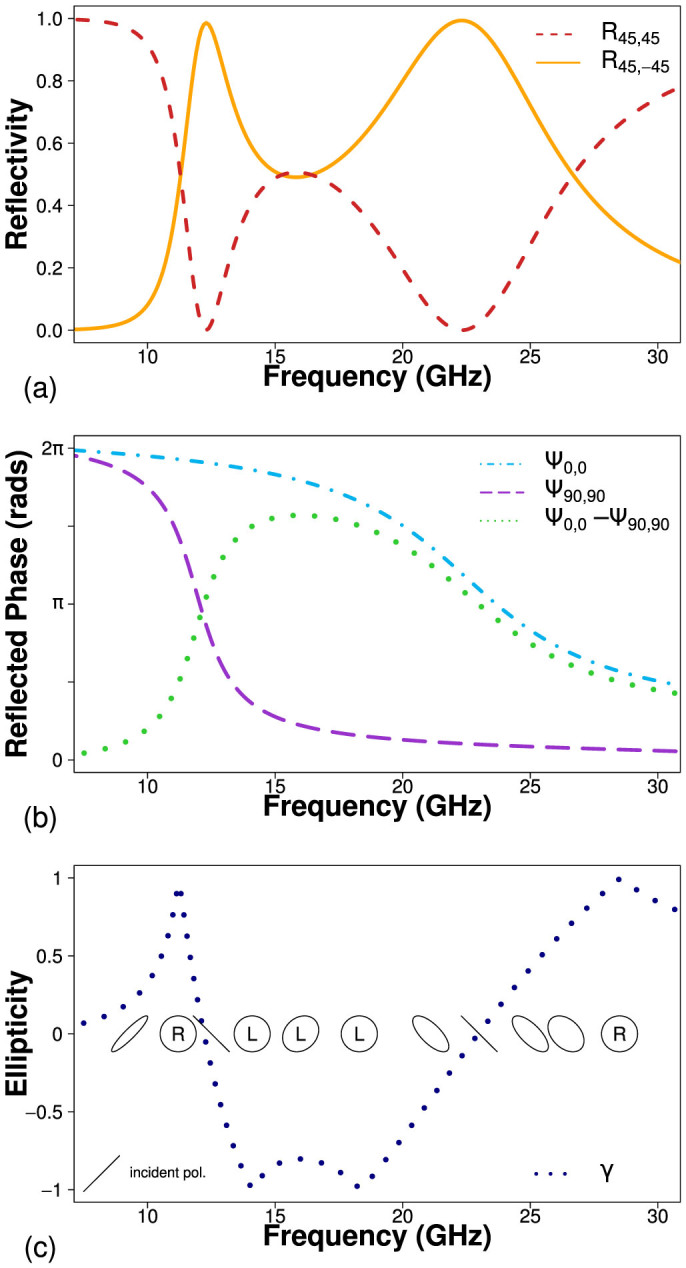
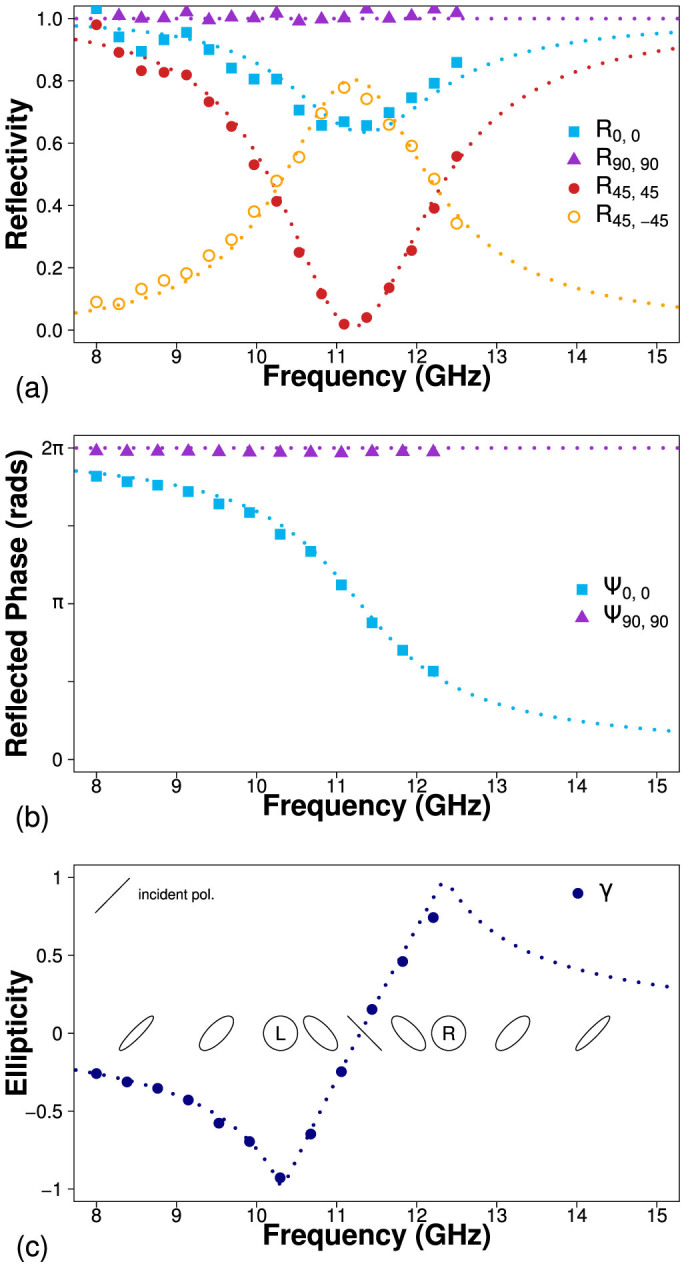
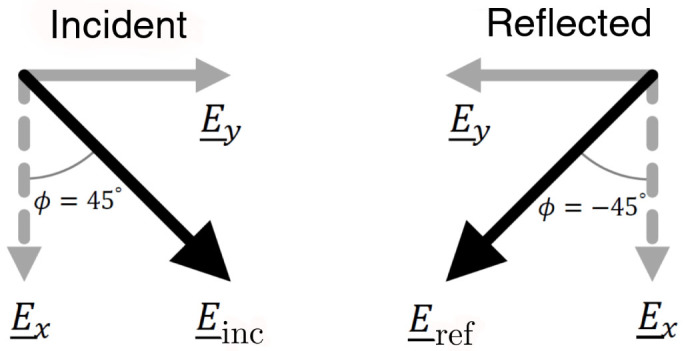
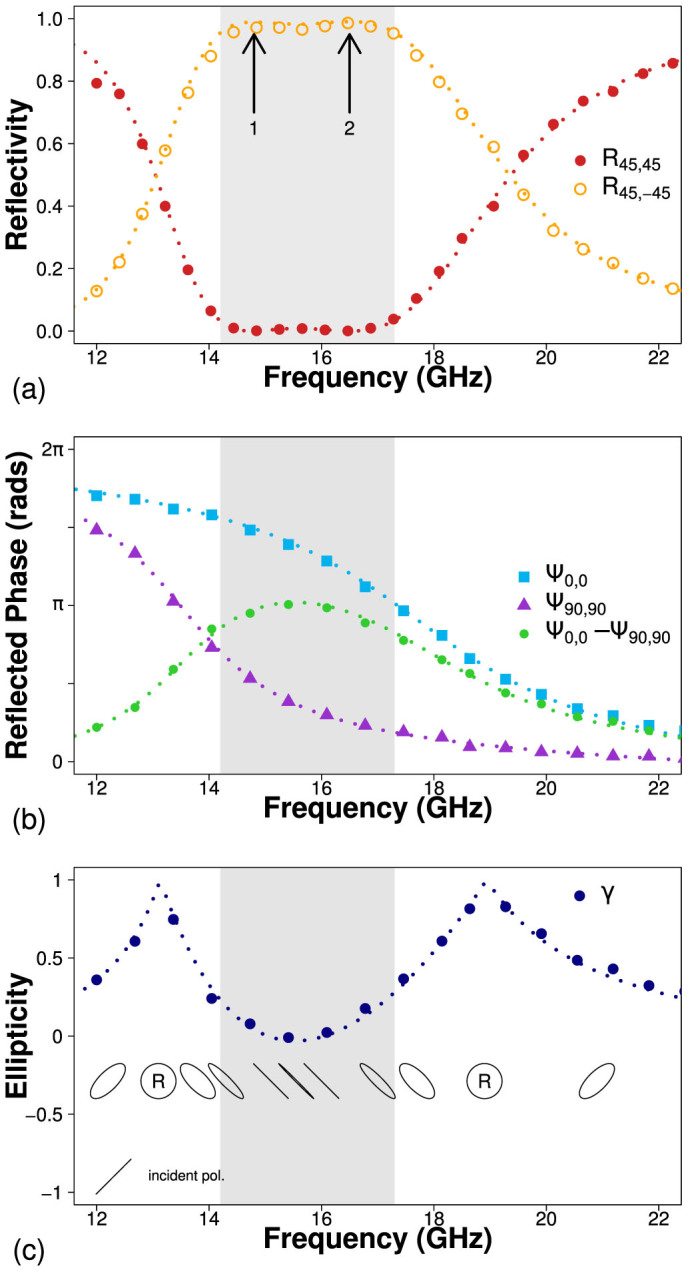
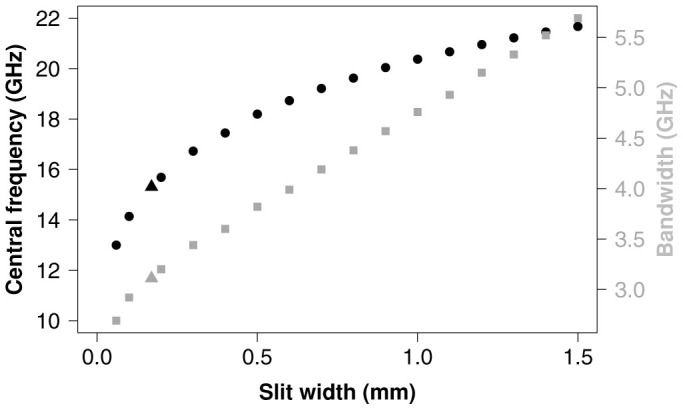
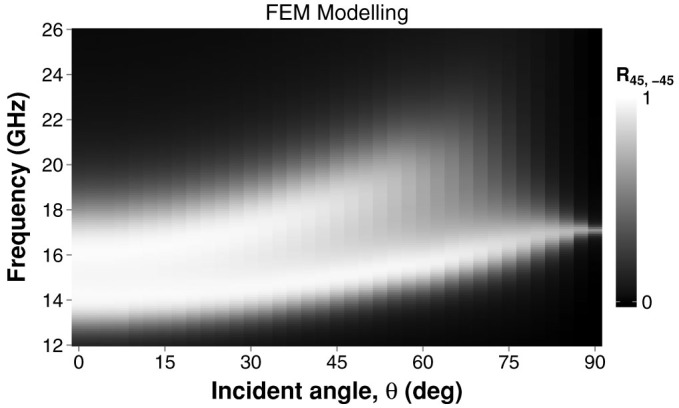
Linearly polarized microwave radiation is shown to have its plane of polarization converted to the orthogonal state upon reflection from an ultrathin (λ/25) cavity array. The structure benefits from an uncomplicated design consisting of a metallic grating closely separated from a ground plane by a dielectric spacer. A single set of periodically spaced slits (monograting) exhibits polarization conversion when the normally incident electric field is aligned at 45° to the slits. Two orthogonal sets of slits (bigrating) allows this narrow-band effect to be broadened when the two orthogonal resonances are separated in frequency. We optimise the design and experimentally demonstrate near loss-less polarization conversion (95% of the incident intensity) across a 3.1 GHz frequency band. Finally, we study the dependence of the structure's performance on incident angle and slit width.
线性极化微波辐射在从超薄(λ/25)腔阵列反射时,其极化平面会转换为正交状态。该结构得益于一种简单的设计,它由一个通过介电间隔层与接地平面紧密分离的金属光栅组成。当垂直入射电场与狭缝呈45°排列时,单组周期性间隔的狭缝(单光栅)会表现出极化转换。当两个正交共振在频率上分离时,两组正交的狭缝(双光栅)能使这种窄带效应得到拓宽。我们优化了设计,并通过实验证明在3.1 GHz频带上实现了近乎无损耗的极化转换(入射强度的95%)。最后,我们研究了该结构的性能对入射角和狭缝宽度的依赖性。