Huang Bin, Lucas Tanja, Kueppers Claudia, Dong Xiaomin, Krause Maike, Bepperling Alexander, Buchner Johannes, Voshol Hans, Weiss Andreas, Gerrits Bertran, Kochanek Stefan
Department of Gene Therapy, Ulm University, Ulm, Germany.
Center for Integrated Protein Science Munich, Department of Biotechnology, Technische Universität München, Garching, Germany.
PLoS One. 2015 Mar 23;10(3):e0121055. doi: 10.1371/journal.pone.0121055. eCollection 2015.
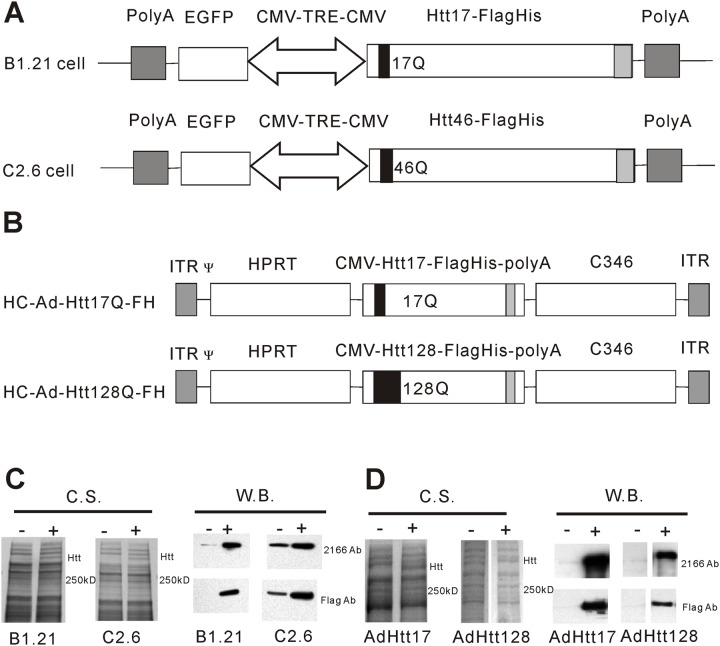
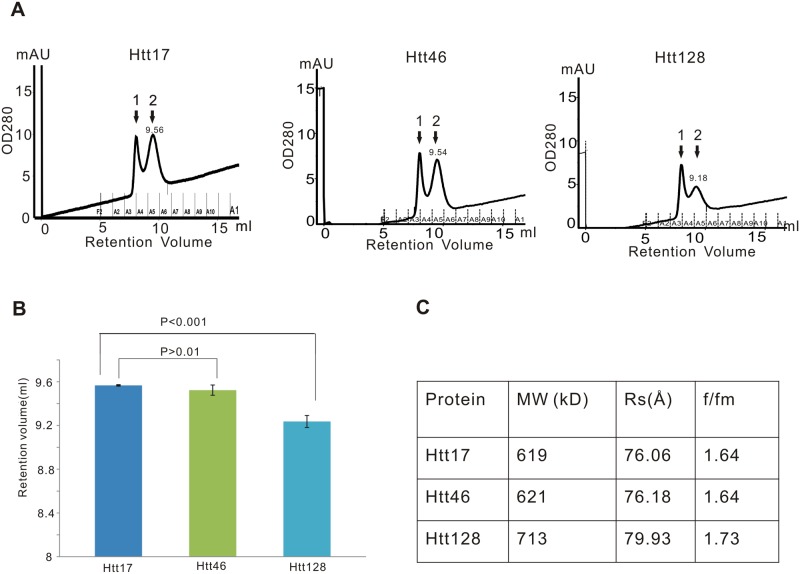
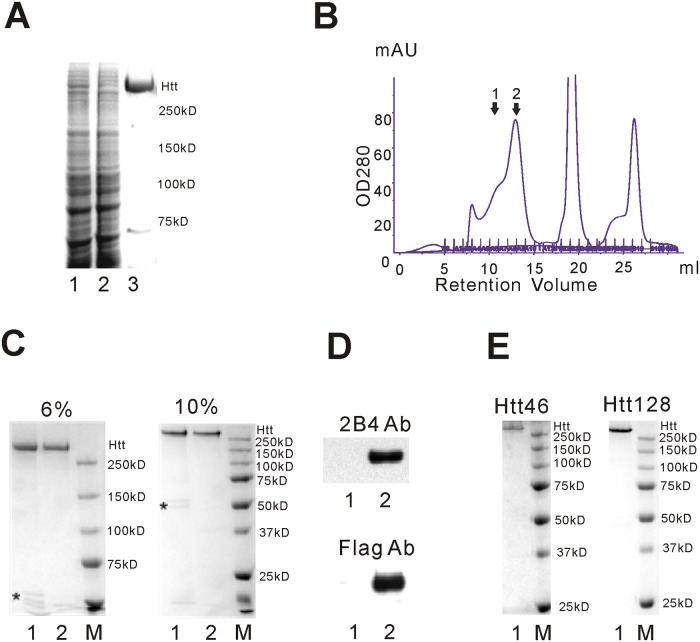
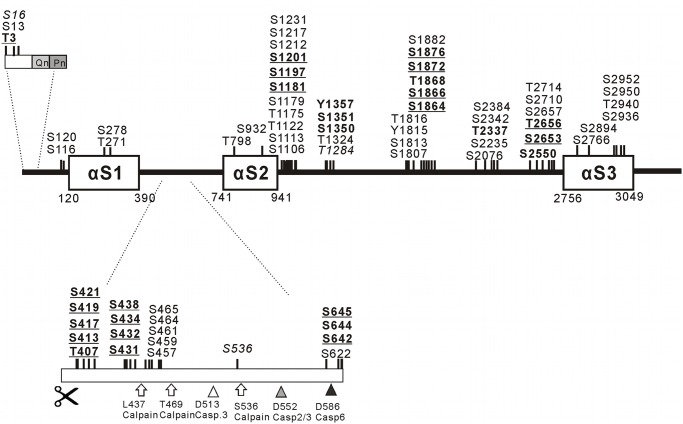
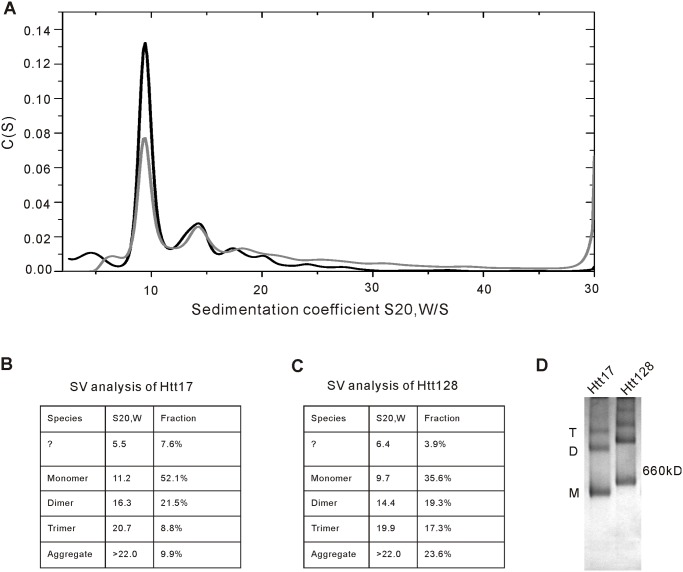
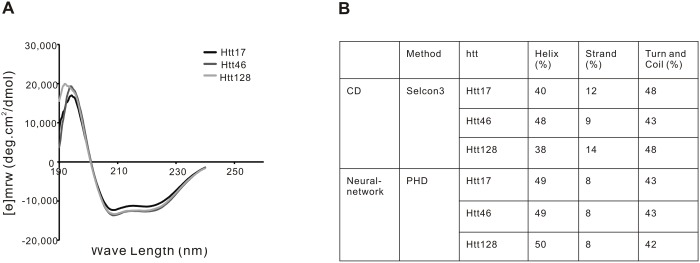
Huntingtin (Htt) is a 350 kD intracellular protein, ubiquitously expressed and mainly localized in the cytoplasm. Huntington's disease (HD) is caused by a CAG triplet amplification in exon 1 of the corresponding gene resulting in a polyglutamine (polyQ) expansion at the N-terminus of Htt. Production of full-length Htt has been difficult in the past and so far a scalable system or process has not been established for recombinant production of Htt in human cells. The ability to produce Htt in milligram quantities would be a prerequisite for many biochemical and biophysical studies aiming in a better understanding of Htt function under physiological conditions and in case of mutation and disease. For scalable production of full-length normal (17Q) and mutant (46Q and 128Q) Htt we have established two different systems, the first based on doxycycline-inducible Htt expression in stable cell lines, the second on "gutless" adenovirus mediated gene transfer. Purified material has then been used for biochemical characterization of full-length Htt. Posttranslational modifications (PTMs) were determined and several new phosphorylation sites were identified. Nearly all PTMs in full-length Htt localized to areas outside of predicted alpha-solenoid protein regions. In all detected N-terminal peptides methionine as the first amino acid was missing and the second, alanine, was found to be acetylated. Differences in secondary structure between normal and mutant Htt, a helix-rich protein, were not observed in our study. Purified Htt tends to form dimers and higher order oligomers, thus resembling the situation observed with N-terminal fragments, although the mechanism of oligomer formation may be different.
亨廷顿蛋白(Htt)是一种350千道尔顿的细胞内蛋白,在全身广泛表达,主要定位于细胞质中。亨廷顿舞蹈病(HD)由相应基因外显子1中的CAG三联体扩增引起,导致Htt的N端出现聚谷氨酰胺(polyQ)扩展。过去,全长Htt的生产一直很困难,到目前为止,尚未建立可扩展的系统或方法用于在人细胞中重组生产Htt。能够生产毫克量的Htt将是许多生物化学和生物物理研究的先决条件,这些研究旨在更好地理解生理条件下以及发生突变和疾病时Htt的功能。为了可扩展地生产全长正常(17Q)和突变(46Q和128Q)Htt,我们建立了两种不同的系统,第一种基于强力霉素诱导的稳定细胞系中Htt表达,第二种基于“无壳”腺病毒介导的基因转移。然后,纯化的材料被用于全长Htt的生化特性分析。确定了翻译后修饰(PTM),并鉴定了几个新的磷酸化位点。全长Htt中几乎所有的PTM都定位于预测的α-螺线管蛋白区域之外。在所有检测到的N端肽中,第一个氨基酸甲硫氨酸缺失,第二个氨基酸丙氨酸被发现发生了乙酰化。在我们的研究中,未观察到正常和突变Htt(一种富含螺旋的蛋白)之间二级结构的差异。纯化的Htt倾向于形成二聚体和更高阶的寡聚体,因此类似于在N端片段中观察到的情况,尽管寡聚体形成的机制可能不同。