• 文献检索
  • 文档翻译
  • 深度研究
  • 学术资讯
  • Suppr Zotero 插件Zotero 插件
  • 邀请有礼
  • 套餐&价格
  • 历史记录
应用&插件
Suppr Zotero 插件Zotero 插件浏览器插件Mac 客户端Windows 客户端微信小程序
定价
高级版会员购买积分包购买API积分包
服务
文献检索文档翻译深度研究API 文档MCP 服务
关于我们
关于 Suppr公司介绍联系我们用户协议隐私条款
关注我们

Suppr 超能文献

核心技术专利:CN118964589B侵权必究
粤ICP备2023148730 号-1Suppr @ 2026

文献检索

告别复杂PubMed语法,用中文像聊天一样搜索,搜遍4000万医学文献。AI智能推荐,让科研检索更轻松。

立即免费搜索

文件翻译

保留排版,准确专业,支持PDF/Word/PPT等文件格式,支持 12+语言互译。

免费翻译文档

深度研究

AI帮你快速写综述,25分钟生成高质量综述,智能提取关键信息,辅助科研写作。

立即免费体验

构建一种自发光蓝藻生物报告器,用于检测水生环境中多种可利用的重金属。

Construction of a self-luminescent cyanobacterial bioreporter that detects a broad range of bioavailable heavy metals in aquatic environments.

机构信息

Department of Biology, Universidad Autónoma de Madrid Madrid, Spain.

出版信息

Front Microbiol. 2015 Mar 9;6:186. doi: 10.3389/fmicb.2015.00186. eCollection 2015.

DOI:10.3389/fmicb.2015.00186
PMID:25806029
原文链接:https://pmc.ncbi.nlm.nih.gov/articles/PMC4353254/
Abstract

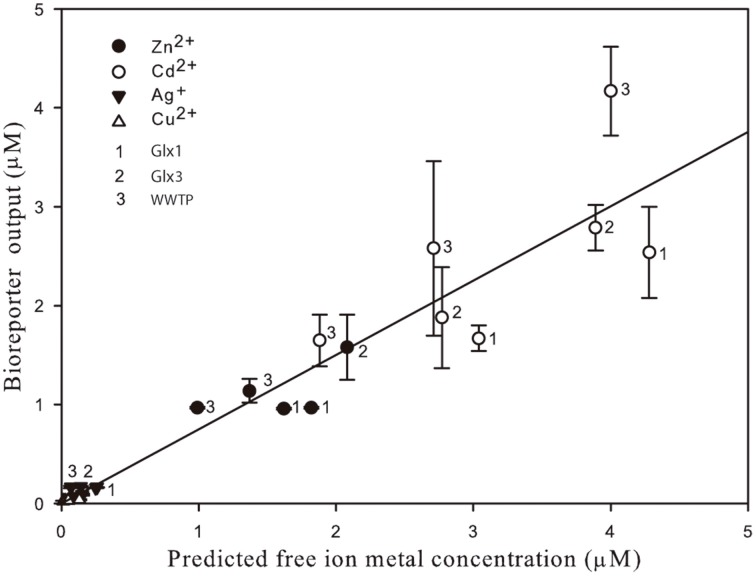
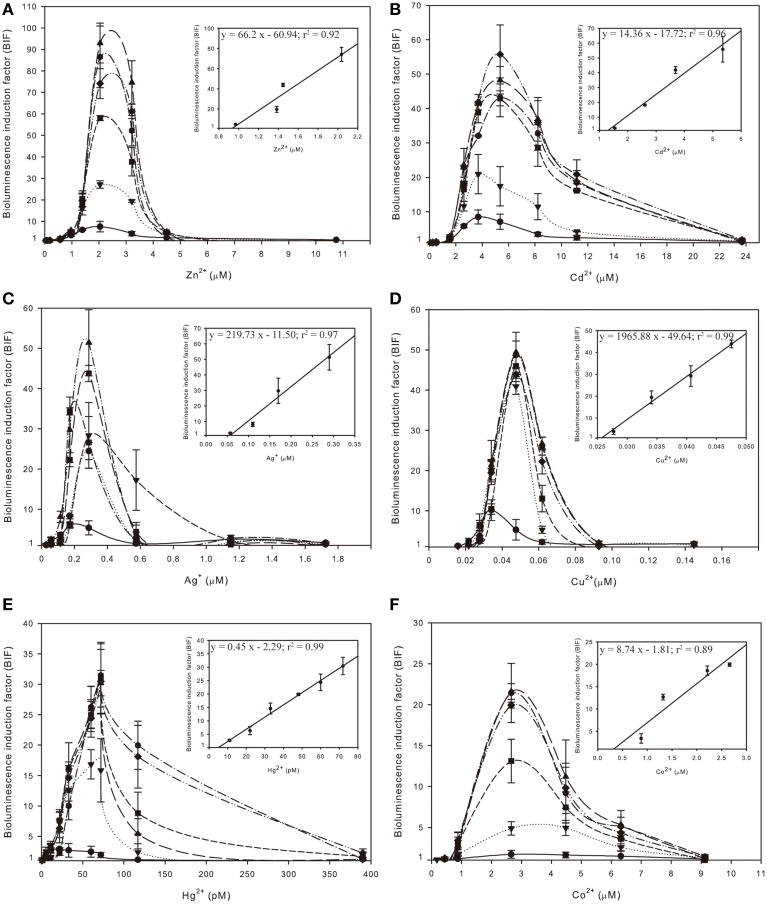
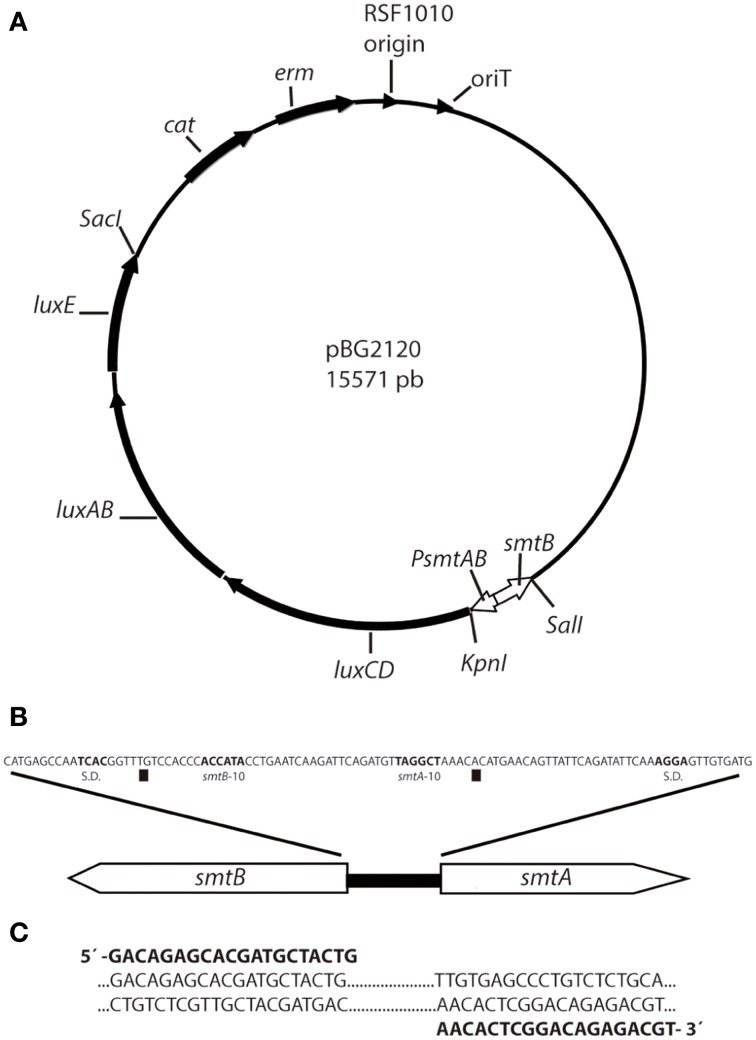
A self-luminescent bioreporter strain of the unicellular cyanobacterium Synechococcus sp. PCC 7942 was constructed by fusing the promoter region of the smt locus (encoding the transcriptional repressor SmtB and the metallothionein SmtA) to luxCDABE from Photorhabdus luminescens; the sensor smtB gene controlling the expression of smtA was cloned in the same vector. The bioreporter performance was tested with a range of heavy metals and was shown to respond linearly to divalent Zn, Cd, Cu, Co, Hg, and monovalent Ag. Chemical modeling was used to link bioreporter response with metal speciation and bioavailability. Limits of Detection (LODs), Maximum Permissive Concentrations (MPCs) and dynamic ranges for each metal were calculated in terms of free ion concentrations. The ranges of detection varied from 11 to 72 pM for Hg(2+) (the ion to which the bioreporter was most sensitive) to 1.54-5.35 μM for Cd(2+) with an order of decreasing sensitivity as follows: Hg(2+) >> Cu(2+) >> Ag(+) > Co(2+) ≥ Zn(2+) > Cd(2+). However, the maximum induction factor reached 75-fold in the case of Zn(2+) and 56-fold in the case of Cd(2+), implying that Zn(2+) is the preferred metal in vivo for the SmtB sensor, followed by Cd(2+), Ag(+) and Cu(2+) (around 45-50-fold induction), Hg(2+) (30-fold) and finally Co(2+) (20-fold). The bioreporter performance was tested in real environmental samples with different water matrix complexity artificially contaminated with increasing concentrations of Zn, Cd, Ag, and Cu, confirming its validity as a sensor of free heavy metal cations bioavailability in aquatic environments.

摘要

构建了一株能自体发光的单细胞蓝藻集胞藻 PCC 7942 生物报告菌株,该菌株通过将 smt 基因座(编码转录抑制剂 SmtB 和金属硫蛋白 SmtA)的启动子区域与发光菌 Photorhabdus luminescens 的 luxCDABE 融合,将控制 smtA 表达的传感器 smtB 基因克隆到相同的载体中。利用一系列重金属对生物报告器的性能进行了测试,结果表明,它对二价 Zn、Cd、Cu、Co、Hg 和单价 Ag 表现出线性响应。化学模拟用于将生物报告器的响应与金属形态和生物利用度联系起来。根据游离离子浓度计算了每种金属的检测限(LOD)、最大允许浓度(MPC)和动态范围。对于 Hg(2+)(生物报告器最敏感的离子),检测范围从 11 到 72 pM 不等,而对于 Cd(2+),检测范围从 1.54 到 5.35 μM,灵敏度依次降低,顺序如下:Hg(2+)>>Cu(2+)>Ag(+)>Co(2+)≥Zn(2+)>Cd(2+)。然而,对于 Zn(2+),最大诱导因子达到 75 倍,对于 Cd(2+),最大诱导因子达到 56 倍,这意味着 Zn(2+)是 SmtB 传感器体内首选的金属,其次是 Cd(2+)、Ag(+)和 Cu(2+)(约 45-50 倍诱导)、Hg(2+)(30 倍)和最后是 Co(2+)(20 倍)。利用不同水基质复杂性的真实环境样品进行了生物报告器性能测试,这些样品人为地污染了不同浓度的 Zn、Cd、Ag 和 Cu,证实了它作为水生环境中游离重金属阳离子生物利用度传感器的有效性。
https://cdn.ncbi.nlm.nih.gov/pmc/blobs/0f5d/4353254/4bb2c1ad139f/fmicb-06-00186-g0003.jpg
https://cdn.ncbi.nlm.nih.gov/pmc/blobs/0f5d/4353254/942d9a68933e/fmicb-06-00186-g0001.jpg
https://cdn.ncbi.nlm.nih.gov/pmc/blobs/0f5d/4353254/2db3e7bd4ee0/fmicb-06-00186-g0002.jpg
https://cdn.ncbi.nlm.nih.gov/pmc/blobs/0f5d/4353254/4bb2c1ad139f/fmicb-06-00186-g0003.jpg
https://cdn.ncbi.nlm.nih.gov/pmc/blobs/0f5d/4353254/942d9a68933e/fmicb-06-00186-g0001.jpg
https://cdn.ncbi.nlm.nih.gov/pmc/blobs/0f5d/4353254/2db3e7bd4ee0/fmicb-06-00186-g0002.jpg
https://cdn.ncbi.nlm.nih.gov/pmc/blobs/0f5d/4353254/4bb2c1ad139f/fmicb-06-00186-g0003.jpg

相似文献

1
Construction of a self-luminescent cyanobacterial bioreporter that detects a broad range of bioavailable heavy metals in aquatic environments.构建一种自发光蓝藻生物报告器,用于检测水生环境中多种可利用的重金属。
Front Microbiol. 2015 Mar 9;6:186. doi: 10.3389/fmicb.2015.00186. eCollection 2015.
2
Effect of pH, EDTA, and anions on heavy metal toxicity toward a bioluminescent cyanobacterial bioreporter.pH 值、EDTA 和阴离子对发光蓝藻生物报告器中重金属毒性的影响。
Arch Environ Contam Toxicol. 2009 Oct;57(3):477-87. doi: 10.1007/s00244-008-9280-9. Epub 2009 Jan 24.
3
Two novel cyanobacterial bioluminescent whole-cell bioreporters based on superoxide dismutases MnSod and FeSod to detect superoxide anion.两种新型基于超氧化物歧化酶 MnSod 和 FeSod 的蓝细菌生物发光全细胞生物报告器,用于检测超氧阴离子。
Chemosphere. 2018 Jun;201:772-779. doi: 10.1016/j.chemosphere.2018.03.012. Epub 2018 Mar 3.
4
Isolation of a prokaryotic metallothionein locus and analysis of transcriptional control by trace metal ions.原核生物金属硫蛋白基因座的分离及痕量金属离子对转录调控的分析。
Mol Microbiol. 1993 Jan;7(2):177-87. doi: 10.1111/j.1365-2958.1993.tb01109.x.
5
SmtB is a metal-dependent repressor of the cyanobacterial metallothionein gene smtA: identification of a Zn inhibited DNA-protein complex.SmtB是蓝藻金属硫蛋白基因smtA的金属依赖性阻遏物:锌抑制的DNA-蛋白质复合物的鉴定。
Nucleic Acids Res. 1993 Feb 25;21(4):921-5. doi: 10.1093/nar/21.4.921.
6
A zinc(II)/lead(II)/cadmium(II)-inducible operon from the Cyanobacterium anabaena is regulated by AztR, an alpha3N ArsR/SmtB metalloregulator.来自蓝藻鱼腥藻的一个锌(II)/铅(II)/镉(II)诱导型操纵子受AztR调控,AztR是一种α3N ArsR/SmtB金属调节蛋白。
Biochemistry. 2005 Jun 21;44(24):8673-83. doi: 10.1021/bi050450+.
7
Bioavailability, accumulation and effects of heavy metals in sediments with special reference to United Kingdom estuaries: a review.沉积物中重金属的生物有效性、积累及其影响——以英国河口为例的综述
Environ Pollut. 1992;76(2):89-131. doi: 10.1016/0269-7491(92)90099-v.
8
Construction of a marine cyanobacterial strain with increased heavy metal ion tolerance by introducing exogenic metallothionein gene.
J Mar Biotechnol. 1998 Aug;6(3):174-7.
9
Zn2+-Inducible Expression Platform for Synechococcus sp. Strain PCC 7002 Based on the smtA Promoter/Operator and smtB Repressor.基于smtA启动子/操纵子和smtB阻遏物的聚球藻属PCC 7002菌株锌离子诱导表达平台
Appl Environ Microbiol. 2017 Jan 17;83(3). doi: 10.1128/AEM.02491-16. Print 2017 Feb 1.
10
Allosteric negative regulation of smt O/P binding of the zinc sensor, SmtB, by metal ions: a coupled equilibrium analysis.金属离子对锌传感器SmtB的Smt O/P结合的变构负调控:耦合平衡分析
Biochemistry. 2002 Aug 6;41(31):9776-86. doi: 10.1021/bi020178t.

引用本文的文献

1
Comparative Analysis of Cell Metabolic Activity Sensing by Escherichia coli rrnB P1-lux and Cd Responsive-Lux Biosensors: Time-Resolved Experiments and Mechanistic Modelling.大肠杆菌 rrnB P1-lux 和 Cd 响应型 Lux 生物传感器对细胞代谢活性的比较分析:时间分辨实验和机理建模。
Biosensors (Basel). 2022 Sep 16;12(9):763. doi: 10.3390/bios12090763.
2
Exploiting Catabolite Repression and Stringent Response to Control Delay and Multimodality of Bioluminescence Signal by Metal Whole-Cell Biosensors: Interplay between Metal Bioavailability and Nutritional Medium Conditions.利用分解代谢物阻遏和严谨反应调控金属全细胞生物传感器生物发光信号的延迟和多模态:金属生物可利用性与营养培养基条件之间的相互作用
Biosensors (Basel). 2022 May 11;12(5):327. doi: 10.3390/bios12050327.
3

本文引用的文献

1
Zinc'ing sensibly: controlling zinc homeostasis at the transcriptional level.合理补锌:在转录水平控制锌稳态
Metallomics. 2014 Jul;6(7):1198-215. doi: 10.1039/c4mt00064a.
2
Copper toxicity to Phaeodactylum tricornutum: a survey of the sensitivity of various toxicity endpoints at the physiological, biochemical, molecular and structural levels.铜对三角褐指藻的毒性:对生理、生化、分子和结构水平上各种毒性终点敏感性的调查。
Biometals. 2014 Jun;27(3):527-37. doi: 10.1007/s10534-014-9727-6. Epub 2014 Mar 28.
3
Time-to-event analyses of ecotoxicity data.
Construction of a sensitive and specific lead biosensor using a genetically engineered bacterial system with a luciferase gene reporter controlled by pbr and cadA promoters.利用一种遗传工程细菌系统构建敏感且特异的铅生物传感器,该系统带有受 pbr 和 cadA 启动子控制的荧光素酶基因报告子。
Biomed Eng Online. 2020 Oct 19;19(1):79. doi: 10.1186/s12938-020-00816-w.
4
Development of a Sensitive Bioreporter Without Antibiotic Markers for Detecting Bioavailable Copper in Water Environments.一种无需抗生素标记物的灵敏生物报告器的开发,用于检测水环境中的生物可利用铜。
Front Microbiol. 2020 Jan 24;10:3031. doi: 10.3389/fmicb.2019.03031. eCollection 2019.
5
Use of Cyanobacterial Luminescent Bioreporters to Report on the Environmental Impact of Metallic Nanoparticles.利用蓝藻生物发光生物报告器报告金属纳米粒子对环境的影响。
Sensors (Basel). 2019 Aug 19;19(16):3597. doi: 10.3390/s19163597.
6
Toxicity mechanisms of ZnO UV-filters used in sunscreens toward the model cyanobacteria Synechococcus elongatus PCC 7942.防晒霜中 ZnO 紫外线滤光剂对模式蓝藻鱼腥藻 PCC 7942 的毒性机制。
Environ Sci Pollut Res Int. 2019 Aug;26(22):22450-22463. doi: 10.1007/s11356-019-05057-6. Epub 2019 Jun 3.
7
Defining an additivity framework for mixture research in inducible whole-cell biosensors.为诱导型全细胞生物传感器中的混合物研究定义一个加性框架。
Sci Rep. 2015 Nov 26;5:17200. doi: 10.1038/srep17200.
时间事件分析在毒理学数据中的应用。
Ecotoxicology. 1996 Jun;5(3):187-96. doi: 10.1007/BF00116339.
4
A battery of bioreporters of nitrogen bioavailability in aquatic ecosystems based on cyanobacteria.基于蓝藻的水生生态系统氮生物可利用性的一系列生物报告器。
Sci Total Environ. 2014 Mar 15;475:169-79. doi: 10.1016/j.scitotenv.2013.07.015. Epub 2013 Jul 30.
5
Monitoring bioavailable phosphorus in lotic systems: a polyphasic approach based on cyanobacteria.监测流动系统中的生物可利用磷:基于蓝藻的多相方法。
Sci Total Environ. 2014 Mar 15;475:158-68. doi: 10.1016/j.scitotenv.2013.06.076. Epub 2013 Jul 16.
6
Online detection of metals in environmental samples: comparing two concepts of bioluminescent bacterial biosensors.在线检测环境样品中的金属:比较两种生物发光细菌生物传感器的概念。
Environ Sci Technol. 2012 Nov 6;46(21):11979-87. doi: 10.1021/es3024918. Epub 2012 Oct 16.
7
Mining genomes of marine cyanobacteria for elements of zinc homeostasis.挖掘海洋蓝细菌基因组中的锌稳态元素。
Front Microbiol. 2012 Apr 11;3:142. doi: 10.3389/fmicb.2012.00142. eCollection 2012.
8
Toxicological interactions of perfluorooctane sulfonic acid (PFOS) and perfluorooctanoic acid (PFOA) with selected pollutants.全氟辛烷磺酸(PFOS)和全氟辛酸(PFOA)与选定污染物的毒理学相互作用。
J Hazard Mater. 2012 Jan 30;201-202:209-18. doi: 10.1016/j.jhazmat.2011.11.061. Epub 2011 Nov 29.
9
Novel cyanobacterial bioreporters of phosphorus bioavailability based on alkaline phosphatase and phosphate transporter genes of Anabaena sp. PCC 7120.基于鱼腥藻 PCC 7120 的碱性磷酸酶和磷酸盐转运基因的新型蓝细菌磷生物可利用性生物报告器。
Anal Bioanal Chem. 2011 Jul;400(10):3573-84. doi: 10.1007/s00216-011-5017-0. Epub 2011 May 1.
10
Whole-cell biosensors for detection of heavy metal ions in environmental samples based on metallothionein promoters from Tetrahymena thermophila.基于嗜热四膜虫金属硫蛋白启动子的用于检测环境样品中重金属离子的全细胞生物传感器。
Microb Biotechnol. 2011 Jul;4(4):513-22. doi: 10.1111/j.1751-7915.2011.00252.x. Epub 2011 Mar 1.