Poyraz Ömer, Brunner Katharina, Lohkamp Bernhard, Axelsson Hanna, Hammarström Lars G J, Schnell Robert, Schneider Gunter
Department of Medical Biochemistry and Biophysics, Karolinska Institutet, Stockholm, Sweden.
Chemical Biology Consortium Sweden, Science for Life Laboratory Stockholm, Department of Medical Biochemistry and Biophysics, Karolinska Institutet, Stockholm, Sweden.
PLoS One. 2015 Mar 25;10(3):e0121494. doi: 10.1371/journal.pone.0121494. eCollection 2015.
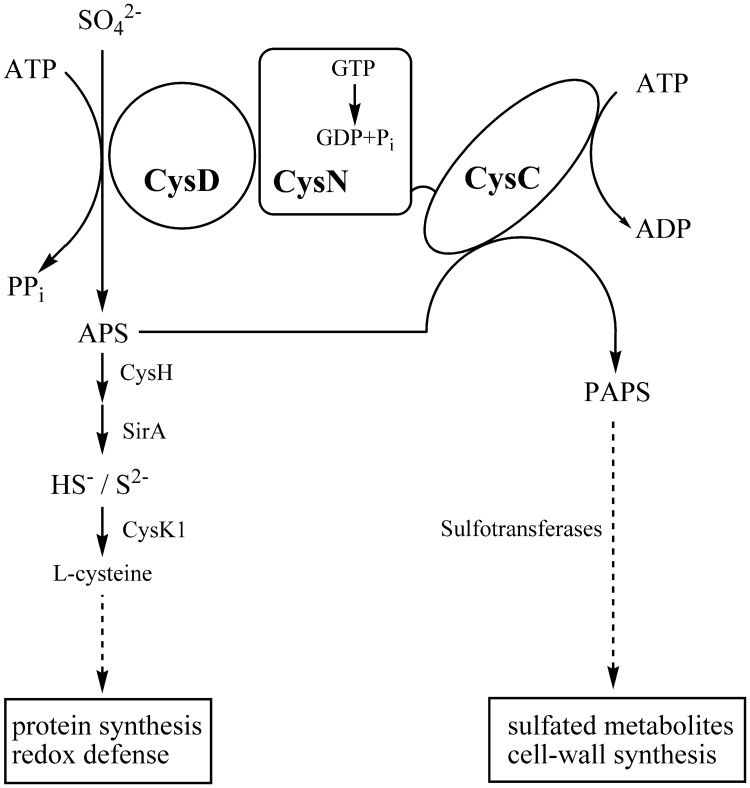
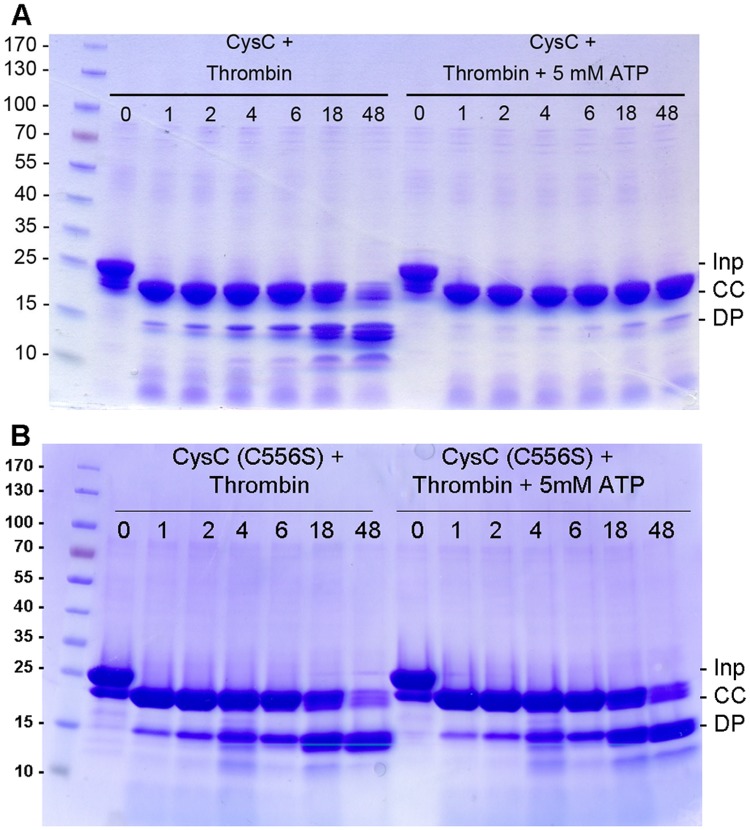
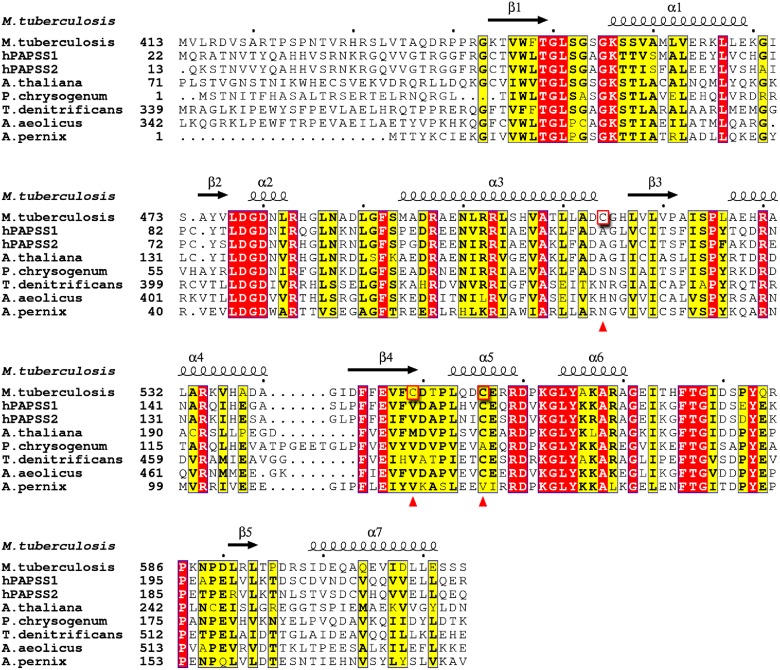
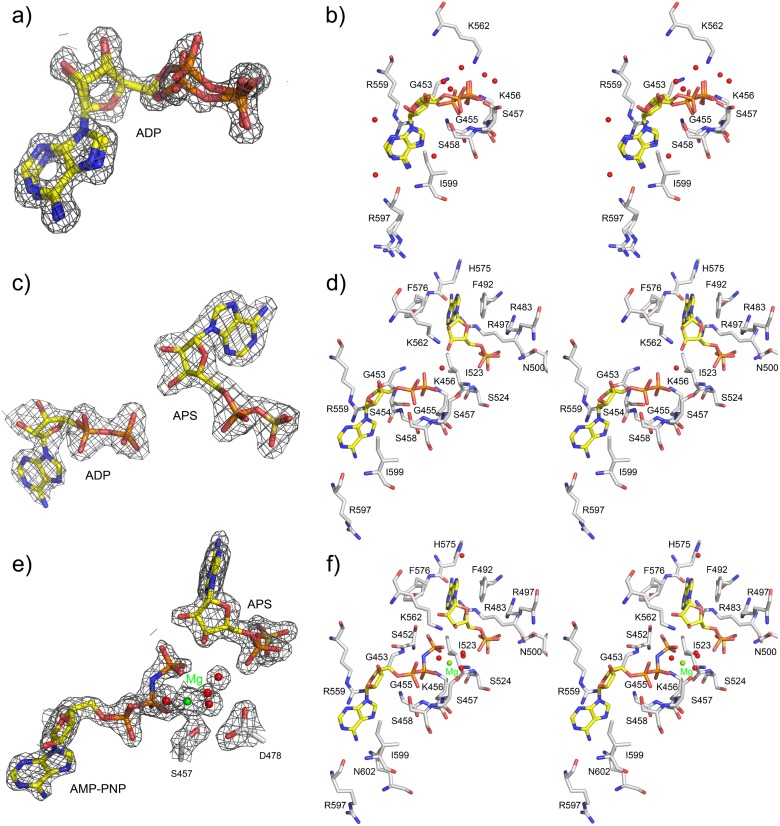
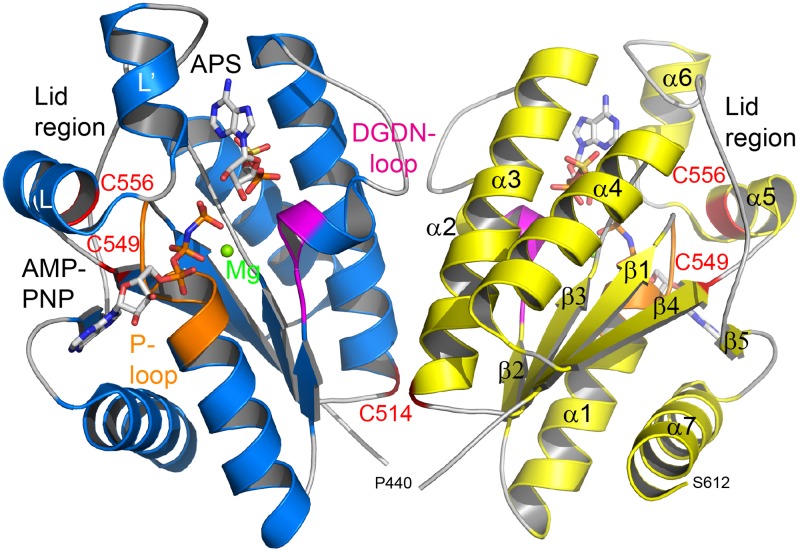
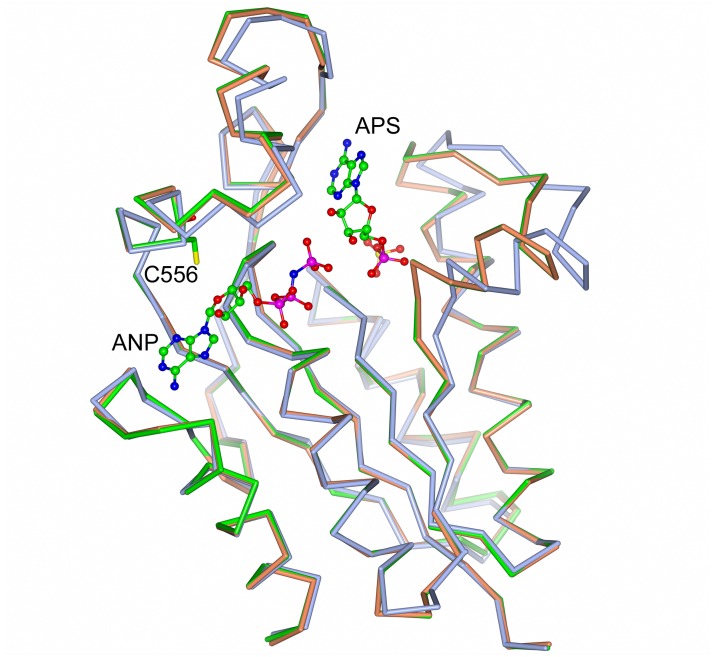
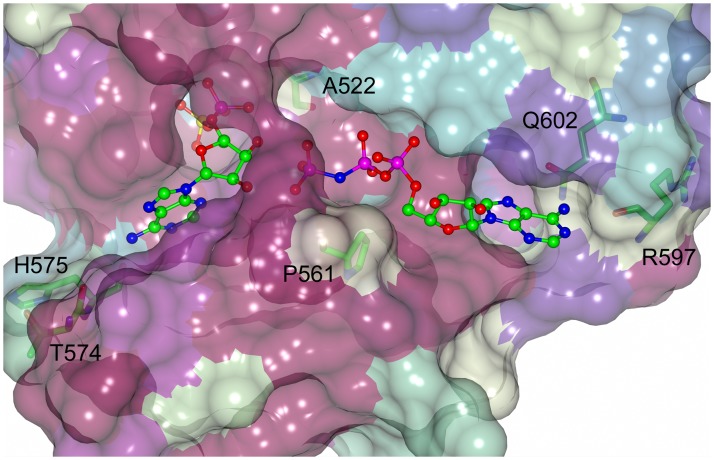
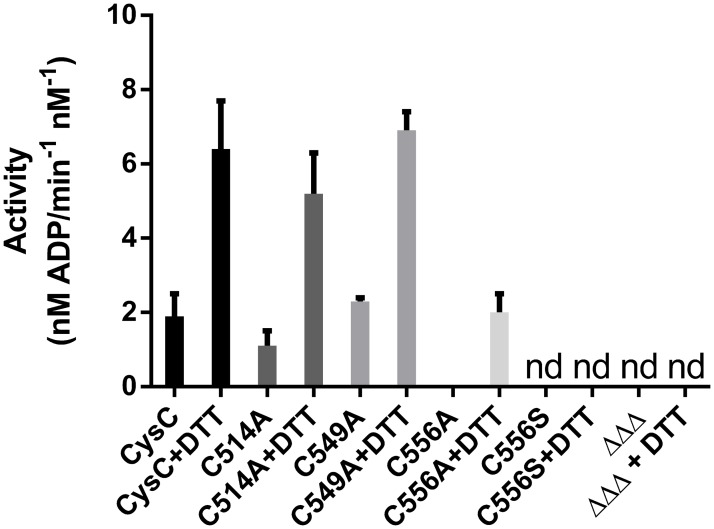
In Mycobacterium tuberculosis the sulfate activating complex provides a key branching point in sulfate assimilation. The complex consists of two polypeptide chains, CysD and CysN. CysD is an ATP sulfurylase that, with the energy provided by the GTPase activity of CysN, forms adenosine-5'-phosphosulfate (APS) which can then enter the reductive branch of sulfate assimilation leading to the biosynthesis of cysteine. The CysN polypeptide chain also contains an APS kinase domain (CysC) that phosphorylates APS leading to 3'-phosphoadenosine-5'-phosphosulfate, the sulfate donor in the synthesis of sulfolipids. We have determined the crystal structures of CysC from M. tuberculosis as a binary complex with ADP, and as ternary complexes with ADP and APS and the ATP mimic AMP-PNP and APS, respectively, to resolutions of 1.5 Å, 2.1 Å and 1.7 Å, respectively. CysC shows the typical APS kinase fold, and the structures provide comprehensive views of the catalytic machinery, conserved in this enzyme family. Comparison to the structure of the human homolog show highly conserved APS and ATP binding sites, questioning the feasibility of the design of specific inhibitors of mycobacterial CysC. Residue Cys556 is part of the flexible lid region that closes off the active site upon substrate binding. Mutational analysis revealed this residue as one of the determinants controlling lid closure and hence binding of the nucleotide substrate.
在结核分枝杆菌中,硫酸盐激活复合物是硫酸盐同化过程中的一个关键分支点。该复合物由两条多肽链CysD和CysN组成。CysD是一种ATP硫酸化酶,它利用CysN的GTPase活性提供的能量形成腺苷-5'-磷酸硫酸酯(APS),然后APS可进入硫酸盐同化的还原分支,导致半胱氨酸的生物合成。CysN多肽链还包含一个APS激酶结构域(CysC),该结构域将APS磷酸化生成3'-磷酸腺苷-5'-磷酸硫酸酯,这是硫脂合成中的硫酸盐供体。我们分别确定了结核分枝杆菌CysC与ADP形成的二元复合物、与ADP和APS形成的三元复合物以及与ATP类似物AMP-PNP和APS形成的三元复合物的晶体结构,分辨率分别为1.5 Å、2.1 Å和1.7 Å。CysC呈现出典型的APS激酶折叠结构,这些结构提供了该酶家族中保守的催化机制的全面视图。与人类同源物的结构比较显示,APS和ATP结合位点高度保守,这对设计结核分枝杆菌CysC特异性抑制剂的可行性提出了质疑。残基Cys556是柔性盖子区域的一部分,在底物结合时会封闭活性位点。突变分析表明,该残基是控制盖子关闭从而控制核苷酸底物结合的决定因素之一。