Kolaczkowska Elzbieta, Jenne Craig N, Surewaard Bas G J, Thanabalasuriar Ajitha, Lee Woo-Yong, Sanz Maria-Jesus, Mowen Kerri, Opdenakker Ghislain, Kubes Paul
1] Department of Physiology and Pharmacology, Calvin, Phoebe and Joan Snyder Institute for Chronic Diseases, University of Calgary, HRIC 3280 Hospital Drive N.W., Calgary, Alberta, Canada T2N 4N1 [2] Department of Evolutionary Immunology, Institute of Zoology, Jagiellonian University, ul. Gronostajowa 9, 30-387 Krakow, Poland [3] Laboratory of Immunobiology, Rega Institute for Medical Research, KU Leuven - University of Leuven, Minderbroedersstraat 10 blok x - bus 1030, 3000 Leuven, Belgium.
Department of Microbiology, Immunology and Infectious Diseases, Calvin, Phoebe and Joan Snyder Institute for Chronic Diseases, University of Calgary, HRIC 3280 Hospital Drive N.W., Calgary, Alberta, Canada T2N 4N1.
Nat Commun. 2015 Mar 26;6:6673. doi: 10.1038/ncomms7673.
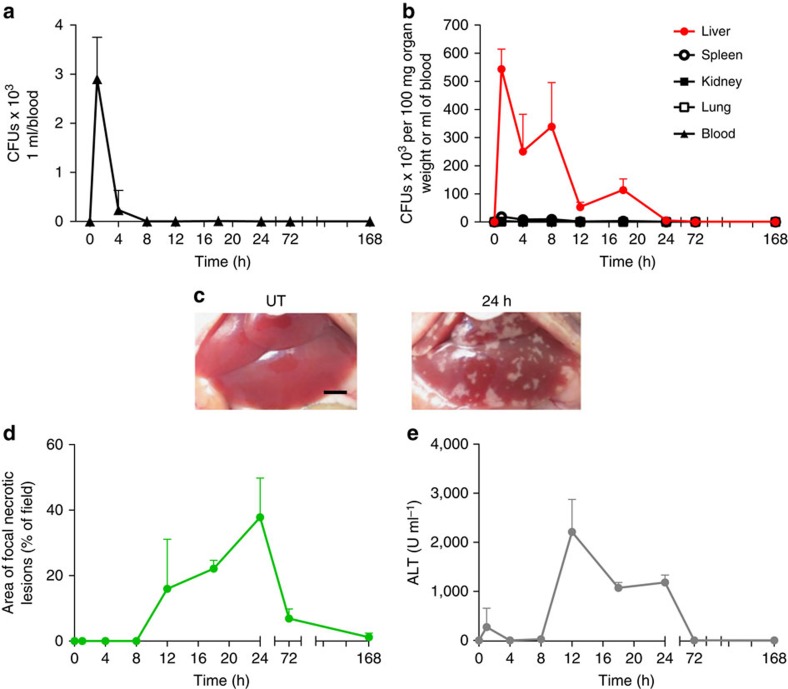
Neutrophil extracellular traps (NETs) composed of DNA decorated with histones and proteases trap and kill bacteria but also injure host tissue. Here we show that during a bloodstream infection with methicillin-resistant Staphylococcus aureus, the majority of bacteria are sequestered immediately by hepatic Kupffer cells, resulting in transient increases in liver enzymes, focal ischaemic areas and a robust neutrophil infiltration into the liver. The neutrophils release NETs into the liver vasculature, which remain anchored to the vascular wall via von Willebrand factor and reveal significant neutrophil elastase (NE) proteolytic activity. Importantly, DNase although very effective at DNA removal, and somewhat effective at inhibiting NE proteolytic activity, fails to remove the majority of histones from the vessel wall and only partly reduces injury. By contrast, inhibition of NET production as modelled by PAD4-deficiency, or prevention of NET formation and proteolytic activity as modelled in NE(-/-) mice prevent collateral host tissue damage.
由带有组蛋白和蛋白酶的DNA组成的中性粒细胞胞外陷阱(NETs)能够捕获并杀死细菌,但也会损伤宿主组织。我们在此表明,在耐甲氧西林金黄色葡萄球菌血流感染期间,大多数细菌会立即被肝脏库普弗细胞隔离,导致肝酶短暂升高、局部缺血区域以及大量中性粒细胞浸润到肝脏中。中性粒细胞将NETs释放到肝脏血管系统中,这些NETs通过血管性血友病因子锚定在血管壁上,并显示出显著的中性粒细胞弹性蛋白酶(NE)蛋白水解活性。重要的是,脱氧核糖核酸酶(DNase)虽然在去除DNA方面非常有效,并且在抑制NE蛋白水解活性方面有一定效果,但无法从血管壁上去除大多数组蛋白,只能部分减轻损伤。相比之下,如通过PAD4缺陷模型模拟的NET产生抑制,或如在NE(-/-)小鼠中模拟的NET形成和蛋白水解活性预防,可防止宿主组织的附带损伤。