Diaz-Miron Jose, Sun Raphael, Choi Pamela, Sommovilla Joshua, Guo Jun, Erwin Christopher R, Mei Junjie, Scott Worthen G, Warner Brad W
Division of Pediatric Surgery, St Louis Children's Hospital, Department of Surgery, Washington University School of Medicine, St Louis, MO.
Division of Neonatology, The Children's Hospital of Philadelphia, Philadelphia, PA.
J Pediatr Surg. 2015 Jun;50(6):948-53. doi: 10.1016/j.jpedsurg.2015.03.014. Epub 2015 Mar 14.
Intestinal adaptation involves villus lengthening, crypt deepening, and increased capillary density following small bowel resection (SBR). Mice lacking the proangiogenic chemokine CXCL5 have normal structural adaptation but impaired angiogenesis. This work evaluates the impact of incomplete adaptive angiogenesis on the functional capacity of the intestine after SBR.
CXCL5 knockout (KO) and C57BL/6 wild-type (WT) mice underwent 50% SBR. Magnetic resonance imaging measured weekly body composition. Intestinal absorptive capacity was evaluated through fecal fat analysis. Gene expression profiles for select macronutrient transporters were measured via RT-PCR. Postoperative crypt and villus measurements were assessed for structural adaptation. Submucosal capillary density was measured through CD31 immunohistochemistry.
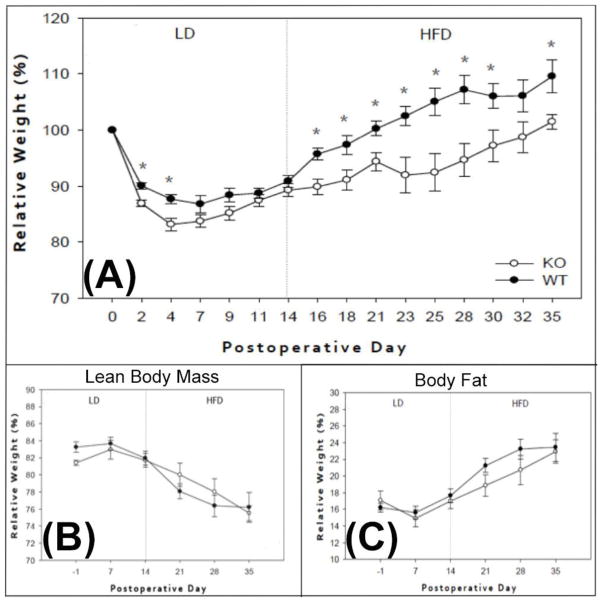
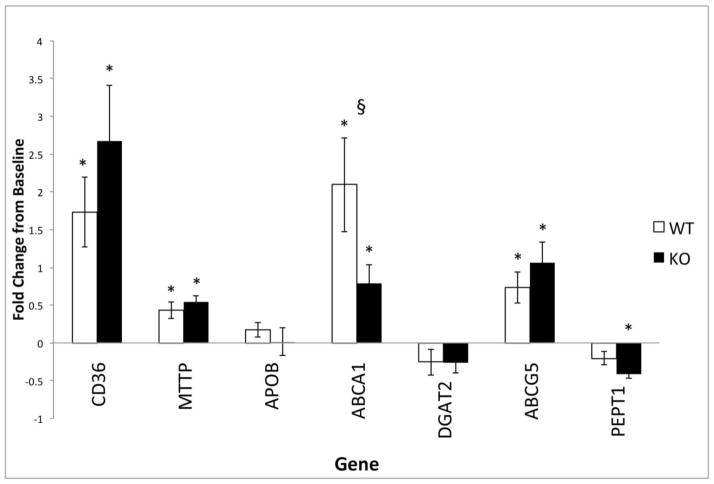
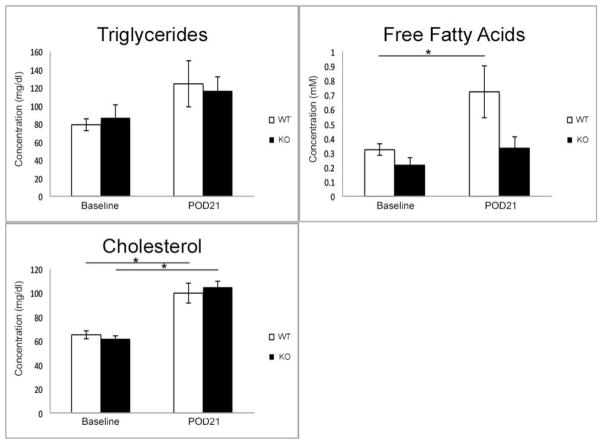
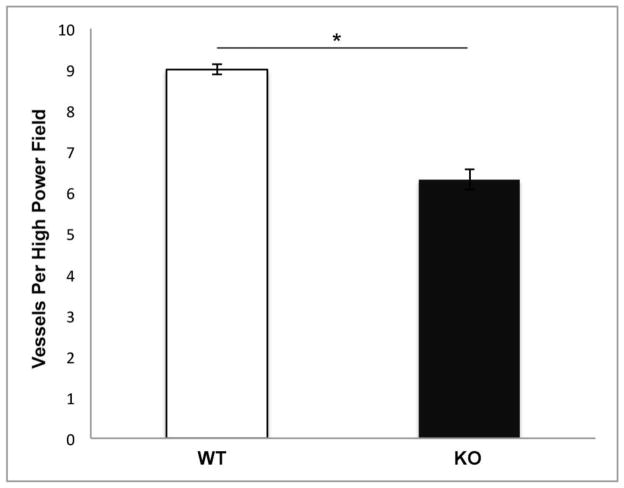
Comparable postoperative weight gain occurred initially. Diminished weight gain, impaired fat absorption, and elevated steatorrhea occurred in KO mice after instituting high-fat diet. Greater postoperative upregulation of ABCA1 fat transporter occurred in WT mice, while PEPT1 protein transporter was significantly downregulated in KO mice. KO mice had impaired angiogenesis but intact structural adaptation.
After SBR, KO mice display an inefficient intestinal absorption profile with perturbed macronutrient transporter expression, impaired fat absorption, and slower postoperative weight gain. In addition to longer villi and deeper crypts, an intact angiogenic response may be required to achieve functional adaptation to SBR.
肠道适应性改变包括小肠切除术后绒毛延长、隐窝加深以及毛细血管密度增加。缺乏促血管生成趋化因子CXCL5的小鼠具有正常的结构适应性,但血管生成受损。本研究评估不完全适应性血管生成对小肠切除术后肠道功能的影响。
CXCL5基因敲除(KO)小鼠和C57BL/6野生型(WT)小鼠接受50%小肠切除术。每周通过磁共振成像测量身体组成。通过粪便脂肪分析评估肠道吸收能力。通过逆转录聚合酶链反应测量特定常量营养素转运蛋白的基因表达谱。评估术后隐窝和绒毛测量结果以判断结构适应性。通过CD31免疫组织化学测量黏膜下毛细血管密度。
术后初期两组小鼠体重增加情况相当。在采用高脂饮食后,KO小鼠体重增加减少、脂肪吸收受损且脂肪泻增加。WT小鼠术后ABCA1脂肪转运蛋白的上调幅度更大,而KO小鼠中PEPT1蛋白转运体显著下调。KO小鼠血管生成受损,但结构适应性正常。
小肠切除术后,KO小鼠表现出肠道吸收效率低下,常量营养素转运蛋白表达紊乱,脂肪吸收受损,术后体重增加缓慢。除了更长的绒毛和更深的隐窝外可能还需要完整的血管生成反应才能实现对小肠切除的功能适应性。