Krishnamurthy Venkata R, Sardar Mohammed Y R, Ying Yu, Song Xuezheng, Haller Carolyn, Dai Erbin, Wang Xiaocong, Hanjaya-Putra Donny, Sun Lijun, Morikis Vasilios, Simon Scott I, Woods Robert J, Cummings Richard D, Chaikof Elliot L
1] Department of Surgery, Center for Drug Discovery and Translational Research, Beth Israel Deaconess Medical Center, Harvard Medical School, 110 Francis Street, Suite 9F, Boston, Massachusetts 02215, USA [2] Wyss Institute of Biologically Inspired Engineering, Harvard University, 110 Francis Street, Suite 9F, Boston, Massachusetts 02115, USA.
Department of Biochemistry, Emory University, Atlanta, Georgia 30322, USA.
Nat Commun. 2015 Mar 31;6:6387. doi: 10.1038/ncomms7387.
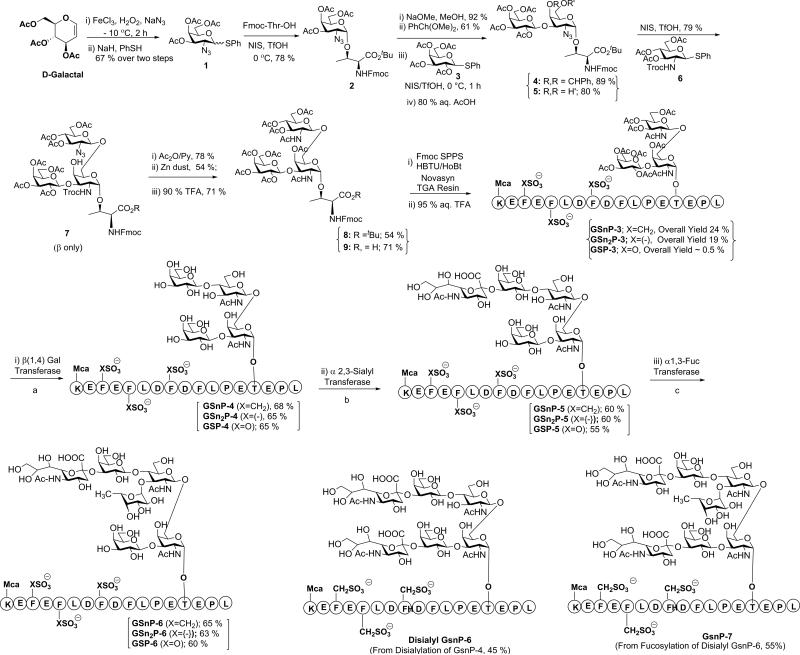
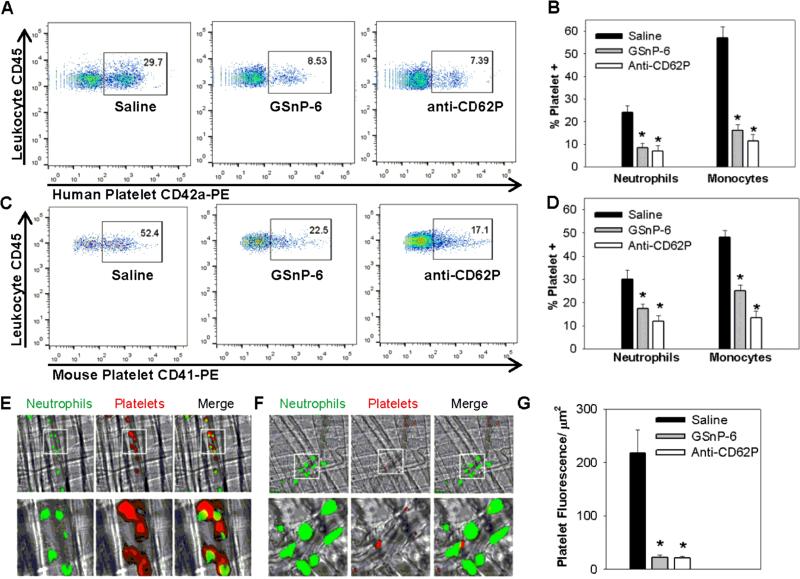
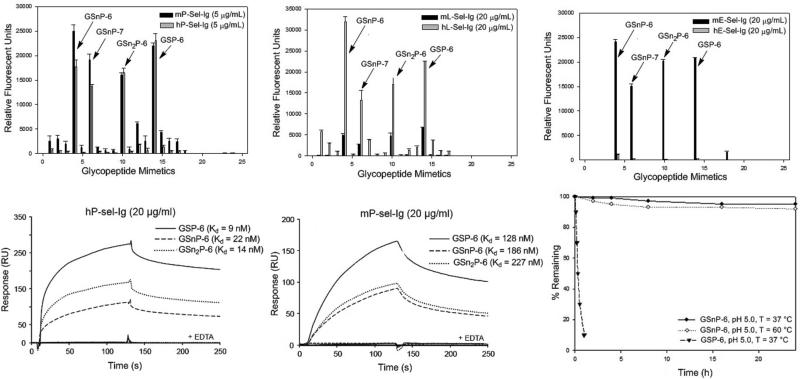
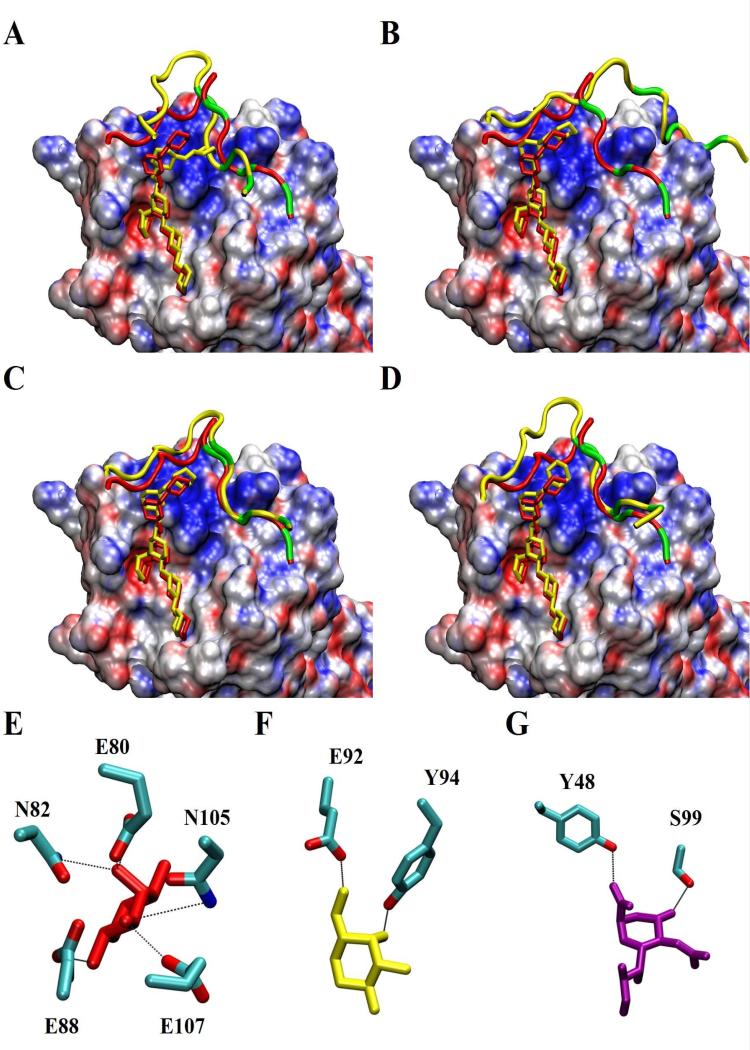
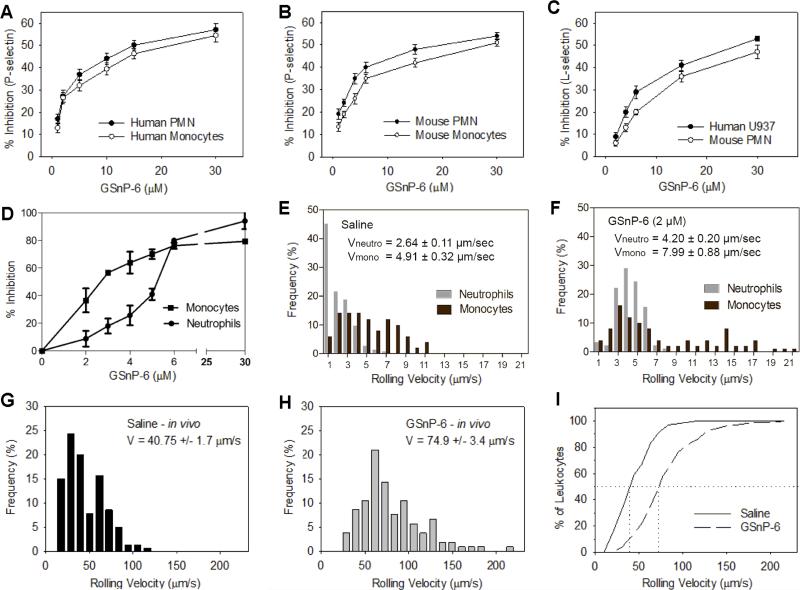
Blockade of P-selectin (P-sel)/PSGL-1 interactions holds significant potential for treatment of disorders of innate immunity, thrombosis and cancer. Current inhibitors remain limited due to low binding affinity or by the recognized disadvantages inherent to chronic administration of antibody therapeutics. Here we report an efficient approach for generating glycosulfopeptide mimics of N-terminal PSGL-1 through development of a stereoselective route for multi-gram scale synthesis of the C2 O-glycan building block and replacement of hydrolytically labile tyrosine sulfates with isosteric sulfonate analogues. Library screening afforded a compound of exceptional stability, GSnP-6, that binds to human P-sel with nanomolar affinity (Kd~22 nM). Molecular dynamics simulation defines the origin of this affinity in terms of a number of critical structural contributions. GSnP-6 potently blocks P-sel/PSGL-1 interactions in vitro and in vivo and represents a promising candidate for the treatment of diseases driven by acute and chronic inflammation.
阻断P-选择素(P-sel)/PSGL-1相互作用在治疗先天性免疫紊乱、血栓形成和癌症方面具有巨大潜力。由于结合亲和力低或抗体疗法长期给药存在公认的缺点,目前的抑制剂仍然有限。在此,我们报告了一种有效的方法,通过开发一种立体选择性路线用于多克规模合成C2 O-聚糖构建块,并使用等排磺酸盐类似物替代水解不稳定的酪氨酸硫酸盐,来生成N端PSGL-1的糖磺肽模拟物。文库筛选得到了一种稳定性极佳的化合物GSnP-6,它以纳摩尔亲和力(Kd~22 nM)与人P-sel结合。分子动力学模拟从多个关键结构贡献方面确定了这种亲和力的来源。GSnP-6在体外和体内均能有效阻断P-sel/PSGL-1相互作用,是治疗由急性和慢性炎症驱动的疾病的有前景的候选药物。