Department of Biology, University of Crete, Voutes University Campus, Heraklion, Crete, Greece.
Department of Biology, University of Crete, Voutes University Campus, Heraklion, Crete, Greece; Botanical Garden, University of Crete, Gallos Campus, Rethymnon, Greece.
PLoS One. 2015 Mar 31;10(3):e0121325. doi: 10.1371/journal.pone.0121325. eCollection 2015.
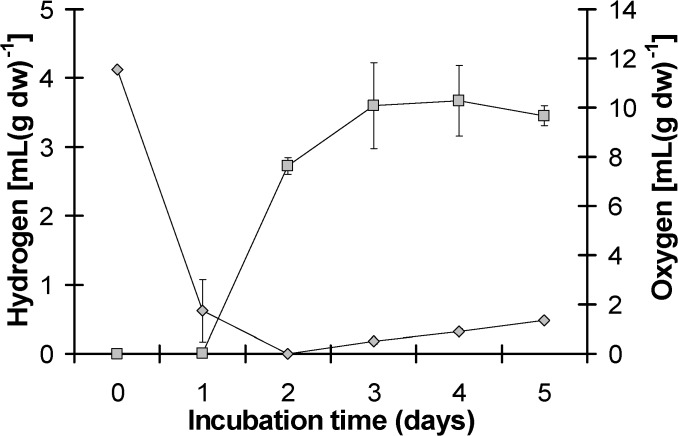
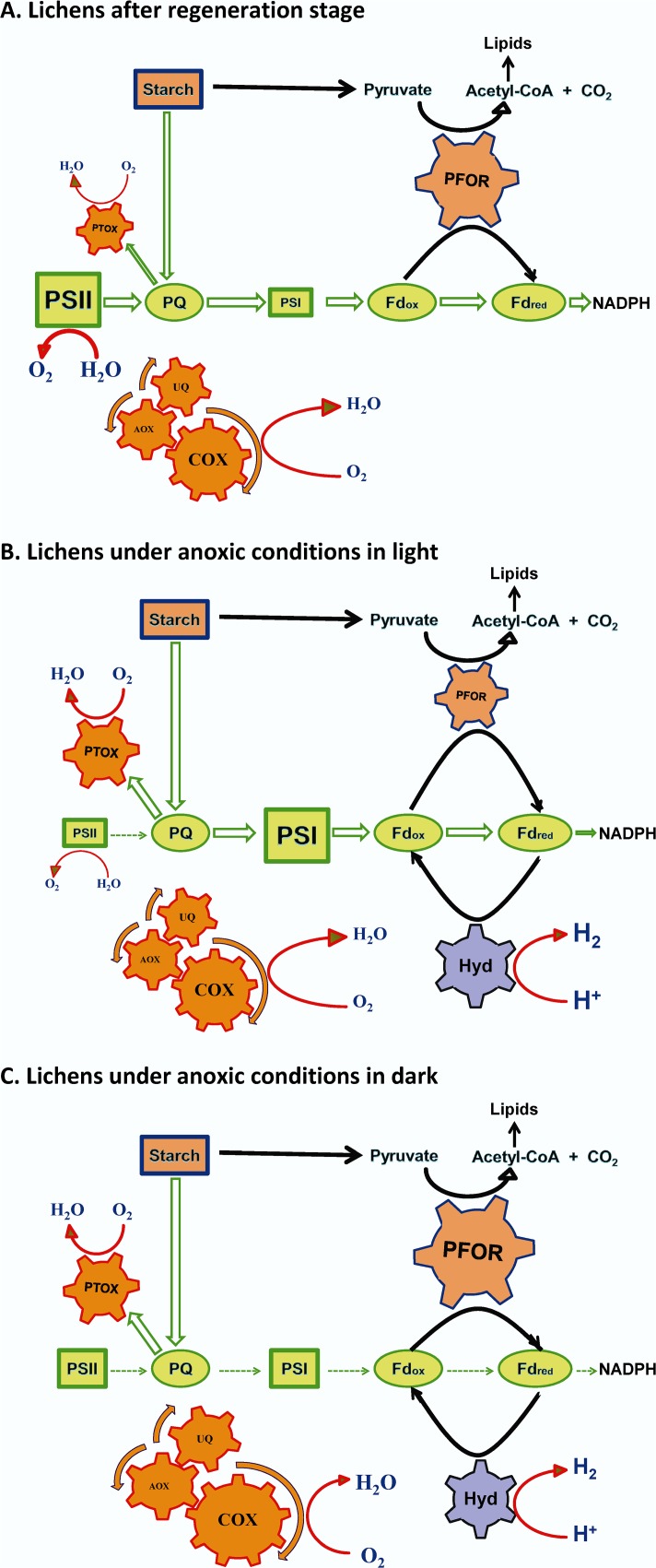
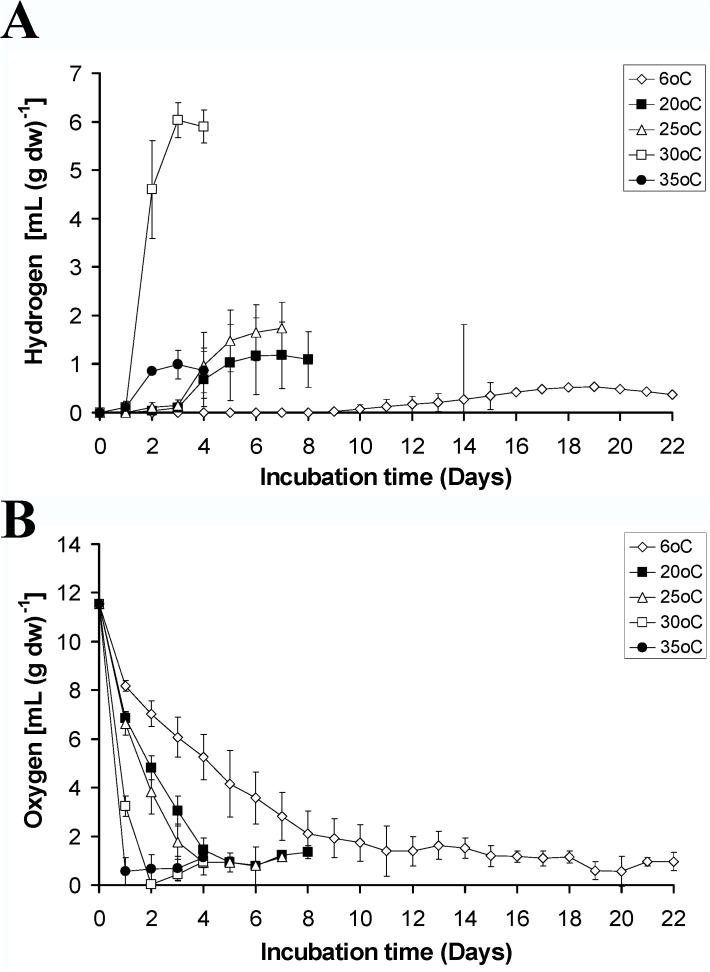
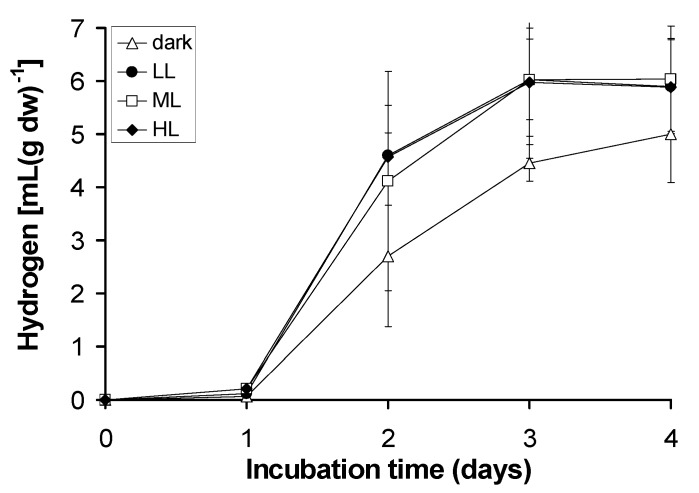
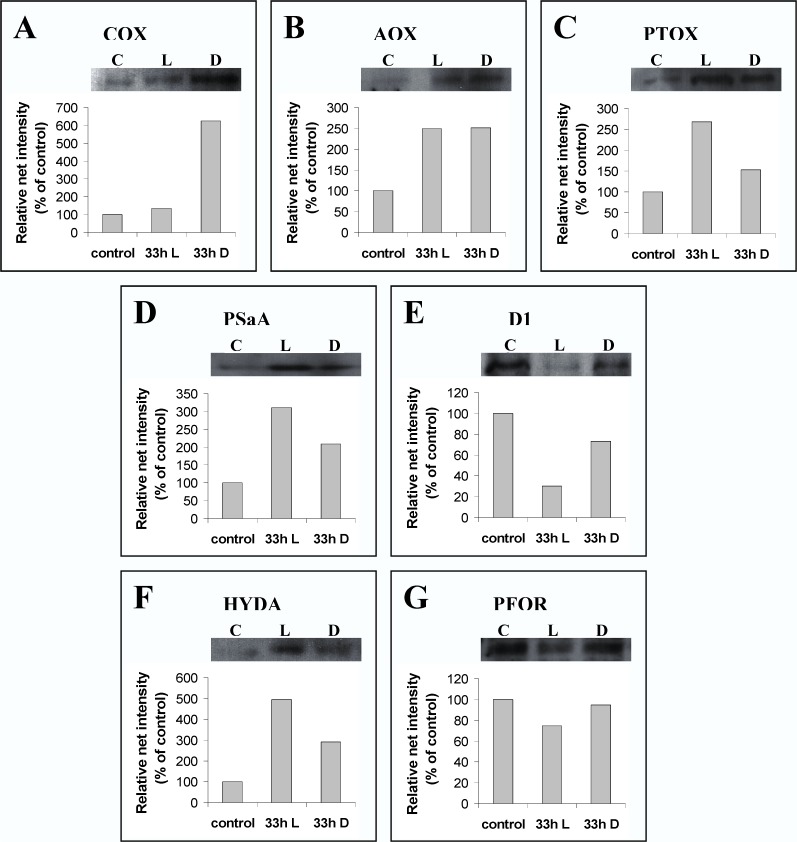
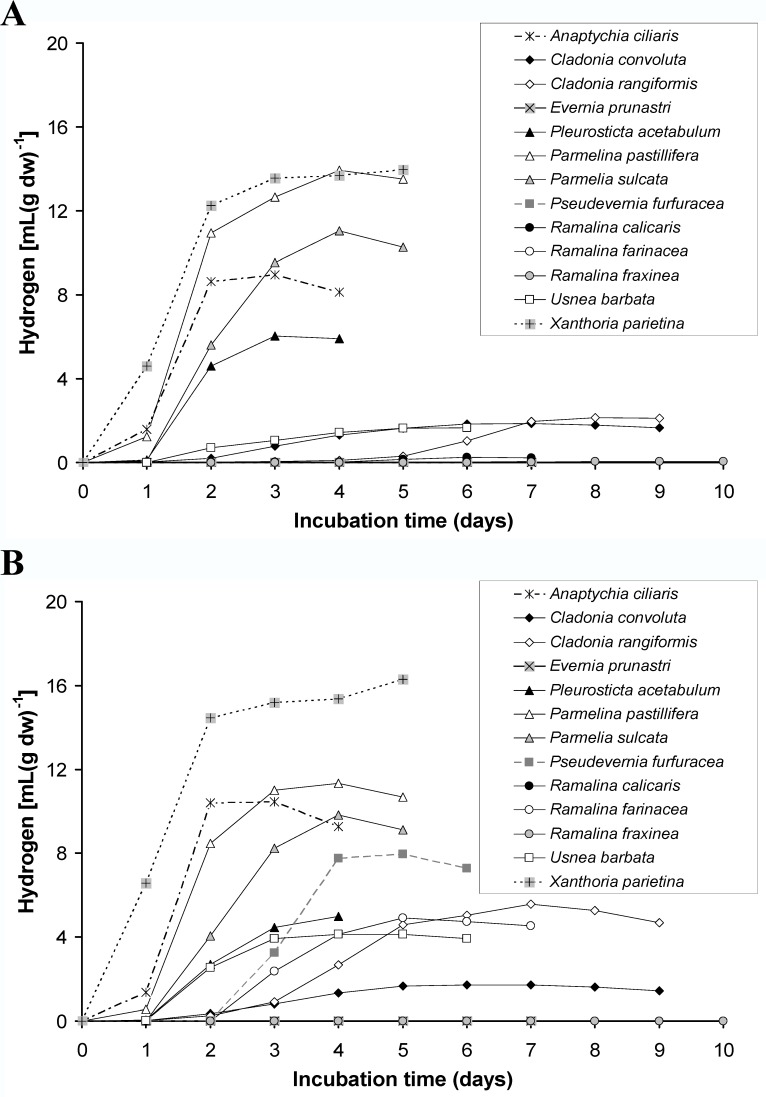
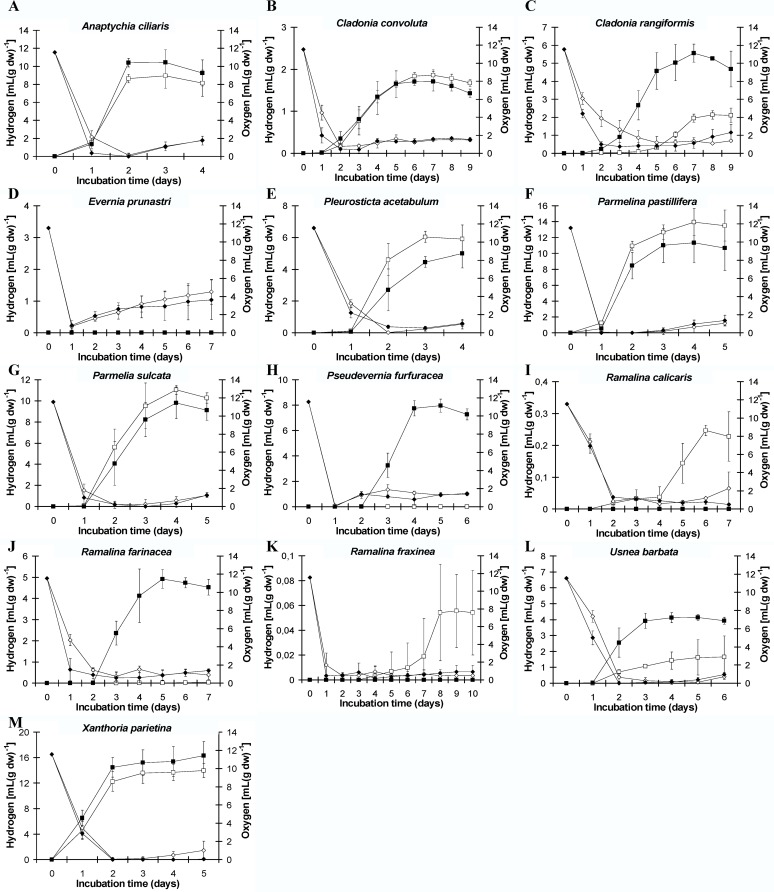
Hydrogen is a promising future energy source. Although the ability of green algae to produce hydrogen has long been recognized (since 1939) and several biotechnological applications have been attempted, the greatest obstacle, being the O2-sensitivity of the hydrogenase enzyme, has not yet been overcome. In the present contribution, 75 years after the first report on algal hydrogen production, taking advantage of a natural mechanism of oxygen balance, we demonstrate high hydrogen yields by lichens. Lichens have been selected as the ideal organisms in nature for hydrogen production, since they consist of a mycobiont and a photobiont in symbiosis. It has been hypothesized that the mycobiont's and photobiont's consumption of oxygen (increase of COX and AOX proteins of mitochondrial respiratory pathways and PTOX protein of chrolorespiration) establishes the required anoxic conditions for the activation of the phycobiont's hydrogenase in a closed system. Our results clearly supported the above hypothesis, showing that lichens have the ability to activate appropriate bioenergetic pathways depending on the specific incubation conditions. Under light conditions, they successfully use the PSII-dependent and the PSII-independent pathways (decrease of D1 protein and parallel increase of PSaA protein) to transfer electrons to hydrogenase, while under dark conditions, lichens use the PFOR enzyme and the dark fermentative pathway to supply electrons to hydrogenase. These advantages of lichen symbiosis in combination with their ability to survive in extreme environments (while in a dry state) constitute them as unique and valuable hydrogen producing natural factories and pave the way for future biotechnological applications.
氢气是一种很有前途的未来能源。尽管绿藻产氢的能力早已得到认可(自 1939 年以来),并且已经尝试了几种生物技术应用,但最大的障碍——氢化酶对氧气的敏感性,尚未克服。在本文中,在首次报道藻类产氢 75 年后,我们利用氧气平衡的自然机制,展示了地衣产生的高氢气产量。地衣被选为自然界中产生氢气的理想生物,因为它们由真菌共生体和光合共生体组成。有人假设,真菌共生体和光合共生体对氧气的消耗(增加线粒体呼吸途径的 COX 和 AOX 蛋白以及叶绿体呼吸的 PTOX 蛋白)为在封闭系统中激活藻胆体的氢化酶创造了所需的缺氧条件。我们的结果清楚地支持了上述假设,表明地衣有能力根据特定的孵育条件激活适当的生物能途径。在光照条件下,它们成功地使用 PSII 依赖和 PSII 非依赖途径(D1 蛋白减少和 PSaA 蛋白平行增加)将电子传递给氢化酶,而在黑暗条件下,地衣使用 PFOR 酶和黑暗发酵途径为氢化酶提供电子。地衣共生的这些优势,再加上它们在极端环境(干燥状态下)中生存的能力,使它们成为独特而有价值的产氢天然工厂,并为未来的生物技术应用铺平了道路。