Guedon Janet Tai, Luo Kun, Zhang Hong, Markham Richard B
W. Harry Feinstone Department of Molecular Microbiology and Immunology, Johns Hopkins Bloomberg School of Public Health, Baltimore, MD.
J Acquir Immune Defic Syndr. 2015 Jul 1;69(3):278-85. doi: 10.1097/QAI.0000000000000609.
Poor adherence to prevention regimens for gel-based anti-HIV-1 microbicides has been a major obstacle to more effective pre-exposure prophylaxis. Concern persists that the antiretroviral drug containing microbicides might promote development of antiretroviral resistance.
Using in vitro transwell systems and a humanized mouse model of HIV-1 sexual transmission, we examined, as candidate microbicides, antibodies targeting the heterodimeric leukocyte function-associated antigen 1 (LFA-1), a non-virally encoded protein acquired by the virus that also plays a critical role cell movement across endothelial and epithelial barriers. LFA-1-specific single domain variable regions from alpaca heavy-chain only antibodies (VHH) were identified and evaluated for their ability to inhibit HIV-1 transmission in the in vitro transwell system.
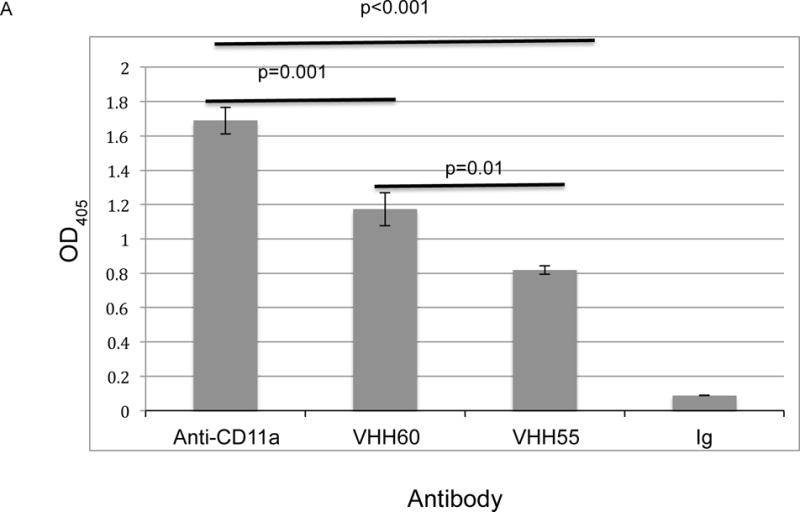
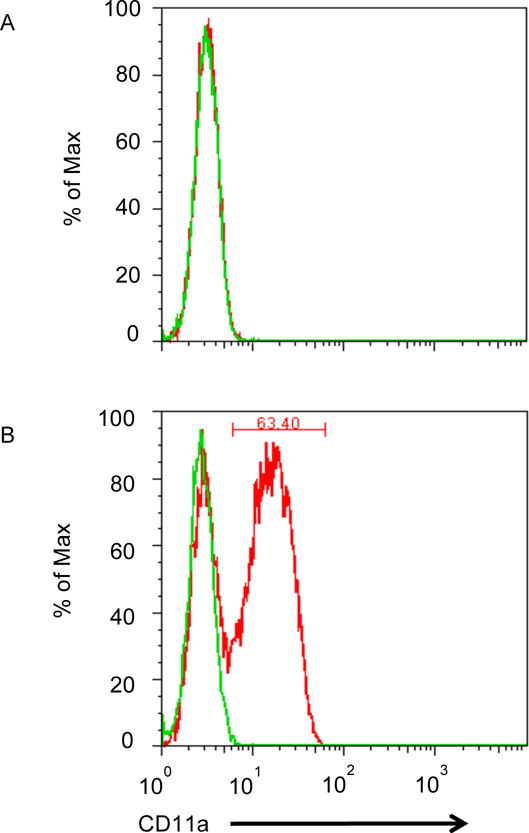
Monoclonal antibodies targeting the CD11a and CD18 components of LFA-1 significantly reduced cell-free and cell-associated HIV-1 transmission in the in vitro transwell culture system and prevented virus transmission in the humanized mouse model of vaginal transmission. The broadly neutralizing monoclonal antibody b12 was unable to block transmission of cell-free virus. CD11a-specific VHH were isolated and expressed and the purified variable region protein domains reduced in vitro transepithelial transmission with an efficacy comparable with that of the CD11a monoclonal antibody.
Targeting integrins acquired by HIV-1 during budding and which are critical to interactions between epithelial cells and lymphocytes can reduce viral movement across epithelial barriers and prevent transmission in a humanized mouse model of sexual transmission. VHH capable of being produced by transformed bacteria can significantly reduce transepithelial virus transmission in in vitro model systems.
基于凝胶的抗HIV-1杀微生物剂预防方案的依从性差一直是更有效暴露前预防的主要障碍。人们一直担心含有抗逆转录病毒药物的杀微生物剂可能会促进抗逆转录病毒耐药性的发展。
我们使用体外transwell系统和HIV-1性传播的人源化小鼠模型,研究了靶向异二聚体白细胞功能相关抗原1(LFA-1)的抗体作为候选杀微生物剂,LFA-1是一种病毒获得的非病毒编码蛋白,在细胞跨内皮和上皮屏障的移动中也起关键作用。鉴定了来自羊驼重链单克隆抗体(VHH)的LFA-1特异性单域可变区,并评估了它们在体外transwell系统中抑制HIV-1传播的能力。
靶向LFA-1的CD11a和CD18成分的单克隆抗体在体外transwell培养系统中显著降低了无细胞和细胞相关的HIV-1传播,并在阴道传播的人源化小鼠模型中阻止了病毒传播。广泛中和的单克隆抗体b12无法阻断无细胞病毒的传播。分离并表达了CD11a特异性VHH,纯化的可变区蛋白结构域降低了体外跨上皮传播,其效果与CD11a单克隆抗体相当。
靶向HIV-1出芽过程中获得的整合素,且该整合素对上皮细胞与淋巴细胞之间的相互作用至关重要,可以减少病毒跨上皮屏障的移动,并在性传播的人源化小鼠模型中预防传播。能够由转化细菌产生的VHH可以在体外模型系统中显著降低跨上皮病毒传播。