Weinstock Mathew, Aljawai Yosra, Morgan Elizabeth A, Laubach Jacob, Gannon Muriel, Roccaro Aldo M, Varga Cindy, Mitsiades Constantine S, Paba-Prada Claudia, Schlossman Robert, Munshi Nikhil, Anderson Kenneth C, Richardson Paul P, Weller Edie, Ghobrial Irene M
Dana-Farber Cancer Institute, Harvard Medical School, Boston, MA, USA.
Beth Israel Deaconess, Harvard Medical School, Boston, MA, USA.
Br J Haematol. 2015 Jun;169(6):851-8. doi: 10.1111/bjh.13383. Epub 2015 Apr 1.
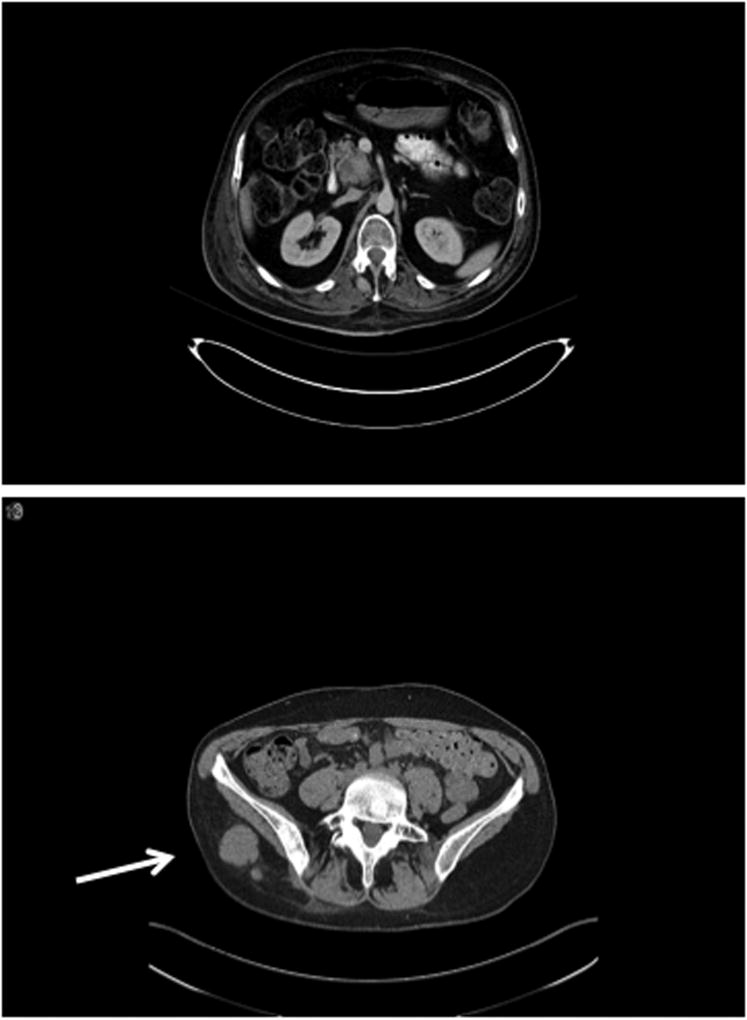
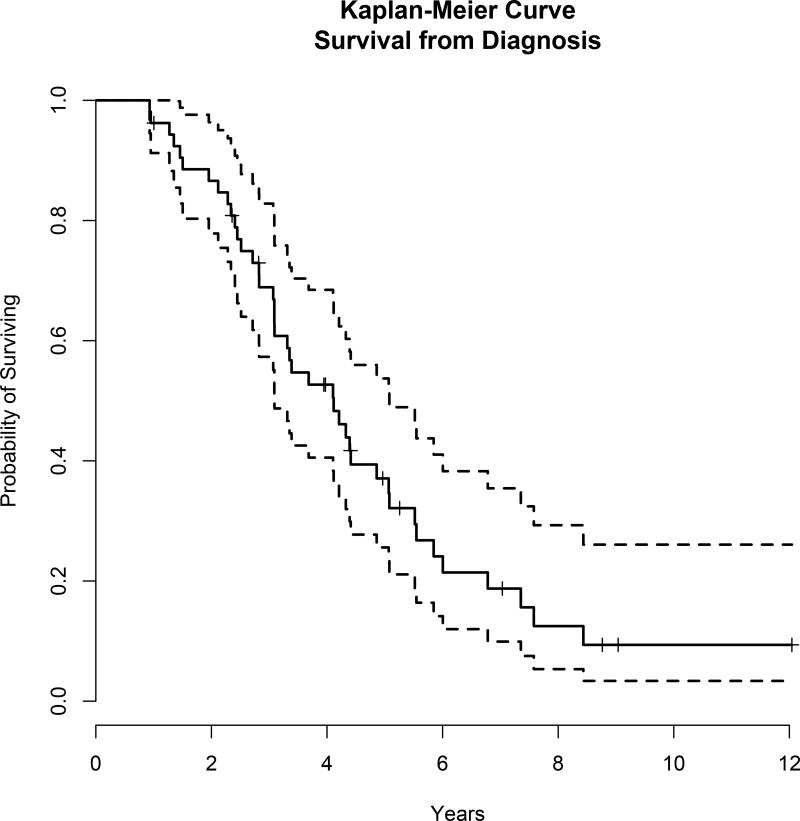
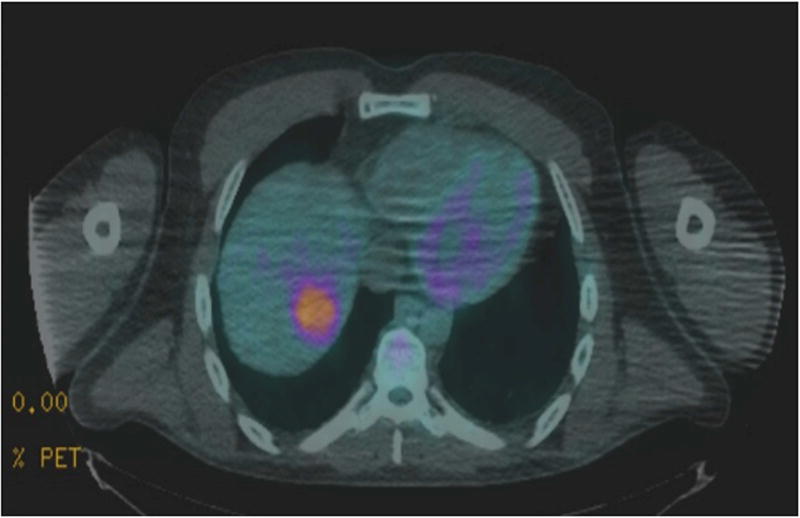
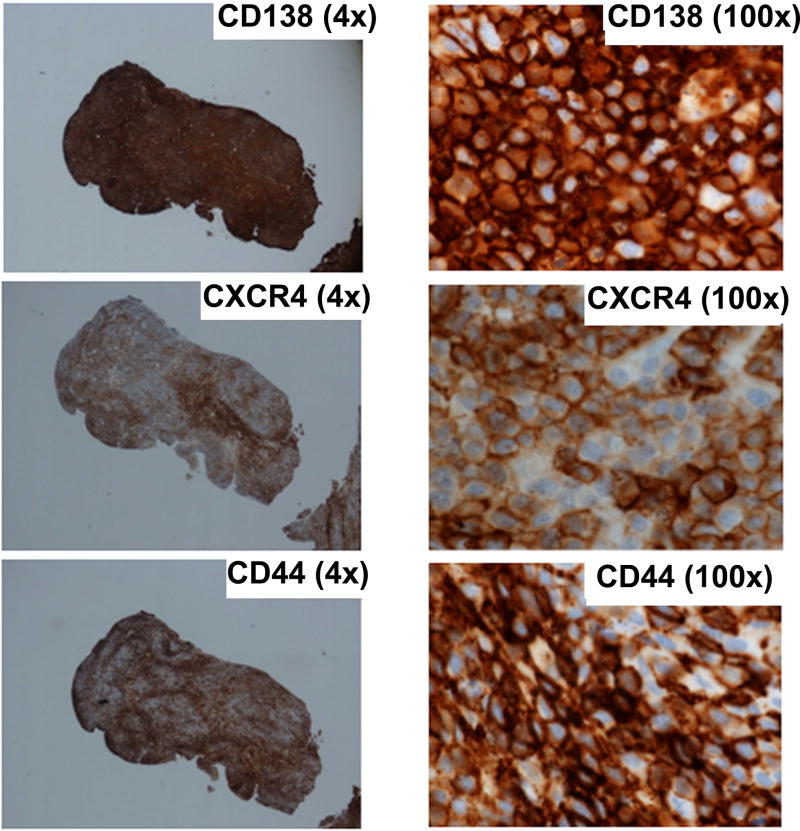
Extramedullary disease (EMD), defined as an infiltrate of clonal plasma cells at an anatomic site distant from the bone marrow, is an uncommon manifestation of multiple myeloma. Six hundred and sixty-three consecutive patients with multiple myeloma who underwent stem cell transplantation between January 2005 and December 2011 were assessed for the presence of EMD. A cohort of 55 patients with biopsy-proven EMD was identified, comprising 8·3% of the total study population. EMD was present at the time of diagnosis in 14·5% of cases and at the time of relapse in 76% of patients. The most common EMD presentations at relapse were liver involvement and pleural effusions. EMD specimens had high expression of CD44 (92%) and moderate expression of CXCR4. The median overall survival from time of myeloma diagnosis was 4·1 years (95% CI: 3·1, 5·1) and the median overall survival from time of EMD diagnosis was 1·3 years (95% CI: 0·8, 2·3). This report demonstrates that the incidence of EMD has not increased with the introduction of novel agents and stem cell transplantation. The most common EMD presentations in the relapsed setting were liver and pleural fluid. The presence of CD44 and CXCR4 expression may represent new markers of EMD that warrant further investigation.
髓外疾病(EMD)定义为克隆性浆细胞在远离骨髓的解剖部位浸润,是多发性骨髓瘤的一种罕见表现。对2005年1月至2011年12月期间接受干细胞移植的663例连续性多发性骨髓瘤患者进行了EMD存在情况的评估。确定了一组55例经活检证实为EMD的患者,占总研究人群的8.3%。14.5%的病例在诊断时存在EMD,76%的患者在复发时出现EMD。复发时最常见的EMD表现为肝脏受累和胸腔积液。EMD标本中CD44高表达(92%),CXCR4中度表达。从骨髓瘤诊断时间起的中位总生存期为4.1年(95%CI:3.1,5.1),从EMD诊断时间起的中位总生存期为1.3年(95%CI:0.8,2.3)。本报告表明,新型药物和干细胞移植的引入并未使EMD的发病率增加。复发时最常见的EMD表现为肝脏和胸腔积液。CD44和CXCR4表达的存在可能代表EMD的新标志物,值得进一步研究。