Department of Psychiatry, Friedman Brain Institute, Icahn School of Medicine at Mount Sinai, New York, New York, 10029, United States of America.
Brudnick Neuropsychiatric Research Institute, University of Massachusetts Medical School, Worcester, Massachusetts, 01604, United States of America.
PLoS One. 2015 Apr 7;10(4):e0121252. doi: 10.1371/journal.pone.0121252. eCollection 2015.
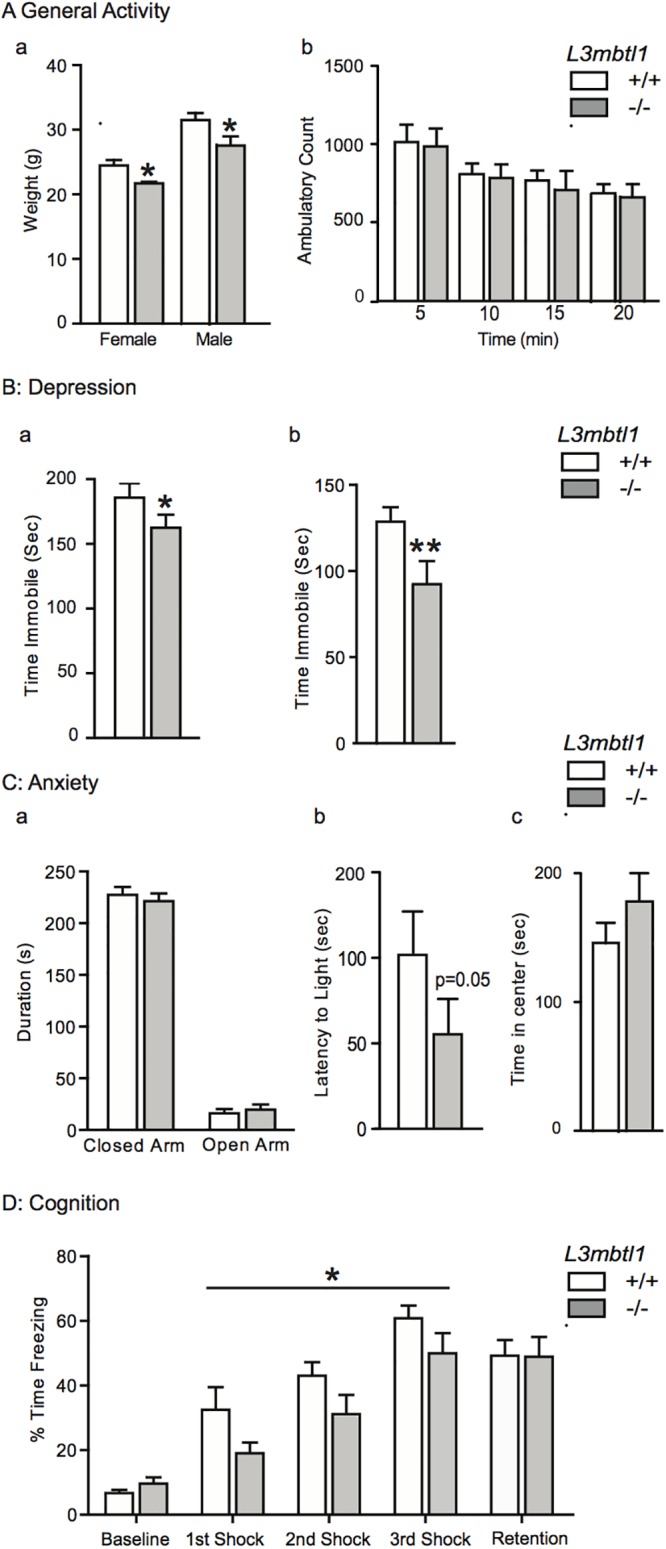
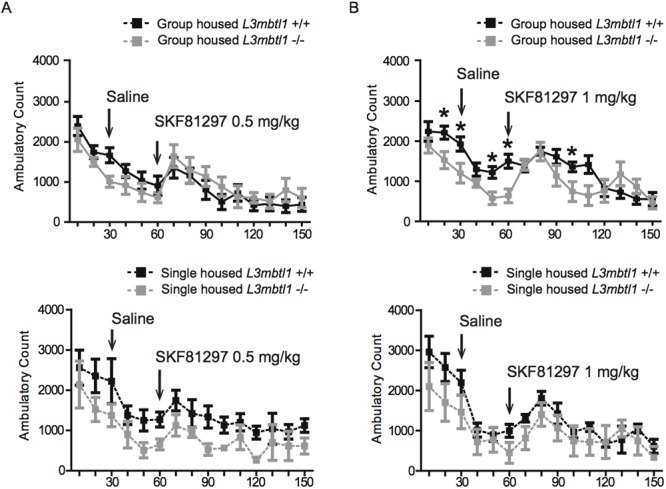
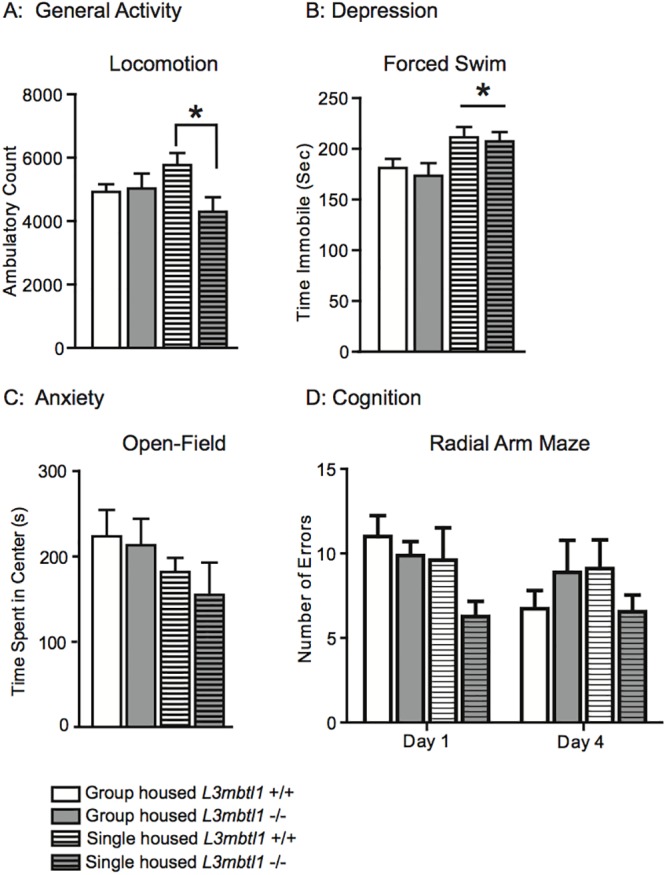
Alterations in histone lysine methylation and epigenetic regulators of gene expression could play a role in the neurobiology and treatment of patients diagnosed with mood spectrum disorder, including depression and anxiety. Mutations and altered expression of various lysine methyltransferases (KMTs) and demethylases (KDMs) have been linked to changes in motivational and emotional behaviors in preclinical model systems. However, it is not known whether regulators operating downstream of histone lysine methylation could affect mood-related behavior. Malignant Brain Tumor (MBT) domain 'chromatin reader' proteins bind to methylated histone lysine residues and associate with chromatin remodeling complexes to facilitate or repress gene expression. MBT proteins, including the founding member, L3mbtl1, maintain high levels of expression in neurons of the mature brain. Here, we exposed L3mbtl1 null mutant mice to a wide range of tests exploring cognition and mood-relevant behaviors at baseline and in the context of social isolation, as a stressor to elicit depression-related behavior in susceptible mice. L3mbtl1 loss-of-function was associated with significant decreases in depression and and anxiety in some of the behavioral paradigms. This was not associated with a more generalized neurological dysfunction because cognition and memory remained unaltered in comparison to controls. These findings warrant further investigations on the role of MBT chromatin reader proteins in the context of emotional and affective behaviors.
组蛋白赖氨酸甲基化和基因表达的表观遗传调控因子的改变可能在情绪谱障碍(包括抑郁和焦虑)患者的神经生物学和治疗中发挥作用。在临床前模型系统中,各种赖氨酸甲基转移酶(KMT)和去甲基酶(KDM)的突变和表达改变与动机和情绪行为的变化有关。然而,尚不清楚组蛋白赖氨酸甲基化下游的调节因子是否会影响与情绪相关的行为。恶性脑肿瘤(MBT)结构域“染色质阅读器”蛋白与甲基化组蛋白赖氨酸残基结合,并与染色质重塑复合物相关联,以促进或抑制基因表达。MBT 蛋白,包括创始成员 L3mbtl1,在成熟大脑的神经元中保持高水平的表达。在这里,我们使 L3mbtl1 缺失突变小鼠暴露于广泛的测试中,以探索基线和社会隔离(作为引发易感小鼠抑郁相关行为的应激源)时的认知和与情绪相关的行为。L3mbtl1 功能丧失与一些行为范式中的抑郁和焦虑显著减少有关。这与更普遍的神经功能障碍无关,因为与对照组相比,认知和记忆保持不变。这些发现证明了 MBT 染色质阅读器蛋白在情感和情感行为中的作用值得进一步研究。