Balanovsky Oleg, Zhabagin Maxat, Agdzhoyan Anastasiya, Chukhryaeva Marina, Zaporozhchenko Valery, Utevska Olga, Highnam Gareth, Sabitov Zhaxylyk, Greenspan Elliott, Dibirova Khadizhat, Skhalyakho Roza, Kuznetsova Marina, Koshel Sergey, Yusupov Yuldash, Nymadawa Pagbajabyn, Zhumadilov Zhaxybay, Pocheshkhova Elvira, Haber Marc, Zalloua Pierre A, Yepiskoposyan Levon, Dybo Anna, Tyler-Smith Chris, Balanovska Elena
Vavilov Institute of General Genetics, Russian Academy of Sciences, Moscow, Russia; Research Centre for Medical Genetics, Russian Academy of Sciences, Moscow, Russia.
Vavilov Institute of General Genetics, Russian Academy of Sciences, Moscow, Russia; Center for Life Sciences, Nazarbayev University, Astana, Republic of Kazakhstan.
PLoS One. 2015 Apr 7;10(4):e0122968. doi: 10.1371/journal.pone.0122968. eCollection 2015.
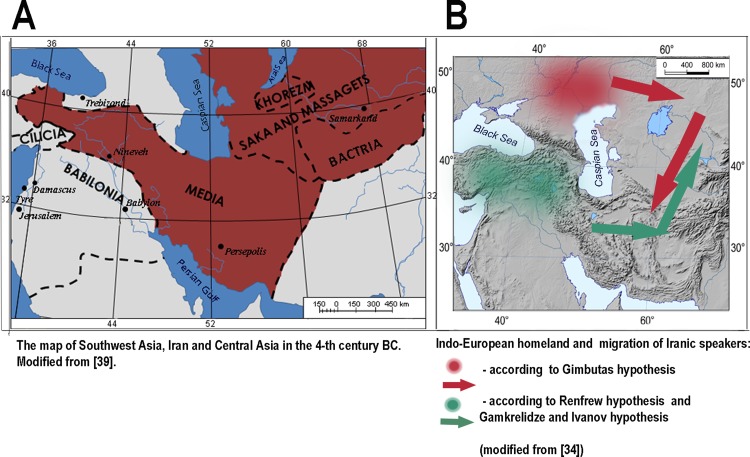
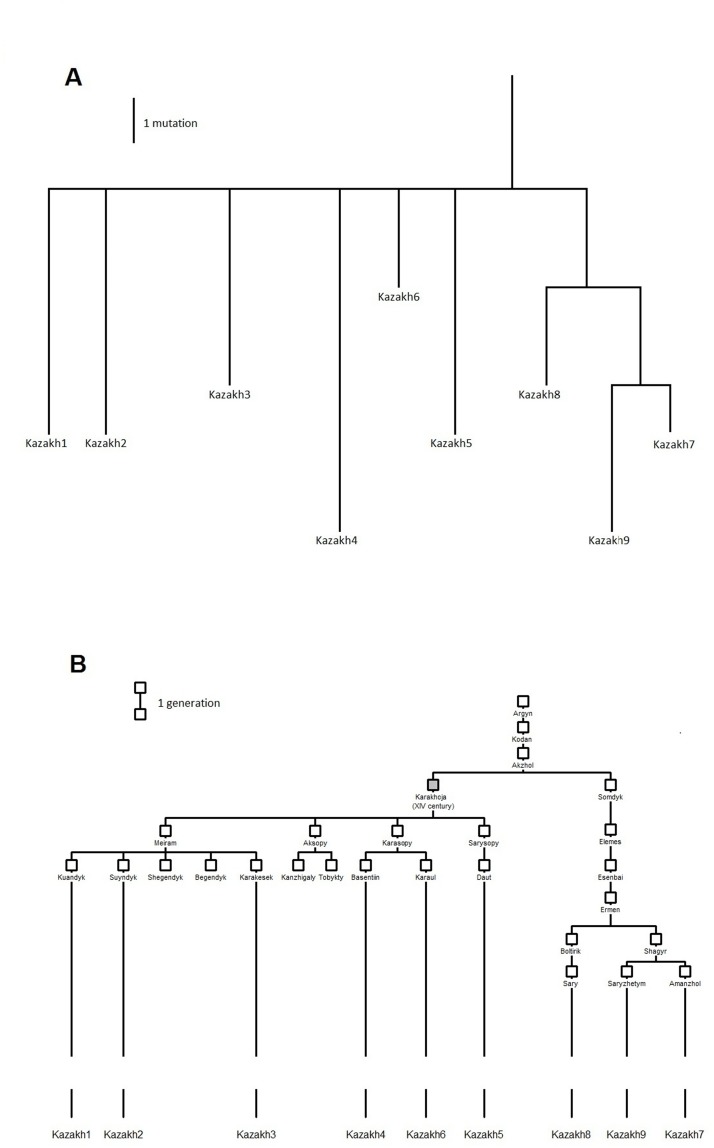
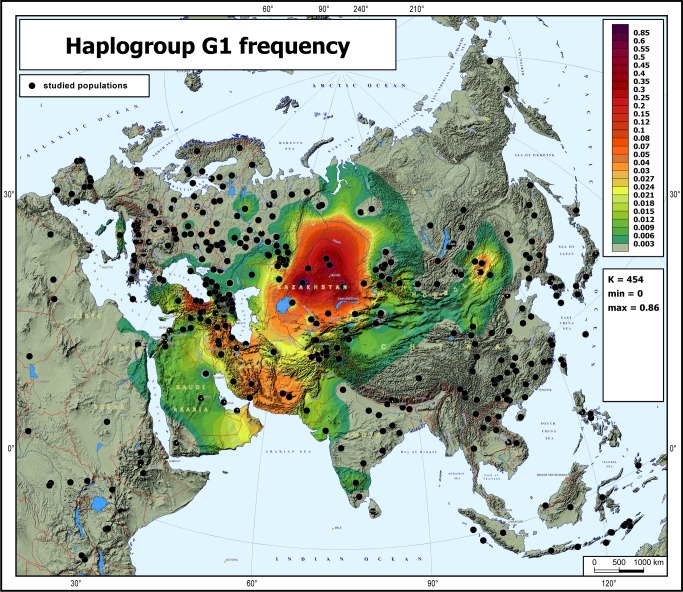
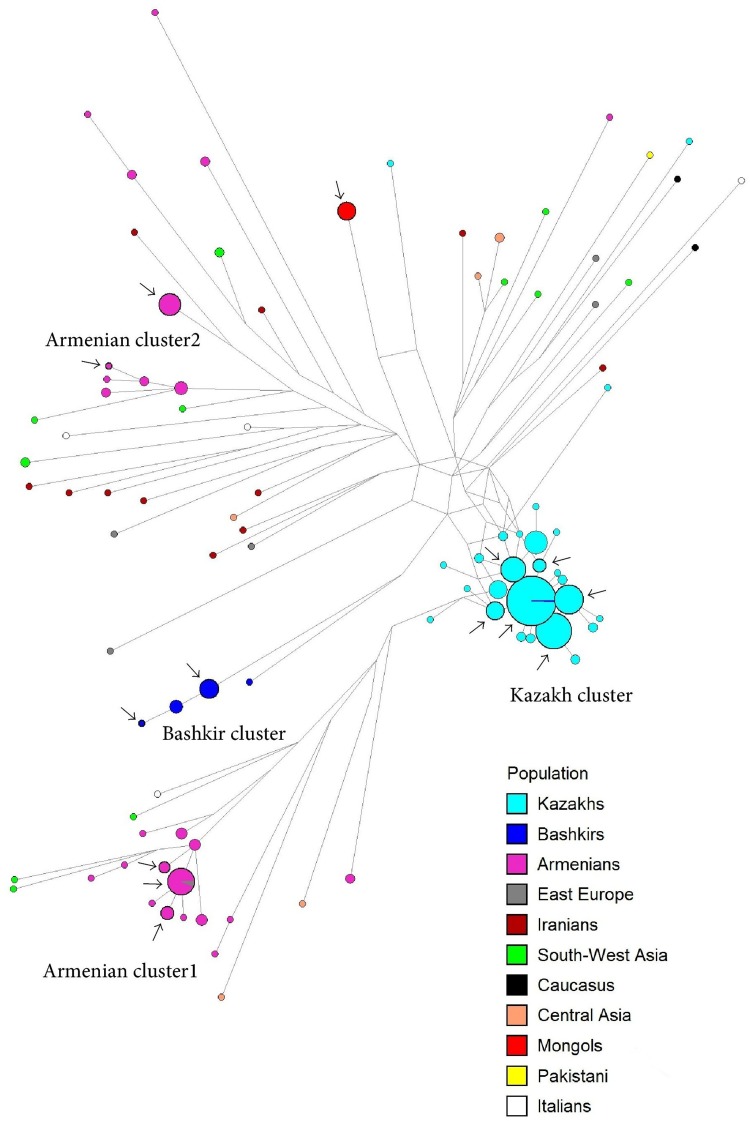
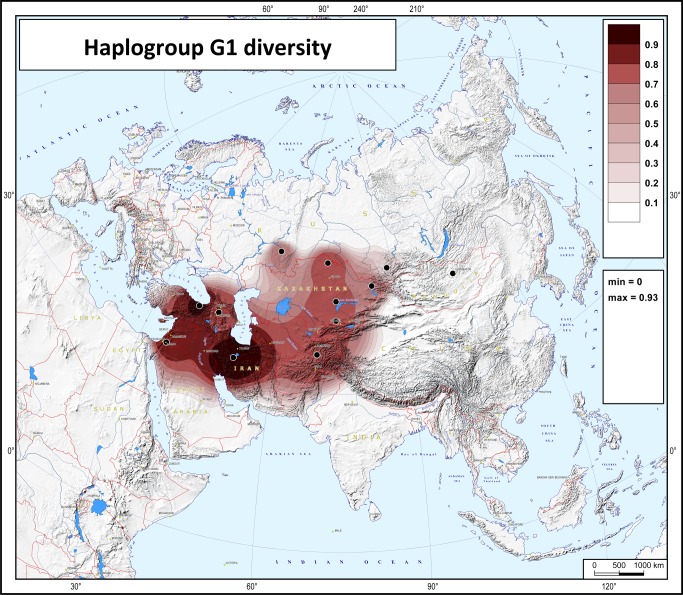
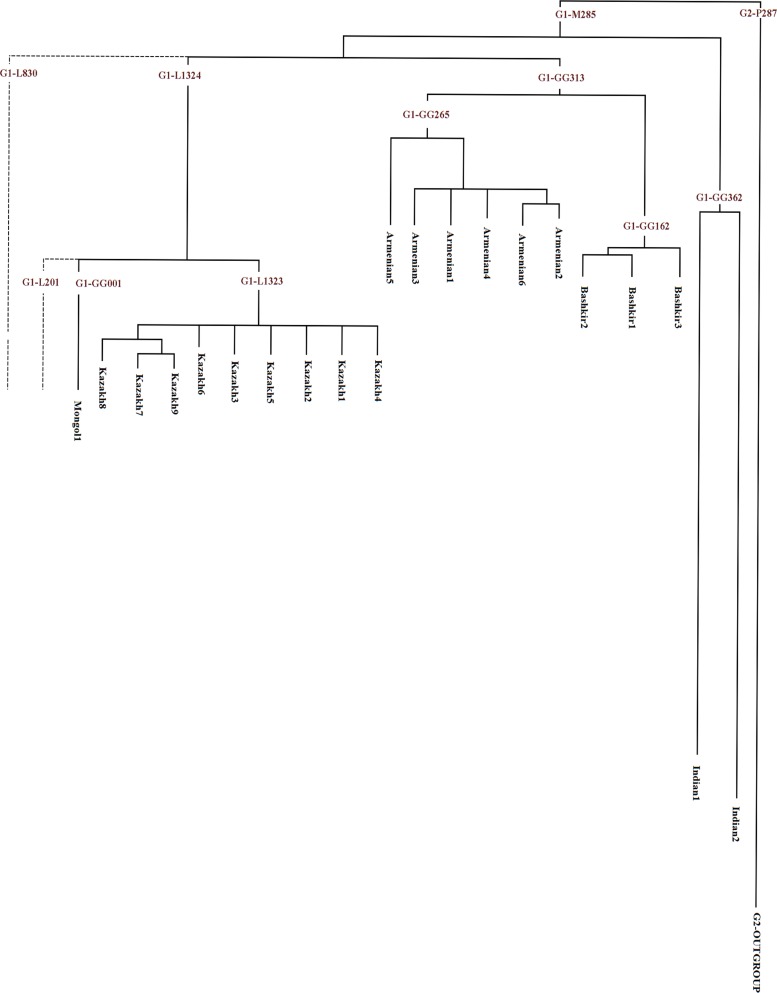
Y-chromosomal haplogroup G1 is a minor component of the overall gene pool of South-West and Central Asia but reaches up to 80% frequency in some populations scattered within this area. We have genotyped the G1-defining marker M285 in 27 Eurasian populations (n= 5,346), analyzed 367 M285-positive samples using 17 Y-STRs, and sequenced ~11 Mb of the Y-chromosome in 20 of these samples to an average coverage of 67X. This allowed detailed phylogenetic reconstruction. We identified five branches, all with high geographical specificity: G1-L1323 in Kazakhs, the closely related G1-GG1 in Mongols, G1-GG265 in Armenians and its distant brother clade G1-GG162 in Bashkirs, and G1-GG362 in West Indians. The haplotype diversity, which decreased from West Iran to Central Asia, allows us to hypothesize that this rare haplogroup could have been carried by the expansion of Iranic speakers northwards to the Eurasian steppe and via founder effects became a predominant genetic component of some populations, including the Argyn tribe of the Kazakhs. The remarkable agreement between genetic and genealogical trees of Argyns allowed us to calibrate the molecular clock using a historical date (1405 AD) of the most recent common genealogical ancestor. The mutation rate for Y-chromosomal sequence data obtained was 0.78×10⁻⁹ per bp per year, falling within the range of published rates. The mutation rate for Y-chromosomal STRs was 0.0022 per locus per generation, very close to the so-called genealogical rate. The "clan-based" approach to estimating the mutation rate provides a third, middle way between direct farther-to-son comparisons and using archeologically known migrations, whose dates are subject to revision and of uncertain relationship to genetic events.
Y染色体单倍群G1是西南亚和中亚整体基因库中的一个次要组成部分,但在该地区散布的一些人群中频率高达80%。我们对27个欧亚人群(n = 5346)的G1定义标记M285进行了基因分型,使用17个Y-STR对367个M285阳性样本进行了分析,并对其中20个样本的约11 Mb Y染色体进行了测序,平均覆盖度为67倍。这使得详细的系统发育重建成为可能。我们鉴定出五个分支,均具有高度的地理特异性:哈萨克人中的G1-L1323,蒙古人中与之密切相关的G1-GG1,亚美尼亚人中的G1-GG265及其在巴什基尔人中的远亲分支G1-GG162,以及西印度人中的G1-GG362。单倍型多样性从伊朗西部到中亚逐渐降低,这使我们能够推测,这个罕见的单倍群可能是由说伊朗语的人群向北扩张到欧亚草原时携带的,并通过奠基者效应成为一些人群(包括哈萨克人的阿尔金部落)的主要遗传成分。阿尔金人的遗传树和族谱树之间的显著一致性使我们能够利用最近共同族谱祖先的历史日期(公元1405年)来校准分子钟。获得的Y染色体序列数据的突变率为每年每碱基0.78×10^-9,落在已发表的突变率范围内。Y染色体STR的突变率为每代每个位点0.0022,非常接近所谓的族谱率。基于“氏族”的突变率估计方法提供了第三种中间途径,介于直接的父子比较和使用考古学已知的迁徙(其日期可能会修订且与遗传事件的关系不确定)之间。