Kwon Young, Song Wei, Droujinine Ilia A, Hu Yanhui, Asara John M, Perrimon Norbert
Department of Genetics, Harvard Medical School, Boston, MA 02115, USA.
Department of Genetics, Harvard Medical School, Boston, MA 02115, USA.
Dev Cell. 2015 Apr 6;33(1):36-46. doi: 10.1016/j.devcel.2015.02.012.
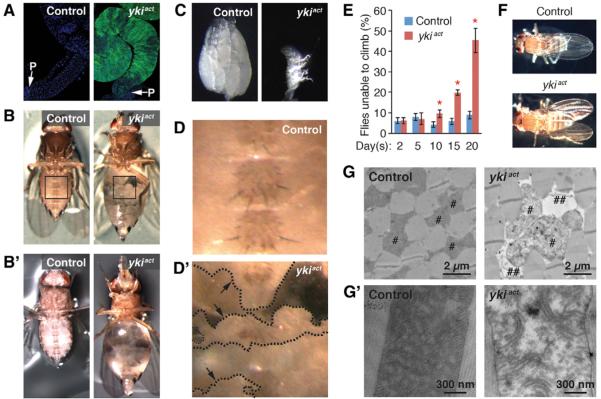
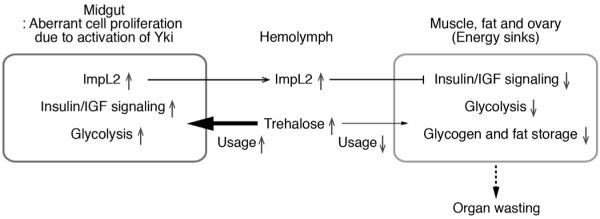
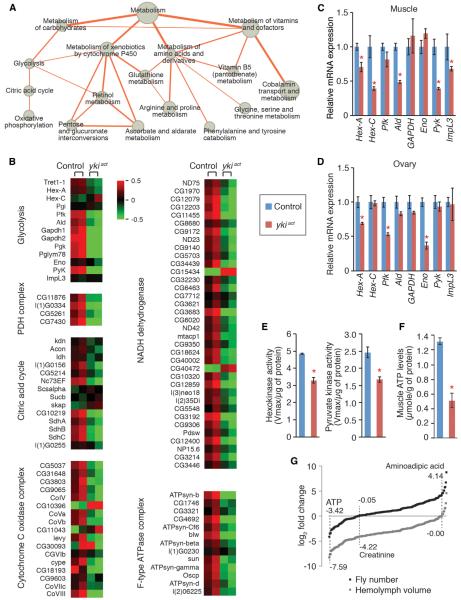
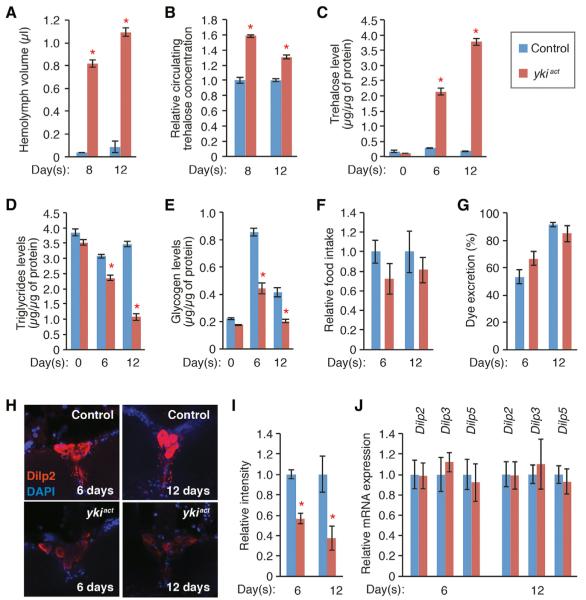
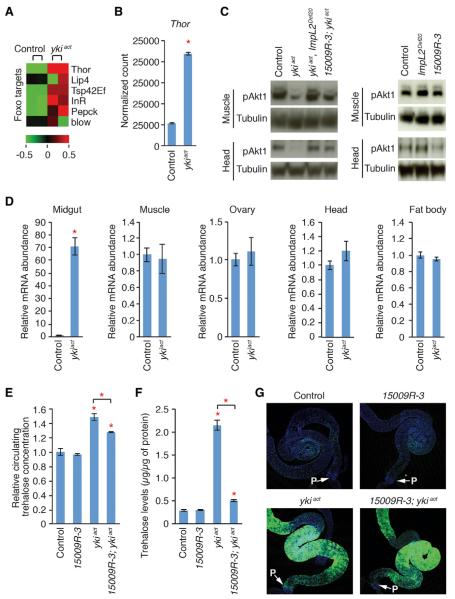
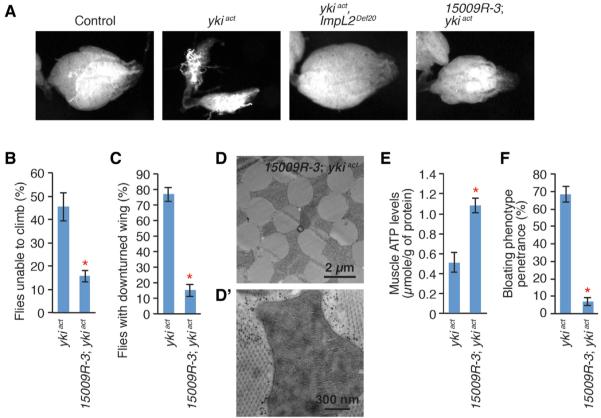
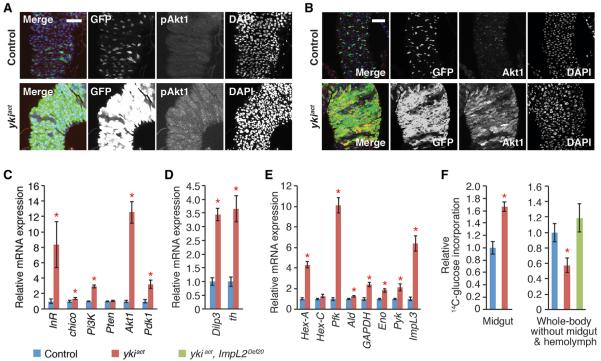
Organ wasting, related to changes in nutrition and metabolic activity of cells and tissues, is observed under conditions of starvation and in the context of diseases, including cancers. We have developed a model for organ wasting in adult Drosophila, whereby overproliferation induced by activation of Yorkie, the Yap1 oncogene ortholog, in intestinal stem cells leads to wasting of the ovary, fat body, and muscle. These organ-wasting phenotypes are associated with a reduction in systemic insulin/IGF signaling due to increased expression of the secreted insulin/IGF antagonist ImpL2 from the overproliferating gut. Strikingly, expression of rate-limiting glycolytic enzymes and central components of the insulin/IGF pathway is upregulated with activation of Yorkie in the gut, which may provide a mechanism for this overproliferating tissue to evade the effect of ImpL2. Altogether, our study provides insights into the mechanisms underlying organ-wasting phenotypes in Drosophila and how overproliferating tissues adapt to global changes in metabolism.
器官消耗与细胞和组织的营养及代谢活动变化有关,在饥饿条件下以及包括癌症在内的疾病背景中均可观察到。我们构建了一个成年果蝇器官消耗模型,其中,肠道干细胞中Yap1致癌基因直系同源物Yorkie的激活所诱导的过度增殖会导致卵巢、脂肪体和肌肉的消耗。这些器官消耗表型与全身胰岛素/胰岛素样生长因子信号传导的减少有关,原因是过度增殖的肠道中分泌的胰岛素/胰岛素样生长因子拮抗剂ImpL2表达增加。引人注目的是,随着肠道中Yorkie的激活,糖酵解限速酶以及胰岛素/胰岛素样生长因子途径的核心成分的表达上调,这可能为这种过度增殖的组织逃避ImpL2的影响提供了一种机制。总之,我们的研究深入探讨了果蝇器官消耗表型背后的机制,以及过度增殖的组织如何适应代谢的整体变化。