Arts Nathalie, Cané Stefania, Hennequart Marc, Lamy Juliette, Bommer Guido, Van den Eynde Benoît, De Plaen Etienne
Ludwig Institute for Cancer Research, Brussels and Université Catholique de Louvain, Brussels, Belgium.
de Duve Institute, Université Catholique de Louvain, Brussels, Belgium.
PLoS One. 2015 Apr 8;10(4):e0122517. doi: 10.1371/journal.pone.0122517. eCollection 2015.
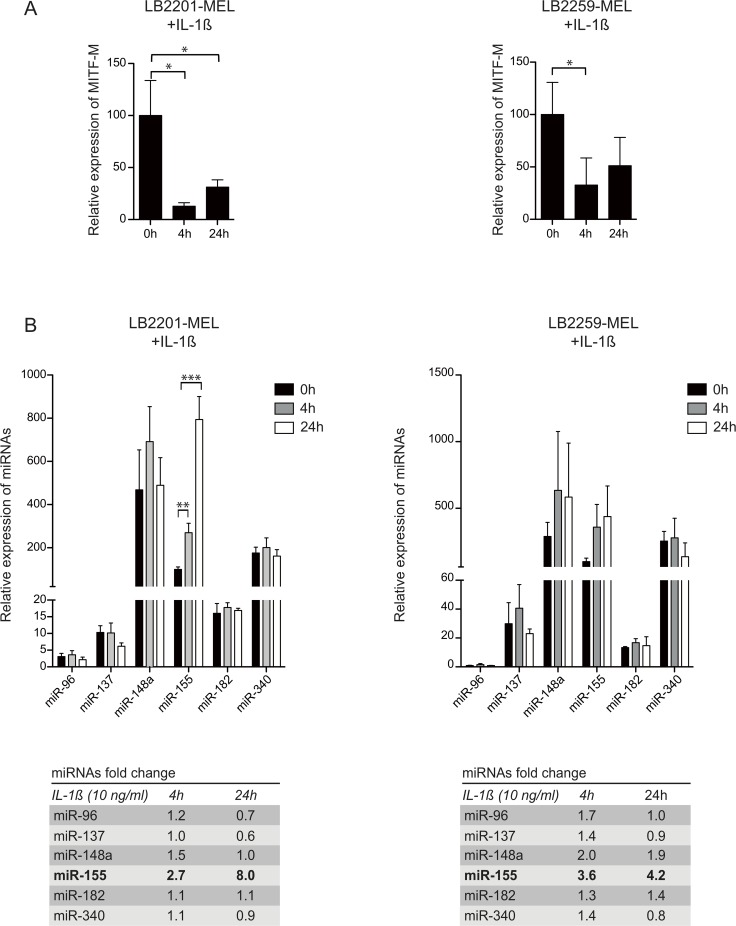
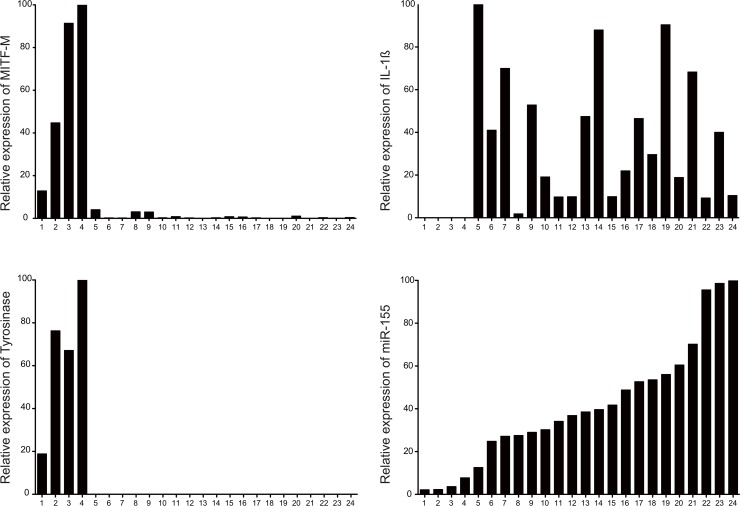
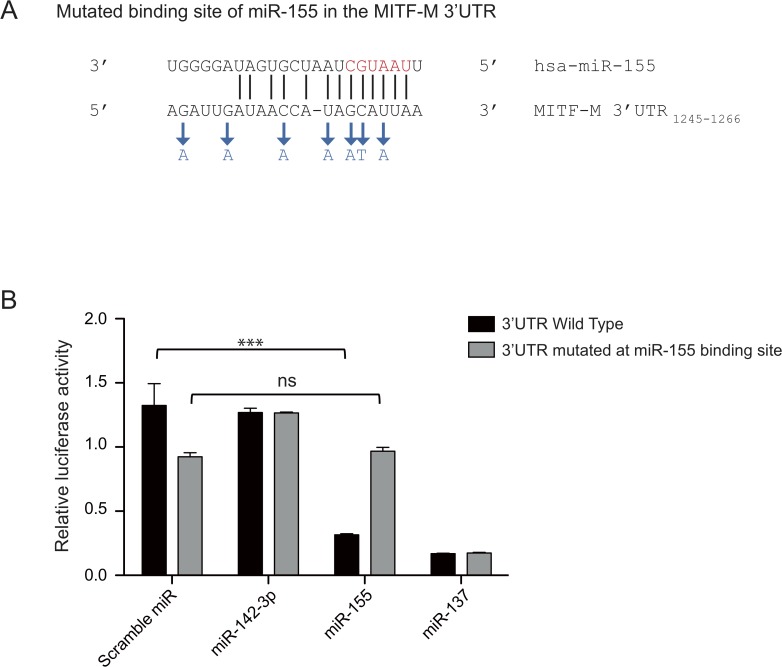
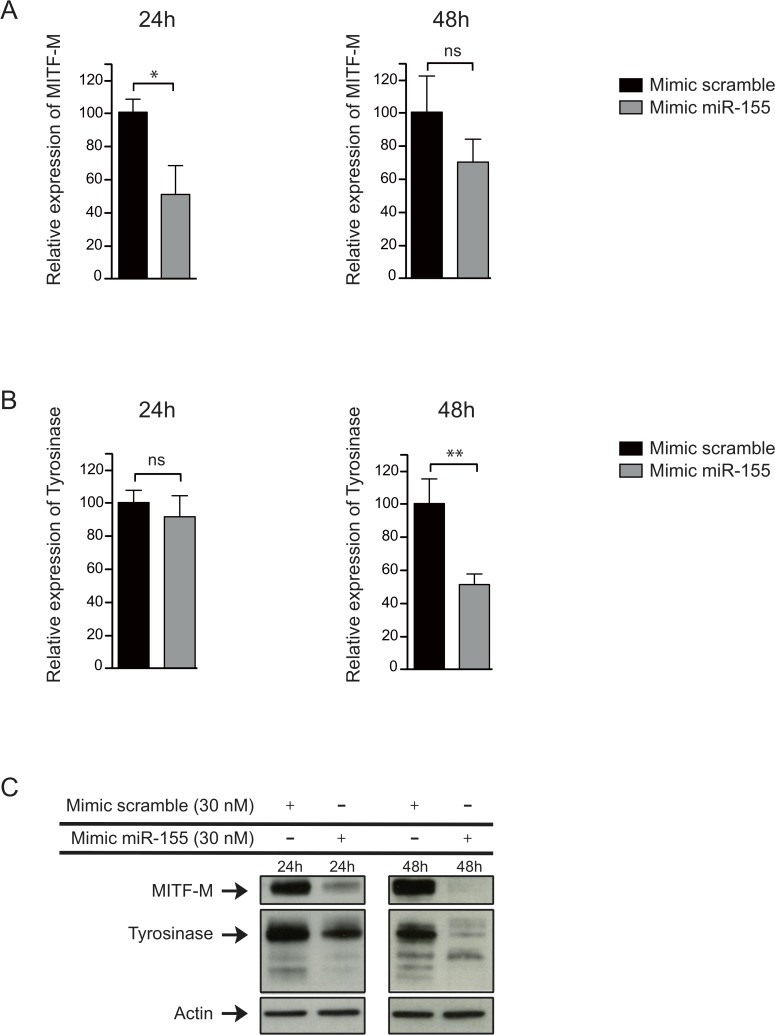
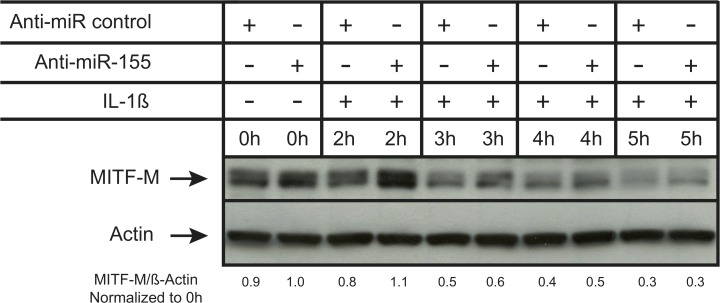
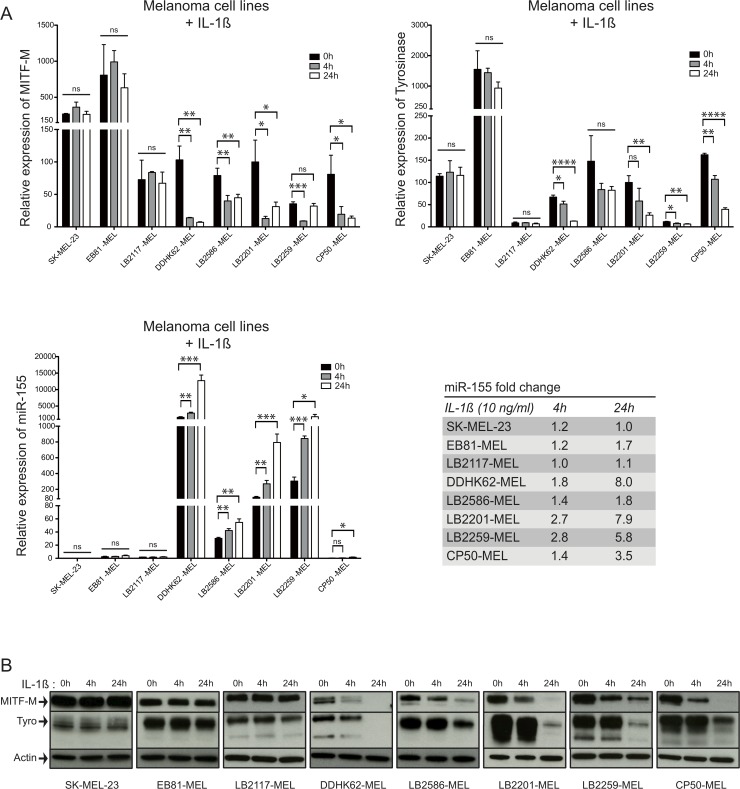
Loss of expression of surface antigens represents a significant problem for cancer immunotherapy. Microphthalmia-associated transcription factor (MITF-M) regulates melanocyte fate by driving expression of many differentiation genes, whose protein products can be recognized by cytolytic T lymphocytes. We previously reported that interleukin-1ß (IL-1ß) can downregulate MITF-M levels. Here we show that downregulation of MITF-M expression by IL-1ß was paralleled by an upregulation of miR-155 expression in four melanoma lines. We confirmed that miR-155 was able to target endogenous MITF-M in melanoma cells and demonstrated a role for miR-155 in the IL-1ß-induced repression of MITF-M by using an antagomiR. Notably, we also observed a strong negative correlation between MITF-M and miR-155 levels in a mouse model of melanoma. Taken together, our results indicate that MITF-M downregulation by inflammatory stimuli might be partly due to miR-155 upregulation. This could represent a novel mechanism of melanoma immune escape in an inflammatory microenvironment.
表面抗原表达缺失是癌症免疫治疗的一个重大问题。小眼畸形相关转录因子(MITF-M)通过驱动许多分化基因的表达来调节黑素细胞命运,其蛋白产物可被细胞毒性T淋巴细胞识别。我们之前报道白细胞介素-1β(IL-1β)可下调MITF-M水平。在此我们表明,在四种黑色素瘤细胞系中,IL-1β对MITF-M表达的下调与miR-155表达的上调同时出现。我们证实miR-155能够靶向黑色素瘤细胞中的内源性MITF-M,并通过使用抗miR证明了miR-155在IL-1β诱导的MITF-M抑制中的作用。值得注意的是,我们在黑色素瘤小鼠模型中还观察到MITF-M和miR-155水平之间存在强烈的负相关。综上所述,我们的结果表明炎症刺激导致的MITF-M下调可能部分归因于miR-155上调。这可能代表了炎症微环境中黑色素瘤免疫逃逸的一种新机制。