Haer-Wigman Lonneke, Newman Hadas, Leibu Rina, Bax Nathalie M, Baris Hagit N, Rizel Leah, Banin Eyal, Massarweh Amir, Roosing Susanne, Lefeber Dirk J, Zonneveld-Vrieling Marijke N, Isakov Ofer, Shomron Noam, Sharon Dror, Den Hollander Anneke I, Hoyng Carel B, Cremers Frans P M, Ben-Yosef Tamar
Department of Human Genetics, Radboud Institute for Molecular Life Sciences.
Department of Ophthalmology, Tel-Aviv Medical Center, Tel-Aviv, Israel.
Hum Mol Genet. 2015 Jul 1;24(13):3742-51. doi: 10.1093/hmg/ddv118. Epub 2015 Apr 9.
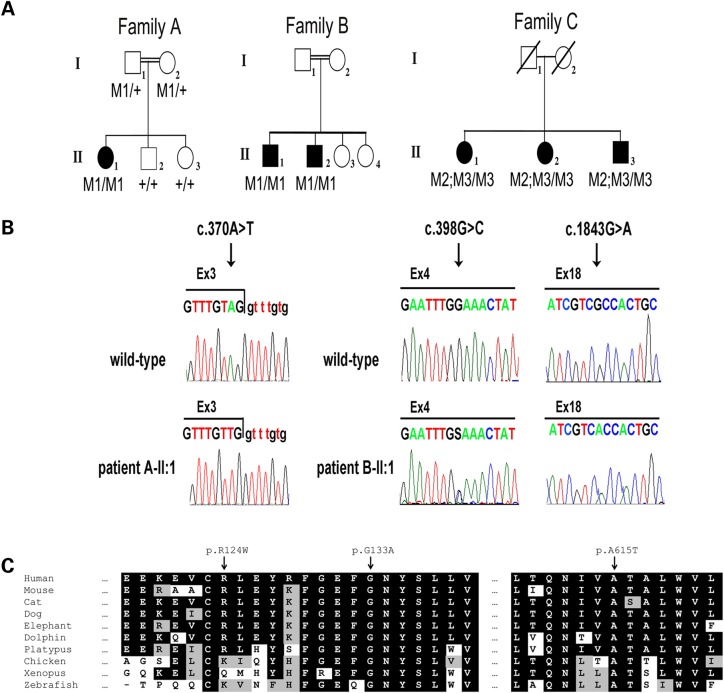
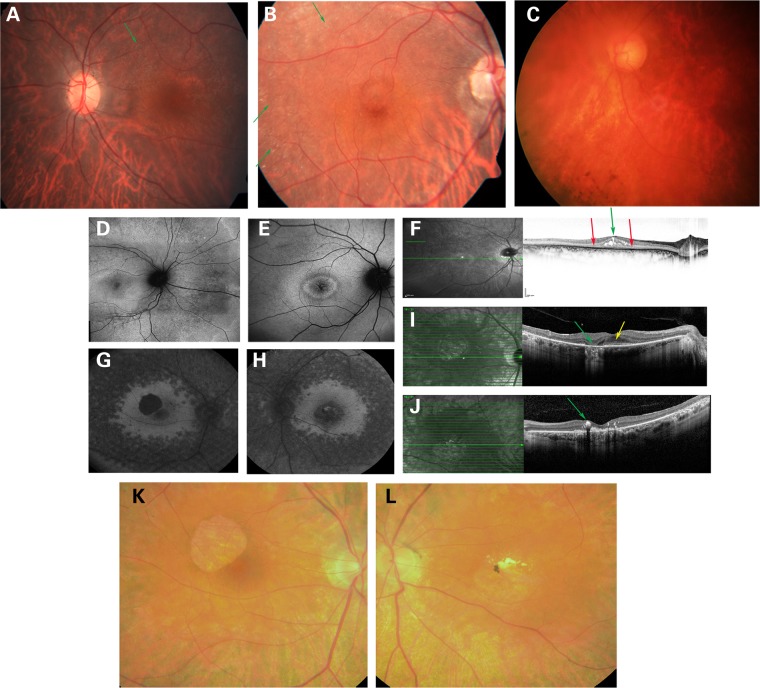
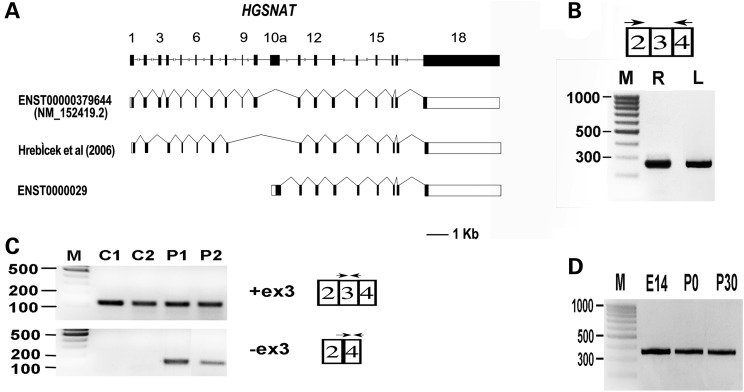
Retinitis pigmentosa (RP), the most common form of inherited retinal degeneration, is clinically and genetically heterogeneous and can appear as syndromic or non-syndromic. Mucopolysaccharidosis type IIIC (MPS IIIC) is a lethal disorder, caused by mutations in the heparan-alpha-glucosaminide N-acetyltransferase (HGSNAT) gene and characterized by progressive neurological deterioration, with retinal degeneration as a prominent feature. We identified HGSNAT mutations in six patients with non-syndromic RP. Whole exome sequencing (WES) in an Ashkenazi Jewish Israeli RP patient revealed a novel homozygous HGSNAT variant, c.370A>T, which leads to partial skipping of exon 3. Screening of 66 Ashkenazi RP index cases revealed an additional family with two siblings homozygous for c.370A>T. WES in three Dutch siblings with RP revealed a complex HGSNAT variant, c.[398G>C; 1843G>A] on one allele, and c.1843G>A on the other allele. HGSNAT activity levels in blood leukocytes of patients were reduced compared with healthy controls, but usually higher than those in MPS IIIC patients. All patients were diagnosed with non-syndromic RP and did not exhibit neurological deterioration, or any phenotypic features consistent with MPS IIIC. Furthermore, four of the patients were over 60 years old, exceeding by far the life expectancy of MPS IIIC patients. HGSNAT is highly expressed in the mouse retina, and we hypothesize that the retina requires higher HGSNAT activity to maintain proper function, compared with other tissues associated with MPS IIIC, such as the brain. This report broadens the spectrum of phenotypes associated with HGSNAT mutations and highlights the critical function of HGSNAT in the human retina.
色素性视网膜炎(RP)是遗传性视网膜变性最常见的形式,在临床和遗传方面具有异质性,可表现为综合征型或非综合征型。IIIC型粘多糖贮积症(MPS IIIC)是一种致死性疾病,由乙酰肝素α-氨基葡糖苷N-乙酰转移酶(HGSNAT)基因突变引起,其特征为进行性神经功能恶化,视网膜变性是突出特征。我们在6例非综合征型RP患者中鉴定出HGSNAT突变。对一名阿什肯纳兹犹太裔以色列RP患者进行全外显子组测序(WES),发现一个新的纯合HGSNAT变异体c.370A>T,该变异导致外显子3部分跳跃。对66例阿什肯纳兹RP索引病例进行筛查,发现另一个家系中有两名同胞为c.370A>T纯合子。对3例患有RP的荷兰同胞进行WES,发现一个等位基因上有一个复杂的HGSNAT变异体c.[398G>C; 1843G>A],另一个等位基因上有c.1843G>A。与健康对照相比,患者血液白细胞中的HGSNAT活性水平降低,但通常高于MPS IIIC患者。所有患者均被诊断为非综合征型RP,未表现出神经功能恶化或任何与MPS IIIC一致的表型特征。此外,其中4例患者年龄超过60岁,远远超过MPS IIIC患者的预期寿命。HGSNAT在小鼠视网膜中高度表达,我们推测与MPS IIIC相关的其他组织(如大脑)相比,视网膜需要更高的HGSNAT活性来维持正常功能。本报告拓宽了与HGSNAT突变相关的表型谱,并突出了HGSNAT在人类视网膜中的关键功能。