Fukumoto Miki, Kurisu Shusaku, Yamada Tesshi, Takenawa Tadaomi
Integrated Center for Mass Spectrometry, Kobe University Graduate School of Medicine, 7-5-1 Kusunoki-cho, Chuo-ku, Kobe, Hyogo 650-0017, Japan.
Biosignal Research Center, Organization of Advanced Science and Technology, Kobe University, 1-1 Rokkodai-cho, Nada-ku, Kobe, Hyogo 657-8501, Japan.
PLoS One. 2015 Apr 10;10(4):e0120616. doi: 10.1371/journal.pone.0120616. eCollection 2015.
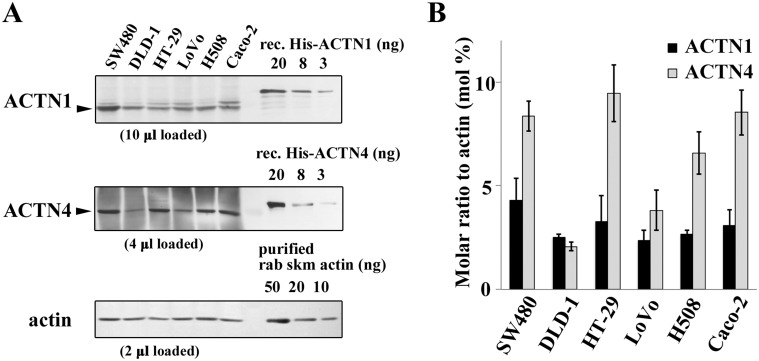
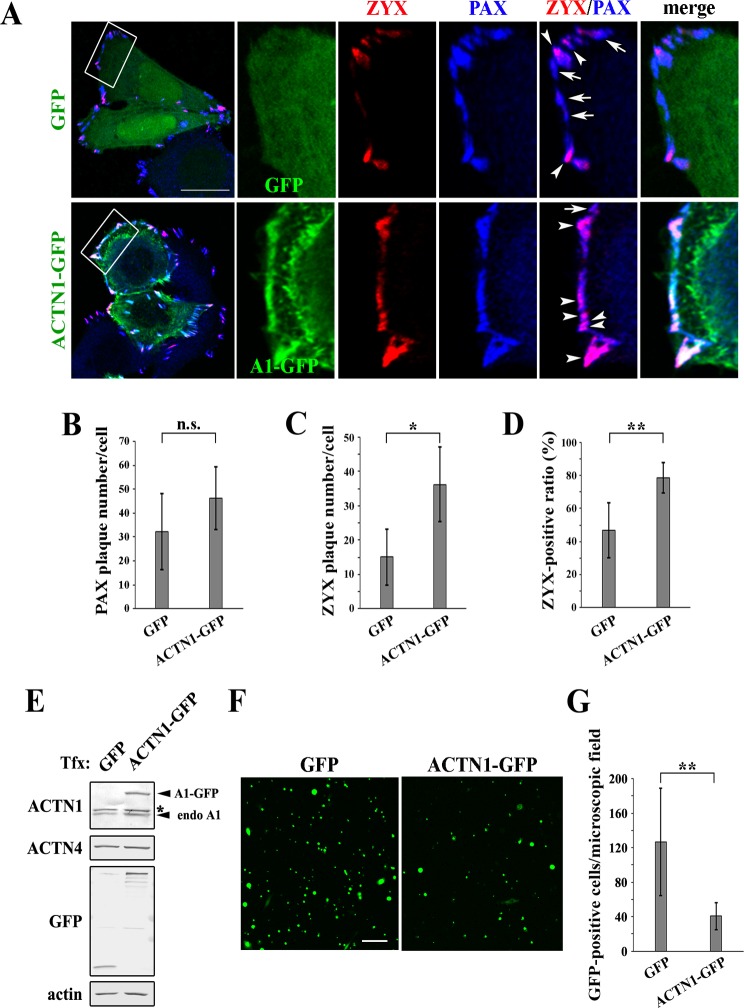
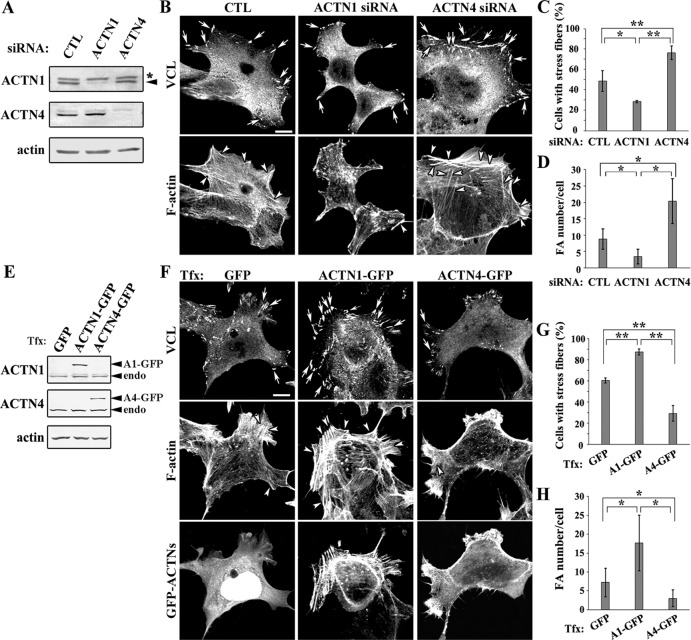
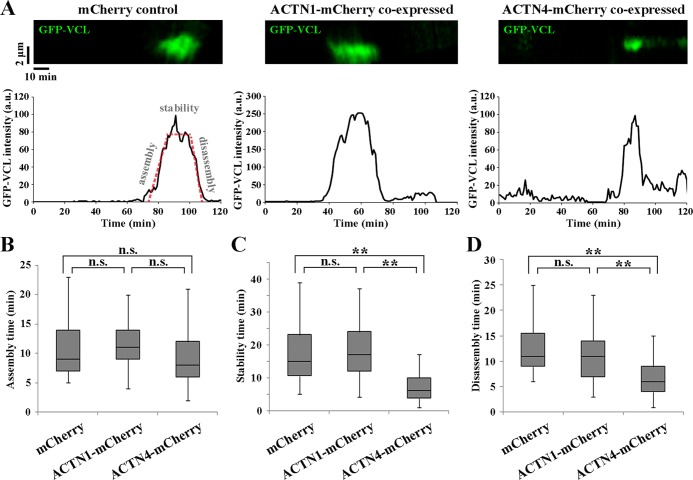
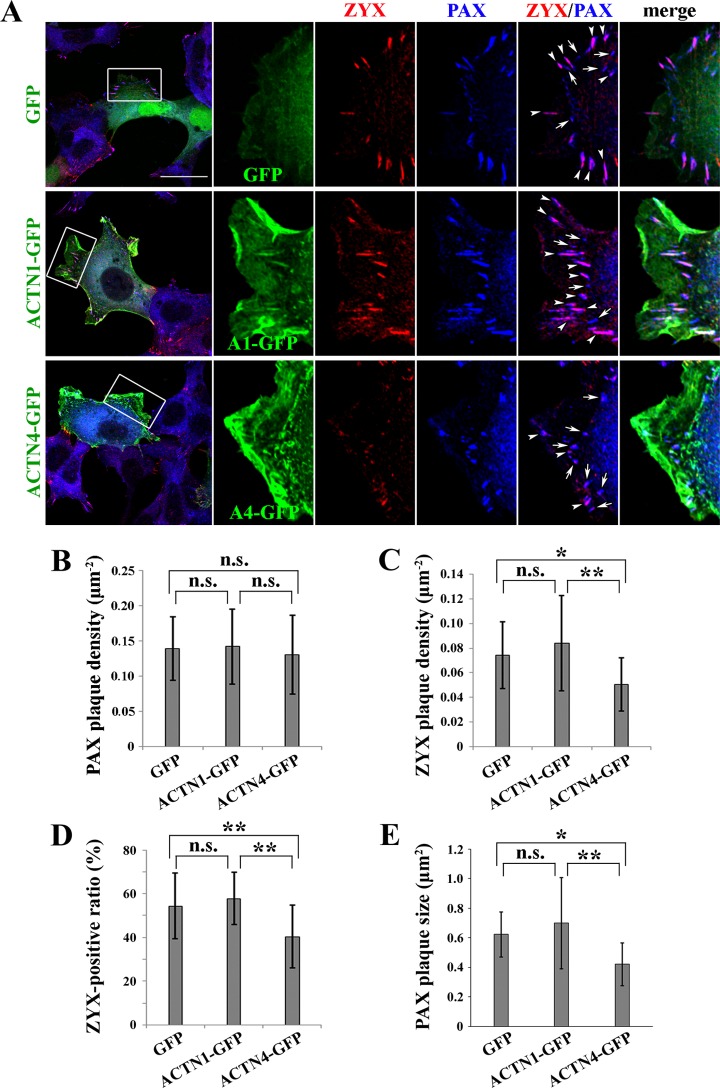
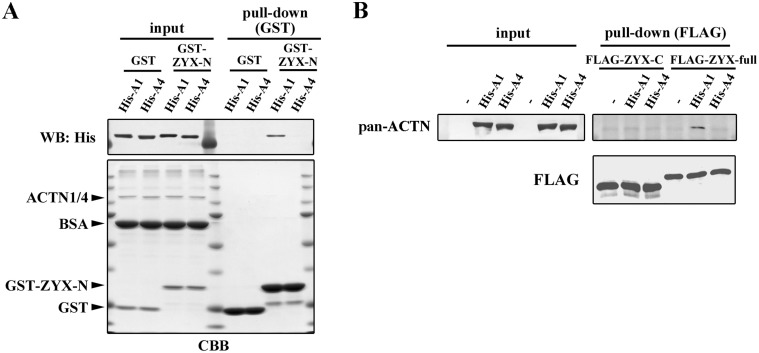
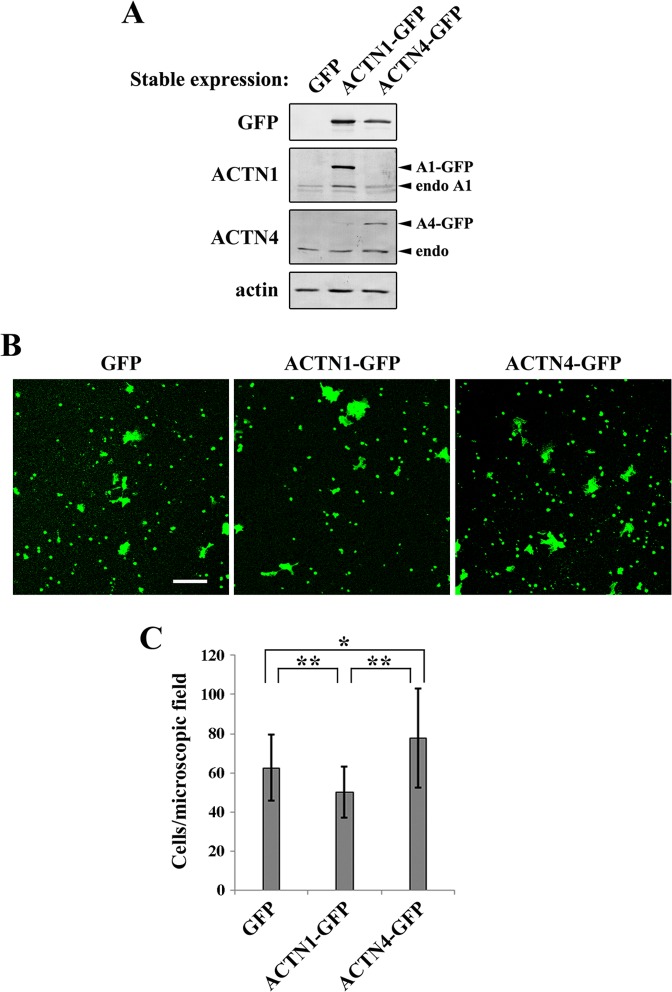
α-Actinins (ACTNs) are known to crosslink actin filaments at focal adhesions in migrating cells. Among the four isoforms of mammalian ACTNs, ACTN1 and ACTN4 are ubiquitously expressed. Recently, ACTN4 was reported to enhance cancer cell motility, invasion, and metastasis. However, the mechanism by which ACTN4 drives these malignant phenotypes remains unclear. Here, we show that ACTN4, but not ACTN1, induces the formation of immature focal adhesions in DLD-1 cells, leading to the rapid turnover of focal adhesions. Interestingly, zyxin (ZYX) assembly to focal adhesions was markedly decreased in ACTN4-expressing DLD-1 cells, while the recruitment of paxillin (PAX) occurred normally. On the other hand, in ACTN1-expressing DLD-1 cells, PAX and ZYX were normally recruited to focal adhesions, suggesting that ACTN4 specifically impairs focal adhesion maturation by inhibiting the recruitment of ZYX to focal complexes. Using purified recombinant proteins, we found that ZYX binding to ACTN4 was defective under conditions where ZYX binding to ACTN1 was observed. Furthermore, Matrigel invasion of SW480 cells that express high endogenous levels of ACTN4 protein was inhibited by ectopic expression of ACTN1. Altogether, our results suggest that ZYX defective binding to ACTN4, which occupies focal adhesions instead of ACTN1, induces the formation of immature focal adhesions, resulting in the enhancement of cell motility and invasion.
已知α-辅肌动蛋白(ACTNs)在迁移细胞的粘着斑处交联肌动蛋白丝。在哺乳动物ACTNs的四种同工型中,ACTN1和ACTN4广泛表达。最近,有报道称ACTN4可增强癌细胞的运动性、侵袭性和转移能力。然而,ACTN4驱动这些恶性表型的机制仍不清楚。在此,我们表明,在DLD-1细胞中,是ACTN4而非ACTN1诱导未成熟粘着斑的形成,导致粘着斑的快速周转。有趣的是,在表达ACTN4的DLD-1细胞中,桩蛋白(ZYX)向粘着斑的组装明显减少,而桩蛋白(PAX)的募集正常发生。另一方面,在表达ACTN1的DLD-1细胞中,PAX和ZYX正常募集到粘着斑,这表明ACTN4通过抑制ZYX向粘着复合体的募集特异性损害粘着斑成熟。使用纯化的重组蛋白,我们发现在观察到ZYX与ACTN1结合的条件下,ZYX与ACTN4的结合存在缺陷。此外,异位表达ACTN1可抑制内源性ACTN4蛋白水平高的SW480细胞的基质胶侵袭。总之,我们的结果表明,ZYX与ACTN4的结合缺陷,ACTN4取代ACTN1占据粘着斑,诱导未成熟粘着斑的形成,导致细胞运动性和侵袭性增强。