Furin Christoff G, von Hippel Frank A, Postlethwait John H, Buck C Loren, Cresko William A, O'Hara Todd M
Department of Biological Sciences, University of Alaska Anchorage, 3211 Providence Dr., Anchorage, AK 99508, USA; Department of Biology and Wildlife, University of Alaska Fairbanks, 902 N. Koyukuk Dr., P.O. Box 757000, Fairbanks, AK 99775, USA.
Department of Biological Sciences, University of Alaska Anchorage, 3211 Providence Dr., Anchorage, AK 99508, USA.
Gen Comp Endocrinol. 2015 Aug 1;219:24-35. doi: 10.1016/j.ygcen.2015.04.002. Epub 2015 Apr 9.
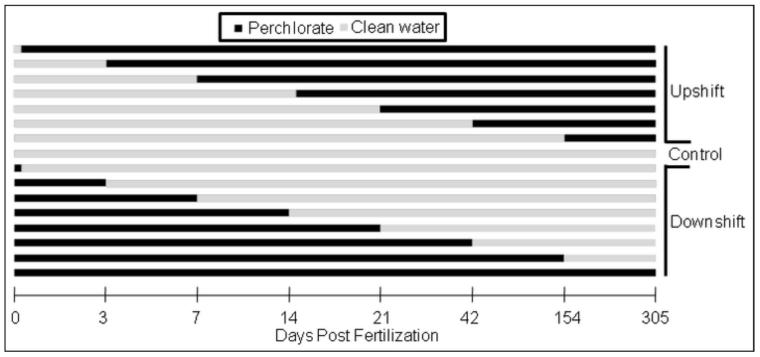
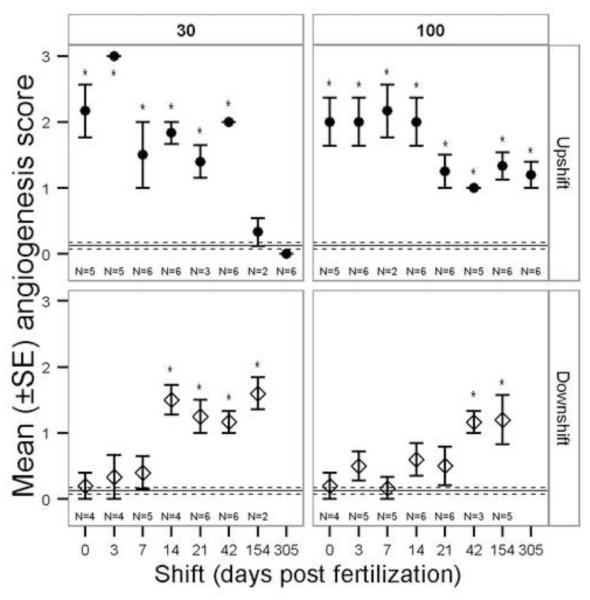
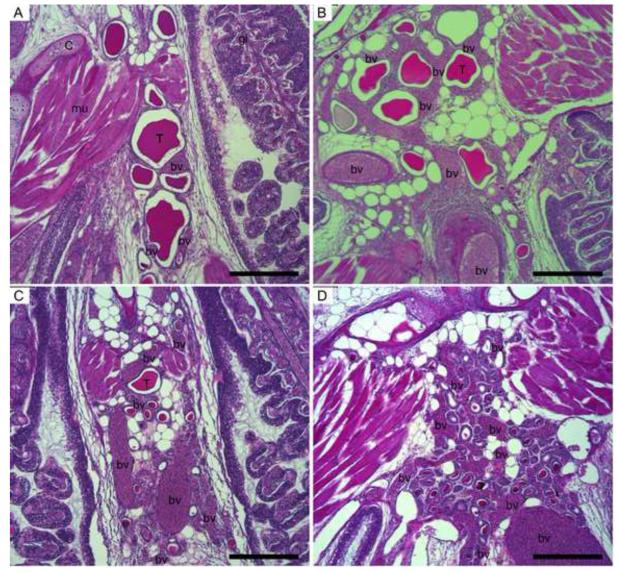
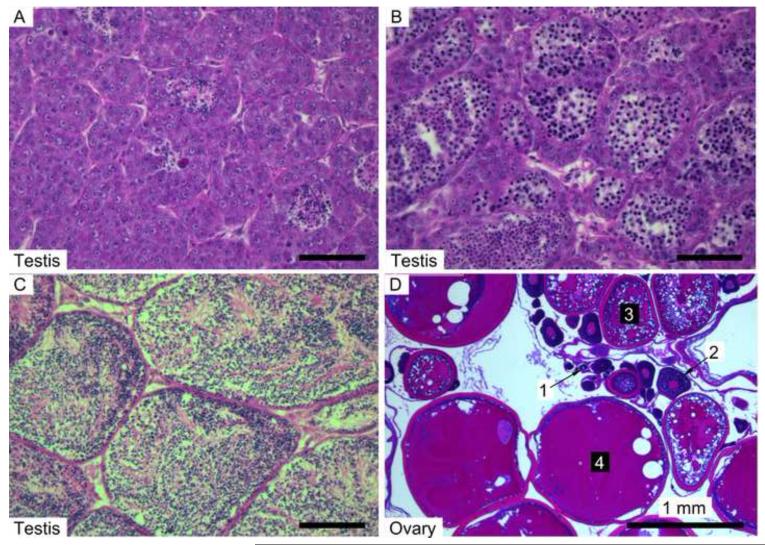
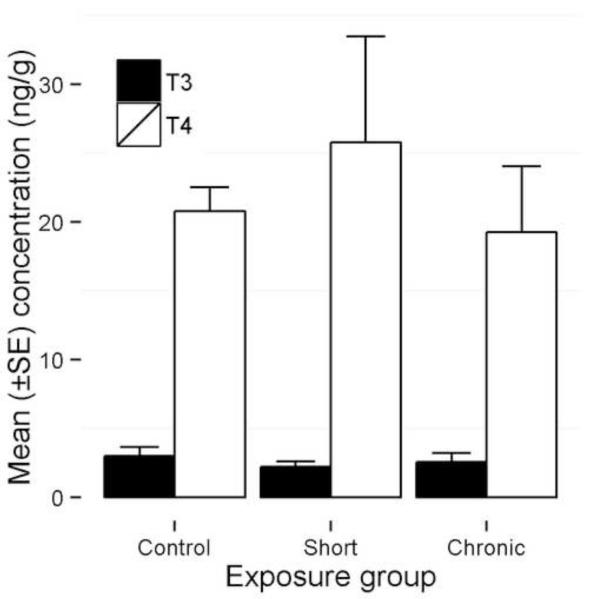
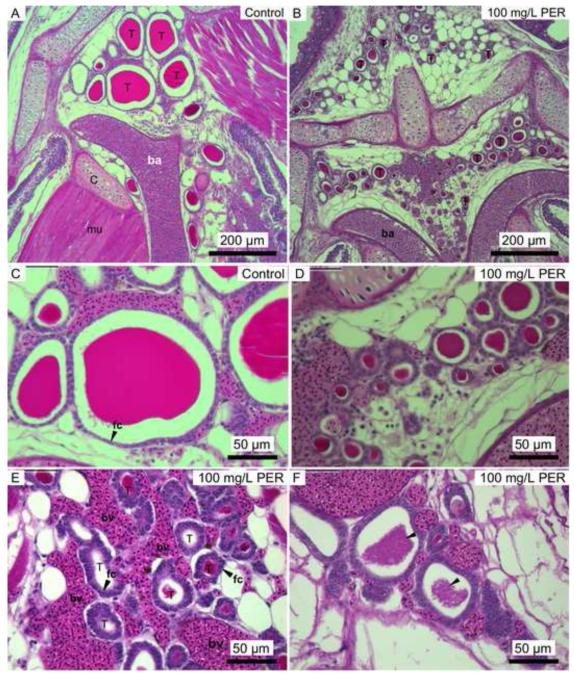
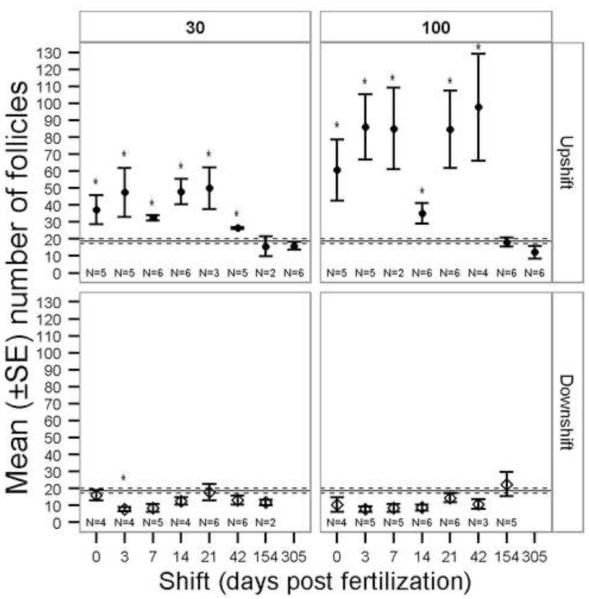
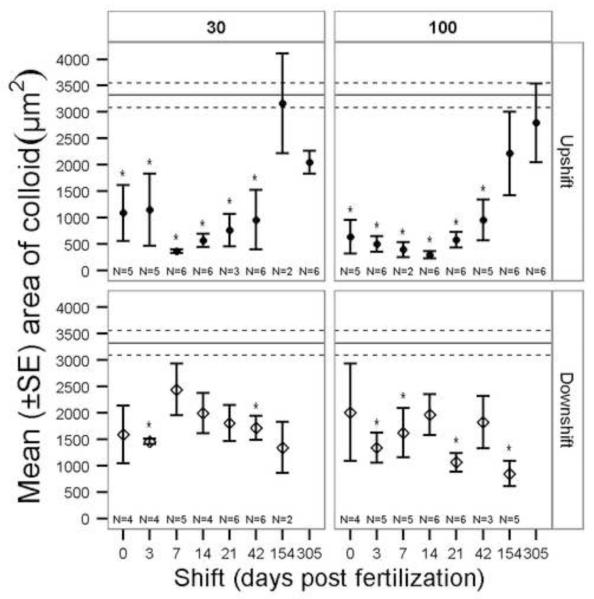
Perchlorate, a common aquatic contaminant, is well known to disrupt homeostasis of the hypothalamus-pituitary-thyroid axis. This study utilizes the threespine stickleback (Gasterosteus aculeatus) fish to determine if perchlorate exposure during certain windows of development has morphological effects on thyroid and gonads. Fish were moved from untreated water to perchlorate-contaminated water (30 and 100mg/L) starting at 0, 3, 7, 14, 21, 42, 154 and 305 days post fertilization until approximately one year old. A reciprocal treatment (fish in contaminated water switched to untreated water) was conducted on the same schedule. Perchlorate exposure increased angiogenesis and follicle proliferation in thyroid tissue, delayed gonadal maturity, and skewed sex ratios toward males; effects depended on concentration and timing of exposure. This study demonstrates that perchlorate exposure beginning during the first 42 days of development has profound effects on stickleback reproductive and thyroid tissues, and by implication can impact population dynamics. Long-term exposure studies that assess contaminant effects at various stages of development provide novel information to characterize risk to aquatic organisms, to facilitate management of resources, and to determine sensitive developmental windows for further study of underlying mechanisms.
高氯酸盐是一种常见的水生污染物,众所周知,它会破坏下丘脑-垂体-甲状腺轴的稳态。本研究利用三刺鱼(Gasterosteus aculeatus)来确定在特定发育阶段接触高氯酸盐是否会对甲状腺和性腺产生形态学影响。受精后0、3、7、14、21、42、154和305天开始,将鱼从不含高氯酸盐的水中转移到受高氯酸盐污染的水中(30毫克/升和100毫克/升),直至鱼长到约一岁。按照相同的时间表进行了反向处理(将受污染水中的鱼转移到不含高氯酸盐的水中)。接触高氯酸盐会增加甲状腺组织中的血管生成和卵泡增殖,延迟性腺成熟,并使性别比例向雄性倾斜;这些影响取决于接触的浓度和时间。本研究表明,在发育的前42天开始接触高氯酸盐会对三刺鱼的生殖和甲状腺组织产生深远影响,进而可能影响种群动态。评估污染物在不同发育阶段影响的长期暴露研究为表征对水生生物的风险、促进资源管理以及确定用于进一步研究潜在机制的敏感发育阶段提供了新信息。