Zhumadilov Agzam, Boyko Matthew, Gruenbaum Shaun E, Brotfain Evgeny, Bilotta Federico, Zlotnik Alexander
Department of Anesthesiology and Critical Care, National Research Center for Oncology and Transplantation, Astana, Kazakhstan.
Department of Anesthesiology and Critical Care, Soroka University Medical Center, Faculty of Health Sciences, Ben Gurion University of the Negev, Beer Sheva, Israel.
Expert Rev Neurother. 2015 May;15(5):501-508. doi: 10.1586/14737175.2015.1032259. Epub 2015 Apr 12.
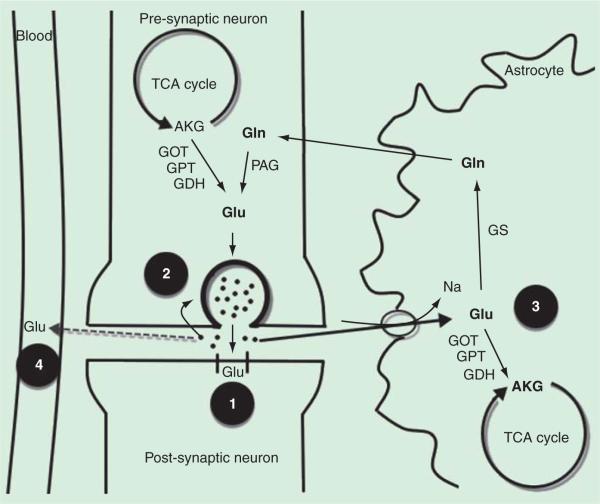
Pathologically elevated glutamate concentrations in the brain's extracellular fluid are associated with several acute and chronic brain insults. Studies have demonstrated that by decreasing the concentration of glutamate in the blood, thereby increasing the concentration gradient between the brain and the blood, the rate of brain-to-blood glutamate efflux can be increased. Blood glutamate scavengers, pyruvate and oxaloacetate have shown great promise in providing neuroprotection in many animal models of acute brain insults. However, glutamate scavengers' potential systemic toxicity, side effects and pharmacokinetic properties may limit their use in clinical practice. In contrast, extracorporeal methods of blood glutamate reduction, in which glutamate is filtered from the blood and eliminated, may be an advantageous adjunct in treating acute brain insults. Here, we review the current evidence for the glutamate-lowering effects of hemodialysis, peritoneal dialysis and hemofiltration. The evidence reviewed here highlights the need for clinical trials.
大脑细胞外液中病理性升高的谷氨酸浓度与多种急性和慢性脑损伤有关。研究表明,通过降低血液中谷氨酸的浓度,从而增加大脑与血液之间的浓度梯度,可以提高大脑向血液中谷氨酸的外流速率。血液谷氨酸清除剂丙酮酸和草酰乙酸在许多急性脑损伤动物模型中显示出巨大的神经保护潜力。然而,谷氨酸清除剂潜在的全身毒性、副作用和药代动力学特性可能会限制它们在临床实践中的应用。相比之下,体外降低血液谷氨酸的方法,即将谷氨酸从血液中过滤并清除,可能是治疗急性脑损伤的一种有利辅助手段。在此,我们综述了目前关于血液透析、腹膜透析和血液滤过降低谷氨酸作用的证据。这里综述的证据凸显了进行临床试验的必要性。