Huang Ya-Fang, Lo Pei-Chi, Yen Chia-Liang, Nigrovic Peter Andrija, Chao Wen-Chen, Wang Wei-Zhi, Hsu George Chengkang, Tsai Yau-Sheng, Shieh Chi-Chang
1 Institute of Clinical Medicine, National Cheng Kung University College of Medicine , Tainan, Taiwan .
2 Institute of Basic Medical Science, National Cheng Kung University College of Medicine , Tainan, Taiwan .
Antioxid Redox Signal. 2015 Oct 20;23(12):973-84. doi: 10.1089/ars.2014.6136. Epub 2015 May 11.
To elucidate the role of reactive oxygen species (ROS) in arthritis and to identify targets of arthritis treatment in conditions with different levels of oxidant stress.
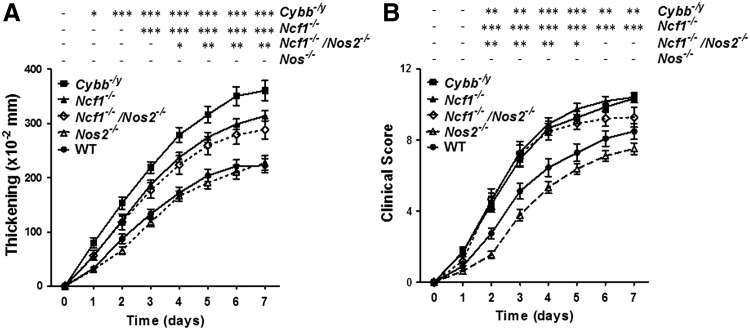
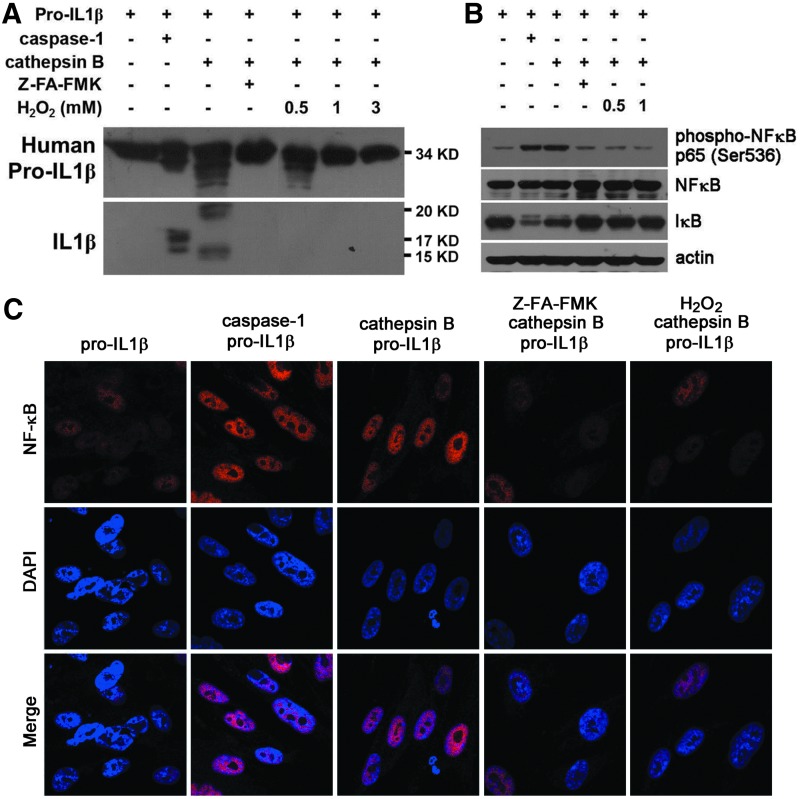
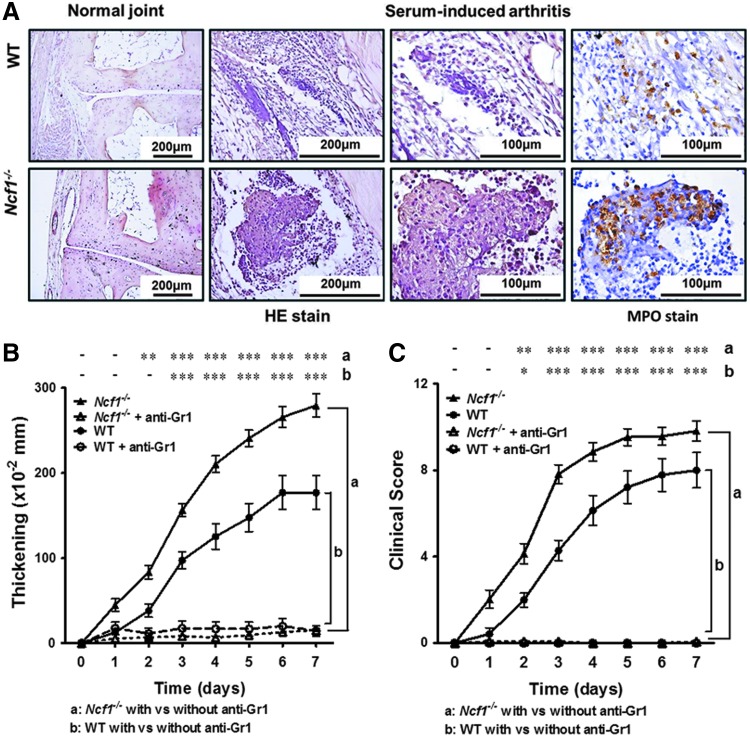
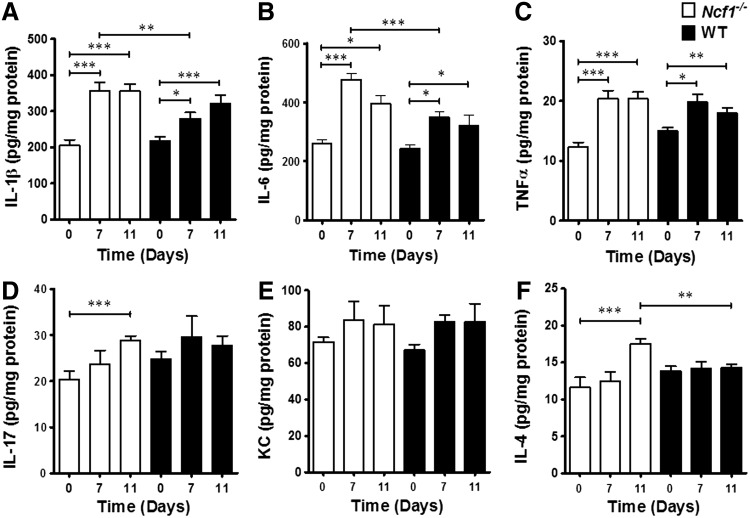
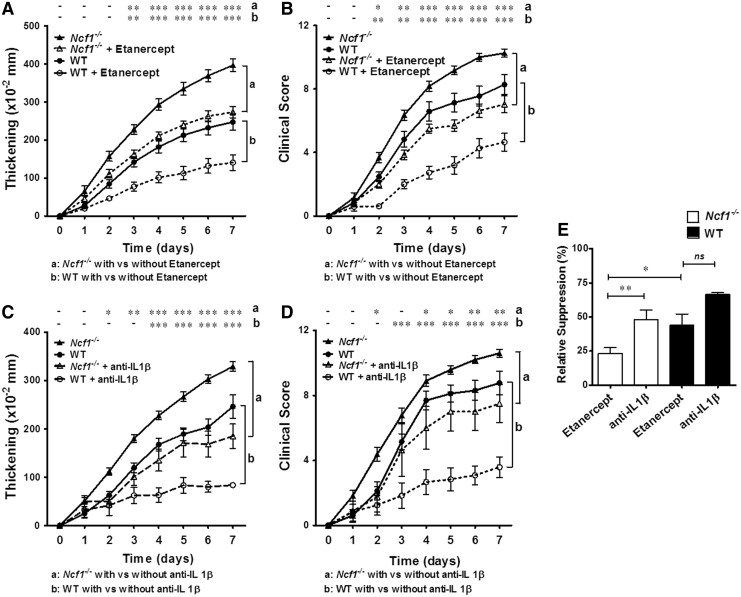
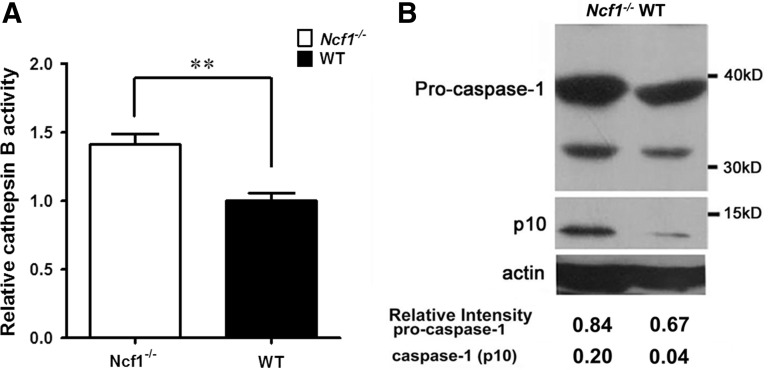
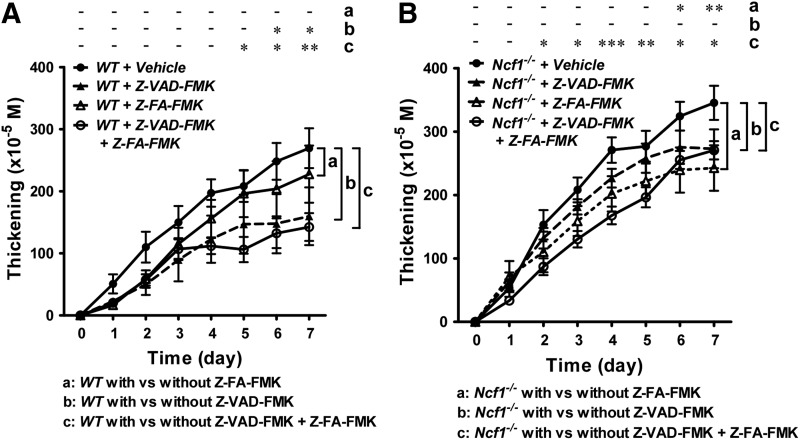
Through establishing an arthritis model by injecting arthritogenic serum into wild-type and NADPH oxidase 2 (NOX2)-deficient mice, we found that arthritis had a neutrophilic infiltrate and was more severe in Ncf1(-/-) mice, a mouse strain lacking the expression of the NCF1/p47(phox) component of NOX2. The levels of interleukin-1β (IL-1β) and IL-6 in inflamed joints were higher in Ncf1(-/-) than in controls. Antagonists of tumor necrosis factor-α (TNFα) and IL-1β were equally effective in suppressing arthritis in wild-type mice, while IL-1β blockade was more effective than TNFα blockade in Ncf1(-/-) mice. A treatment of caspase inhibitor and the combination treatment of a caspase inhibitor and a cathepsin inhibitor, but not a cathepsin inhibitor alone, suppressed arthritic severity in the wild-type mice, while a treatment of cathepsin inhibitor and the combination treatment of a caspase inhibitor and a cathepsin inhibitor, but not a caspase inhibitor alone, were effective in treating Ncf1(-/-) mice. Consistently, cathepsin B was found to proteolytically process pro-IL-1β to its active form and this activity was suppressed by ROS.
This novel mechanism of a redox-mediated immune regulation of arthritis through leukocyte-produced ROS is important for devising an optimal treatment for patients with different levels of tissue ROS.
Our results suggest that ROS act as a negative feedback to constrain IL-1β-mediated inflammation, accounting for the more severe arthritis in the absence of NOX2.
阐明活性氧(ROS)在关节炎中的作用,并确定在不同氧化应激水平条件下关节炎的治疗靶点。
通过向野生型和NADPH氧化酶2(NOX2)缺陷型小鼠注射致关节炎血清建立关节炎模型,我们发现关节炎有中性粒细胞浸润,且在Ncf1(-/-)小鼠中更严重,Ncf1(-/-)小鼠是一种缺乏NOX2的NCF1/p47(phox)成分表达的小鼠品系。Ncf1(-/-)小鼠炎症关节中白细胞介素-1β(IL-1β)和IL-6的水平高于对照组。肿瘤坏死因子-α(TNFα)拮抗剂和IL-1β拮抗剂在抑制野生型小鼠关节炎方面同样有效,而在Ncf1(-/-)小鼠中,阻断IL-1β比阻断TNFα更有效。半胱天冬酶抑制剂治疗以及半胱天冬酶抑制剂与组织蛋白酶抑制剂的联合治疗(而非单独使用组织蛋白酶抑制剂)可抑制野生型小鼠的关节炎严重程度,而组织蛋白酶抑制剂治疗以及半胱天冬酶抑制剂与组织蛋白酶抑制剂的联合治疗(而非单独使用半胱天冬酶抑制剂)对治疗Ncf1(-/-)小鼠有效。一致地,发现组织蛋白酶B可将前IL-1β蛋白水解加工成其活性形式,且这种活性受到ROS的抑制。
这种通过白细胞产生的ROS对关节炎进行氧化还原介导的免疫调节的新机制,对于为不同组织ROS水平的患者设计最佳治疗方案具有重要意义。
我们的结果表明,ROS作为一种负反馈来限制IL-1β介导的炎症,这解释了在缺乏NOX2时关节炎更严重的原因。