Jones Pete R, Moore David R, Shub Daniel E, Amitay Sygal
Medical Research Council (MRC) Institute of Hearing Research.
School of Psychology, University of Nottingham.
J Exp Psychol Learn Mem Cogn. 2015 Sep;41(5):1456-70. doi: 10.1037/xlm0000111. Epub 2015 Apr 13.
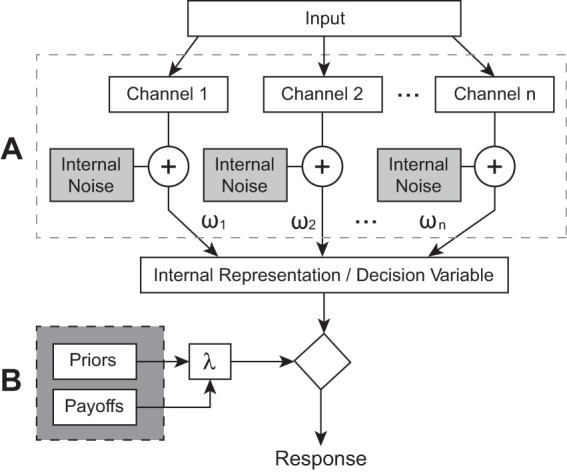
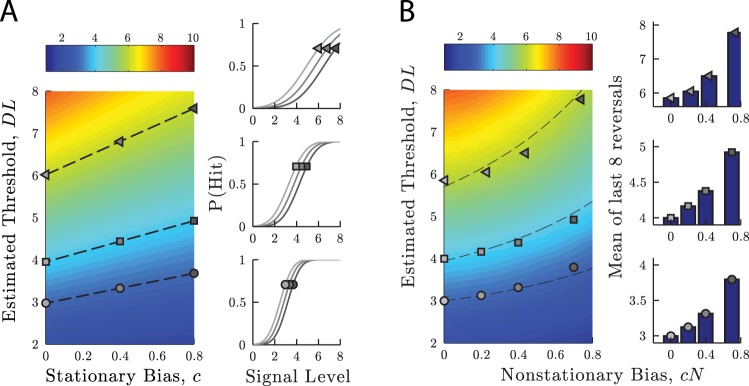
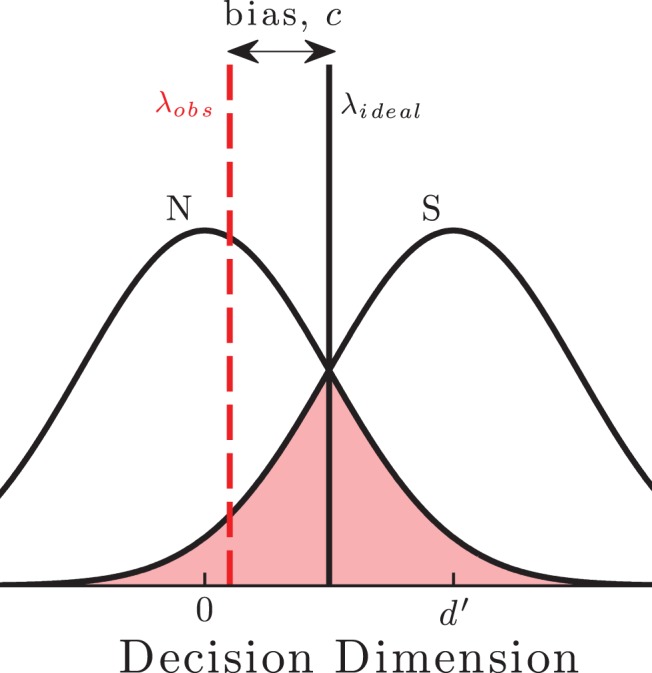
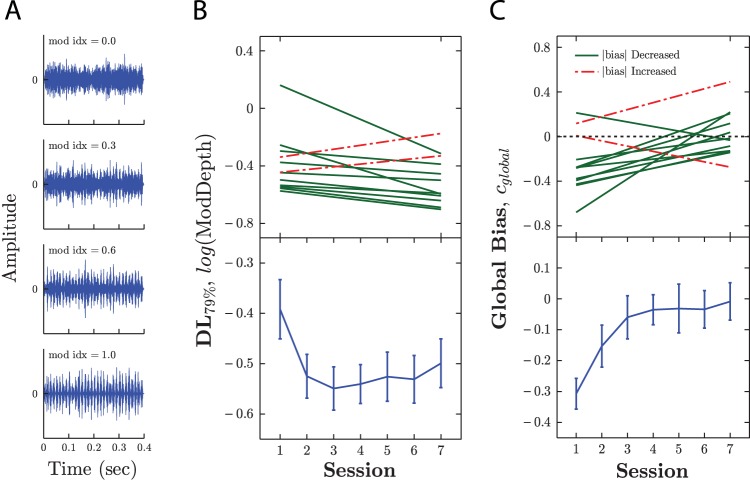
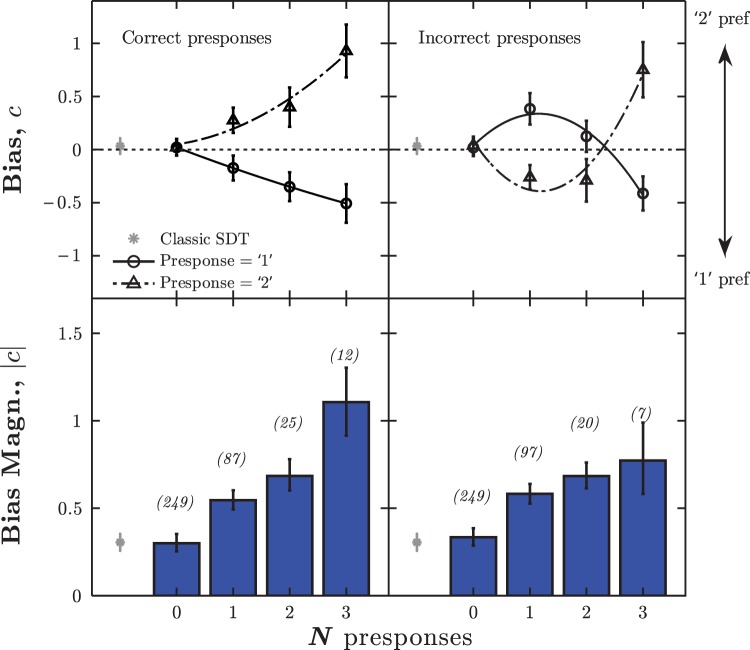
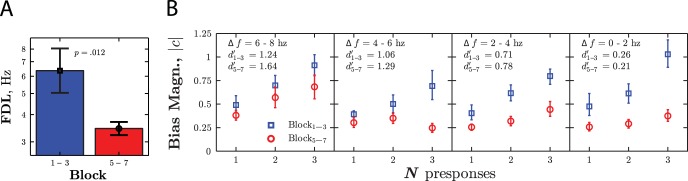
Sensory judgments improve with practice. Such perceptual learning is often thought to reflect an increase in perceptual sensitivity. However, it may also represent a decrease in response bias, with unpracticed observers acting in part on a priori hunches rather than sensory evidence. To examine whether this is the case, 55 observers practiced making a basic auditory judgment (yes/no amplitude-modulation detection or forced-choice frequency/amplitude discrimination) over multiple days. With all tasks, bias was present initially, but decreased with practice. Notably, this was the case even on supposedly "bias-free," 2-alternative forced-choice, tasks. In those tasks, observers did not favor the same response throughout (stationary bias), but did favor whichever response had been correct on previous trials (nonstationary bias). Means of correcting for bias are described. When applied, these showed that at least 13% of perceptual learning on a forced-choice task was due to reduction in bias. In other situations, changes in bias were shown to obscure the true extent of learning, with changes in estimated sensitivity increasing once bias was corrected for. The possible causes of bias and the implications for our understanding of perceptual learning are discussed.
感觉判断会随着练习而改善。这种知觉学习通常被认为反映了知觉敏感性的提高。然而,它也可能代表反应偏差的减少,未经过练习的观察者部分是基于先验的直觉而非感觉证据做出反应。为了检验是否如此,55名观察者在多天内练习进行一项基本的听觉判断(是/否调幅检测或迫选频率/幅度辨别)。在所有任务中,最初都存在偏差,但随着练习而减少。值得注意的是,即使在所谓“无偏差”的二选一迫选任务中也是如此。在这些任务中,观察者并非始终偏好相同的反应(固定偏差),而是确实偏好之前试验中正确的反应(非固定偏差)。描述了校正偏差的方法。应用这些方法后发现,在一项迫选任务中,至少13%的知觉学习是由于偏差的减少。在其他情况下,偏差的变化被证明会掩盖学习的真实程度,一旦校正偏差,估计的敏感性变化就会增加。讨论了偏差的可能原因及其对我们理解知觉学习的影响。