Pizzino Gabriele, Bitto Alessandra, Pallio Giovanni, Irrera Natasha, Galfo Federica, Interdonato Monica, Mecchio Anna, De Luca Filippo, Minutoli Letteria, Squadrito Francesco, Altavilla Domenica
Department of Clinical and Experimental Medicine, University of Messina, Messina, Italy.
Department of Paediatric, Gynaecological, Microbiological and Biomedical Sciences, University of Messina, Messina, Italy.
Mediators Inflamm. 2015;2015:591572. doi: 10.1155/2015/591572. Epub 2015 Mar 22.
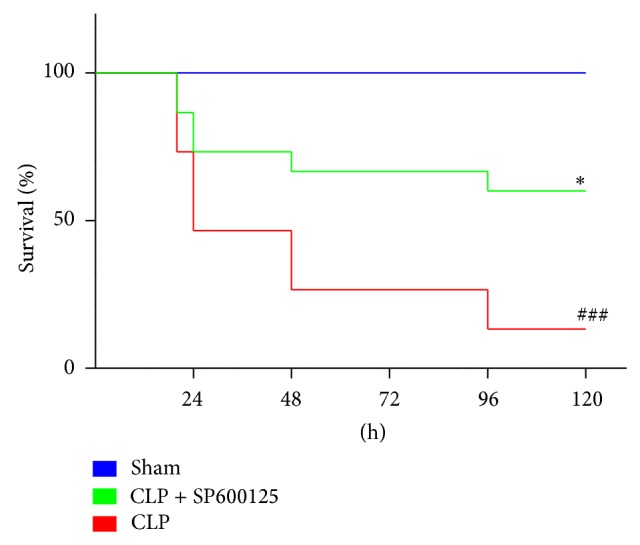
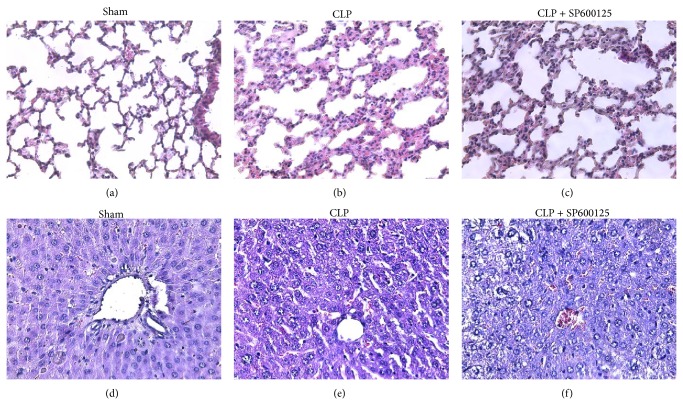
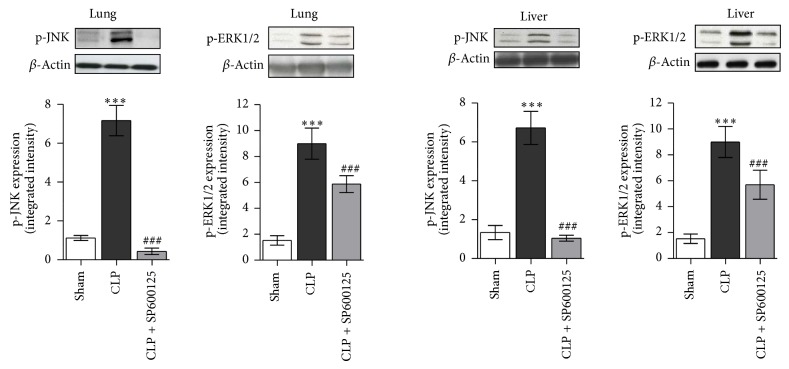
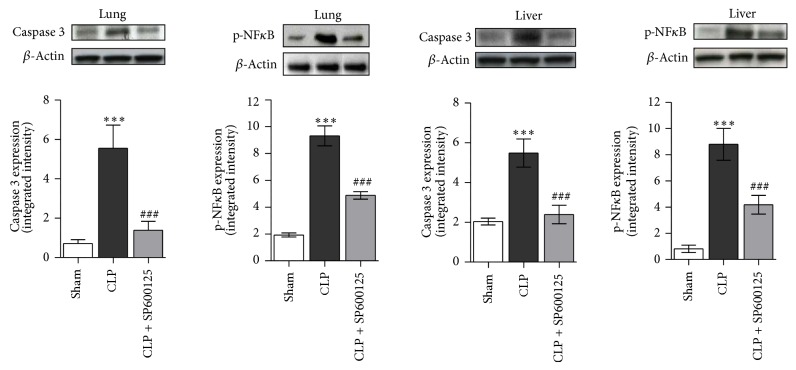
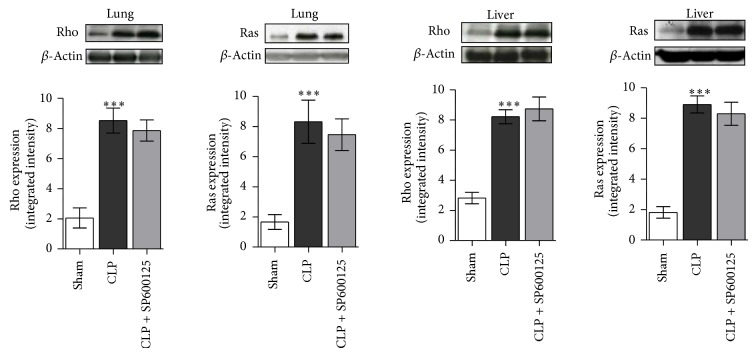
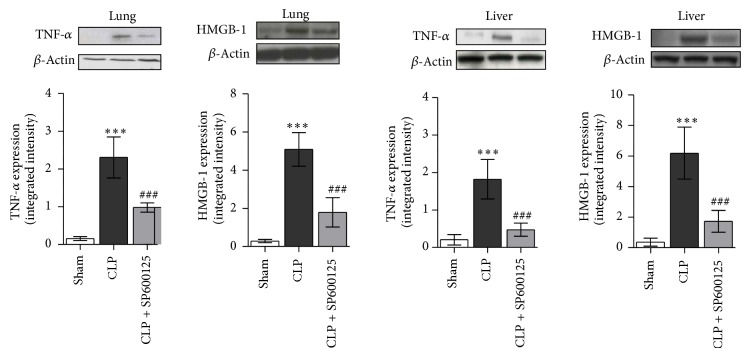
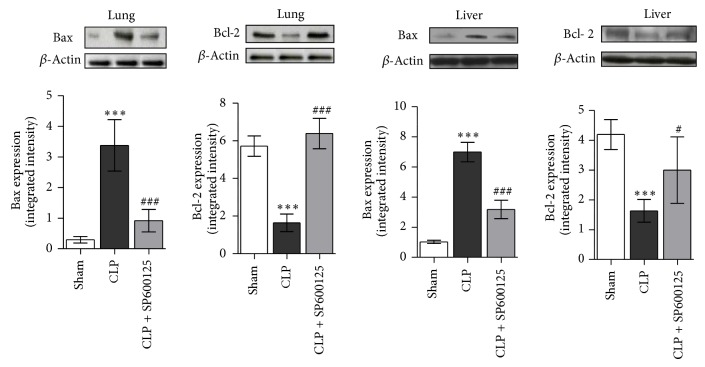
Cecal ligation and puncture (CLP) is an experimental polymicrobial sepsis induced systemic inflammation that leads to acute organ failure. Aim of our study was to evaluate the effects of SP600125, a specific c-Jun NH2-terminal kinase (JNK) inhibitor, to modulate the early and late steps of the inflammatory cascade in a murine model of CLP-induced sepsis. CB57BL/6J mice were subjected to CLP or sham operation. Animals were randomized to receive either SP600125 (15 mg/kg) or its vehicle intraperitoneally 1 hour after surgery and repeat treatment every 24 hours. To evaluate survival, a group of animals was monitored every 24 hours for 120 hours. Two other animals were sacrificed 4 or 18 hours after surgical procedures; lung and liver samples were collected for biomolecular and histopathologic analysis. The expression of p-JNK, p-ERK, TNF-α, HMGB-1, NF-κB, Ras, Rho, Caspase 3, Bcl-2, and Bax was evaluated in lung and liver samples; SP600125 improved survival, reduced CLP induced activation of JNK, NF-κB, TNF-α, and HMGB-1, inhibited proapoptotic pathway, preserved Bcl-2 expression, and reduced histologic damage in both lung and liver of septic mice. SP600125 protects against CLP induced sepsis by blocking JNK signalling; therefore, it can be considered a therapeutic approach in human sepsis.
盲肠结扎穿孔术(CLP)是一种实验性多微生物败血症,可引发全身炎症,导致急性器官衰竭。我们研究的目的是评估特异性c-Jun氨基末端激酶(JNK)抑制剂SP600125在CLP诱导的败血症小鼠模型中对调节炎症级联反应早期和晚期步骤的作用。将CB57BL/6J小鼠进行CLP或假手术。动物在手术后1小时随机接受腹腔注射SP600125(15mg/kg)或其溶媒,并每24小时重复给药一次。为评估生存率,一组动物每24小时监测120小时。另外两只动物在手术操作后4小时或18小时处死;收集肺和肝样本进行生物分子和组织病理学分析。评估肺和肝样本中p-JNK、p-ERK、TNF-α、HMGB-1、NF-κB、Ras、Rho、Caspase 3、Bcl-2和Bax的表达;SP600125提高了生存率,降低了CLP诱导的JNK、NF-κB、TNF-α和HMGB-1的激活,抑制了促凋亡途径,保留了Bcl-2表达,并减少了败血症小鼠肺和肝的组织学损伤。SP600125通过阻断JNK信号传导来预防CLP诱导的败血症;因此,它可被视为治疗人类败血症的一种方法。