Wirth Roland, Lakatos Gergely, Maróti Gergely, Bagi Zoltán, Minárovics János, Nagy Katalin, Kondorosi Éva, Rákhely Gábor, Kovács Kornél L
Department of Biotechnology, University of Szeged, Közép fasor 52, H-6726 Szeged, Hungary.
Institute of Biochemistry, Biological Research Center, Hungarian Academy of Sciences, Temesvári krt. 62, H-6726 Szeged, Hungary.
Biotechnol Biofuels. 2015 Apr 8;8:59. doi: 10.1186/s13068-015-0243-x. eCollection 2015.
The growing concern regarding the use of agricultural land for the production of biomass for food/feed or energy is dictating the search for alternative biomass sources. Photosynthetic microorganisms grown on marginal or deserted land present a promising alternative to the cultivation of energy plants and thereby may dampen the 'food or fuel' dispute. Microalgae offer diverse utilization routes.
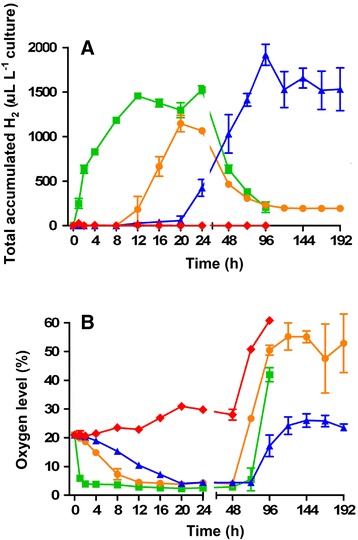
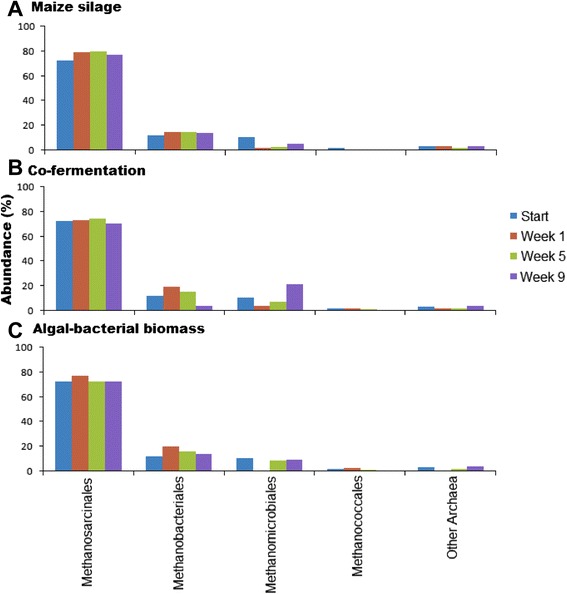
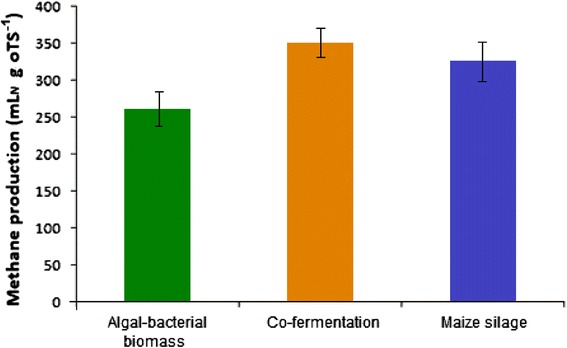
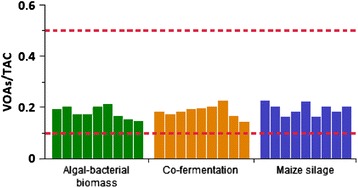
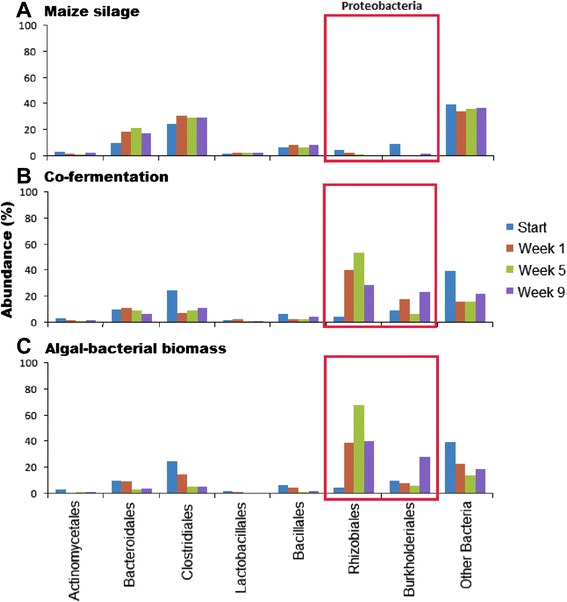
A two-stage energetic utilization, using a natural mixed population of algae (Chlamydomonas sp. and Scenedesmus sp.) and mutualistic bacteria (primarily Rhizobium sp.), was tested for coupled biohydrogen and biogas production. The microalgal-bacterial biomass generated hydrogen without sulfur deprivation. Algal hydrogen production in the mixed population started earlier but lasted for a shorter period relative to the benchmark approach. The residual biomass after hydrogen production was used for biogas generation and was compared with the biogas production from maize silage. The gas evolved from the microbial biomass was enriched in methane, but the specific gas production was lower than that of maize silage. Sustainable biogas production from the microbial biomass proceeded without noticeable difficulties in continuously stirred fed-batch laboratory-size reactors for an extended period of time. Co-fermentation of the microbial biomass and maize silage improved the biogas production: The metagenomic results indicated that pronounced changes took place in the domain Bacteria, primarily due to the introduction of a considerable bacterial biomass into the system with the substrate; this effect was partially compensated in the case of co-fermentation. The bacteria living in syntrophy with the algae apparently persisted in the anaerobic reactor and predominated in the bacterial population. The Archaea community remained virtually unaffected by the changes in the substrate biomass composition.
Through elimination of cost- and labor-demanding sulfur deprivation, sustainable biohydrogen production can be carried out by using microalgae and their mutualistic bacterial partners. The beneficial effect of the mutualistic mixed bacteria in O2 quenching is that the spent algal-bacterial biomass can be further exploited for biogas production. Anaerobic fermentation of the microbial biomass depends on the composition of the biogas-producing microbial community. Co-fermentation of the mixed microbial biomass with maize silage improved the biogas productivity.
人们日益关注将农业用地用于生产粮食/饲料或能源的生物质,这促使人们寻找替代生物质来源。在边际或废弃土地上生长的光合微生物是能源植物种植的一个有前途的替代方案,从而可能缓解“粮食还是燃料”的争议。微藻提供了多种利用途径。
测试了一种两阶段能源利用方法,使用藻类(衣藻属和栅藻属)和共生细菌(主要是根瘤菌属)的天然混合群体进行耦合生物制氢和沼气生产。微藻-细菌生物质在不进行硫剥夺的情况下产生氢气。混合群体中的藻类产氢开始时间早于基准方法,但持续时间较短。产氢后的残余生物质用于沼气生产,并与玉米青贮饲料的沼气生产进行比较。微生物生物质产生的气体富含甲烷,但比产气低于玉米青贮饲料。在连续搅拌的实验室规模分批补料反应器中,微生物生物质可持续生产沼气,且在较长时间内没有明显困难。微生物生物质与玉米青贮饲料的共发酵提高了沼气产量:宏基因组结果表明,细菌域发生了显著变化,主要是由于随着底物向系统中引入了大量细菌生物质;在共发酵的情况下,这种影响得到了部分补偿。与藻类共生的细菌显然在厌氧反应器中持续存在,并在细菌群体中占主导地位。古菌群落实际上不受底物生物质组成变化的影响。
通过消除成本高且费力的硫剥夺,利用微藻及其共生细菌伙伴可以实现可持续的生物制氢。共生混合细菌在氧气淬灭方面的有益作用是,用过的微藻-细菌生物质可进一步用于沼气生产。微生物生物质的厌氧发酵取决于产沼气微生物群落的组成。微生物混合生物质与玉米青贮饲料的共发酵提高了沼气生产率。