Aguirre-Rueda Diana, Guerra-Ojeda Sol, Aldasoro Martin, Iradi Antonio, Obrador Elena, Mauricio Maria D, Vila Jose M, Marchio Patricia, Valles Soraya L
Department of Physiology, School of Medicine, University of Valencia, Valencia, Spain.
PLoS One. 2015 Apr 13;10(4):e0122843. doi: 10.1371/journal.pone.0122843. eCollection 2015.
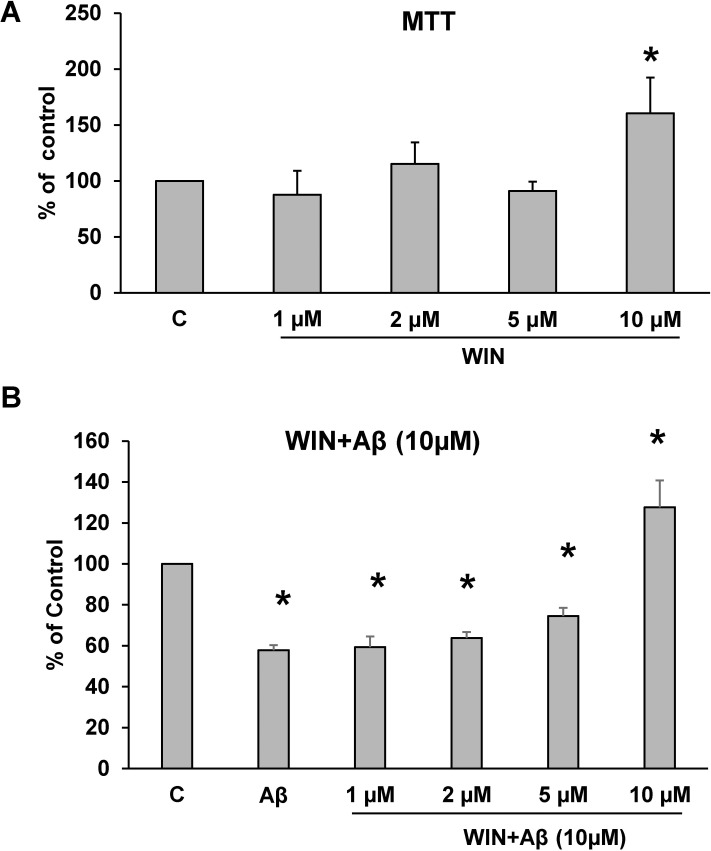
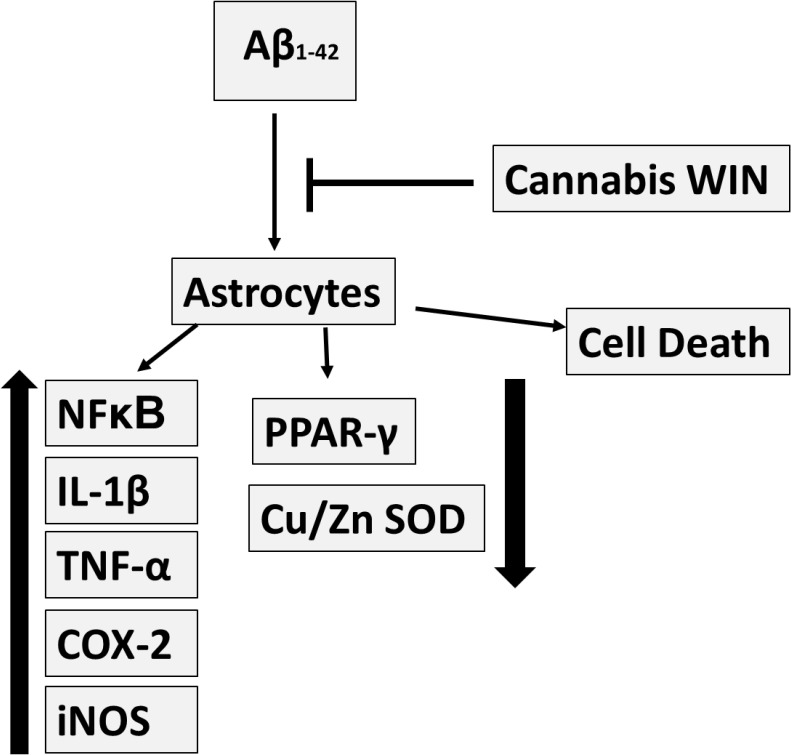
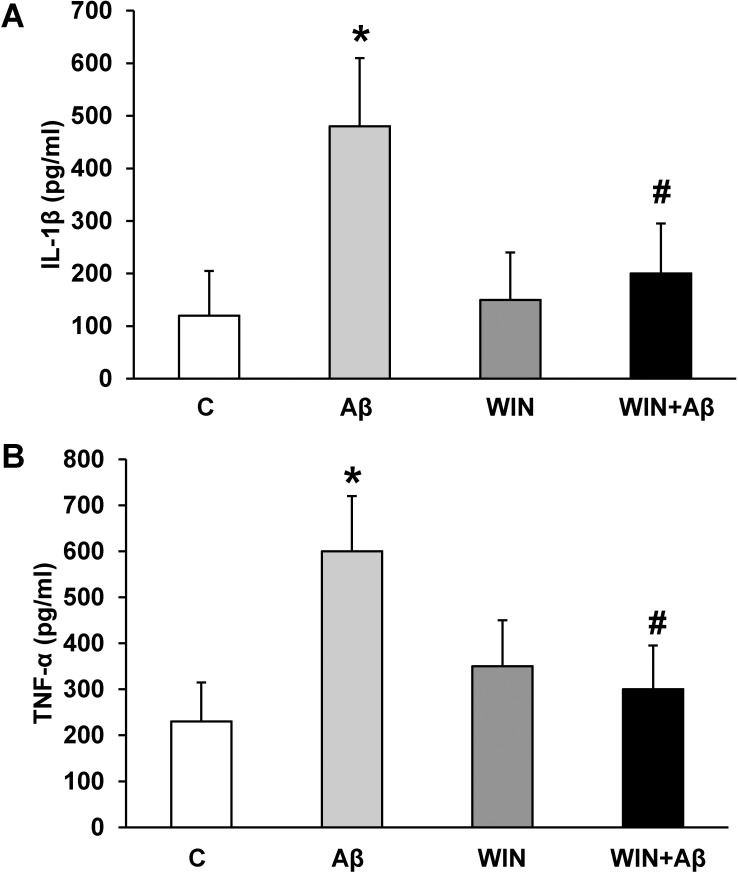
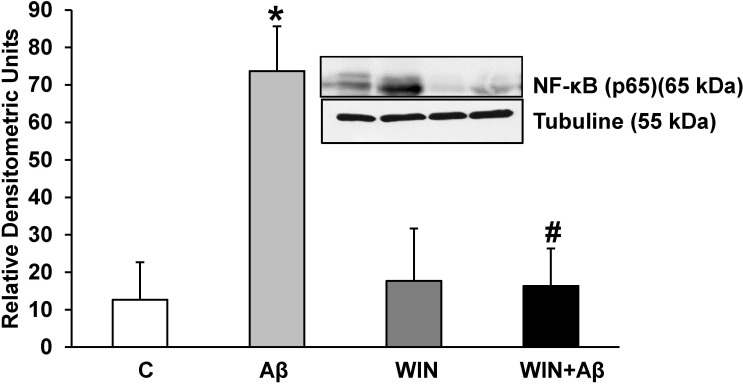
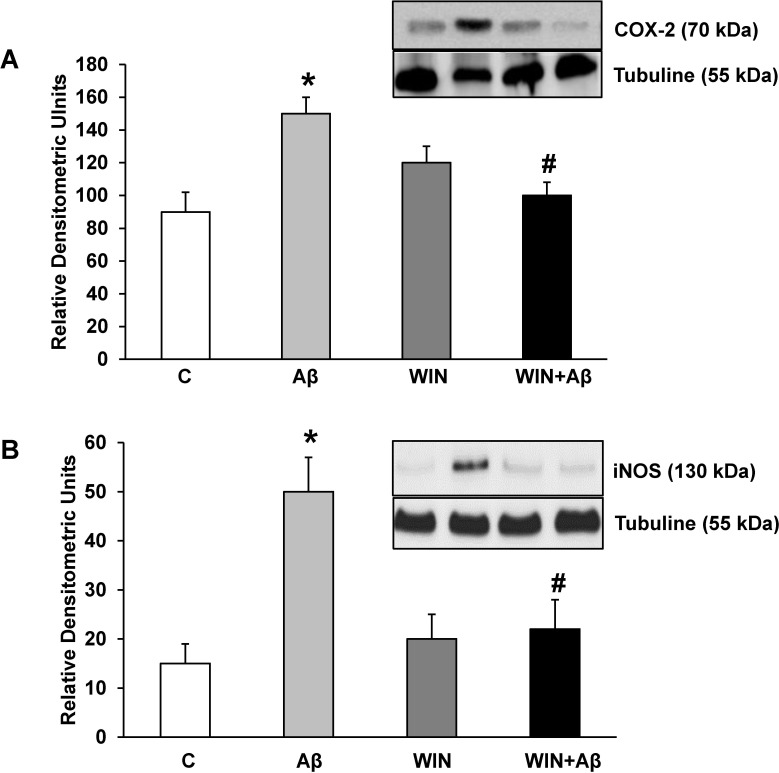
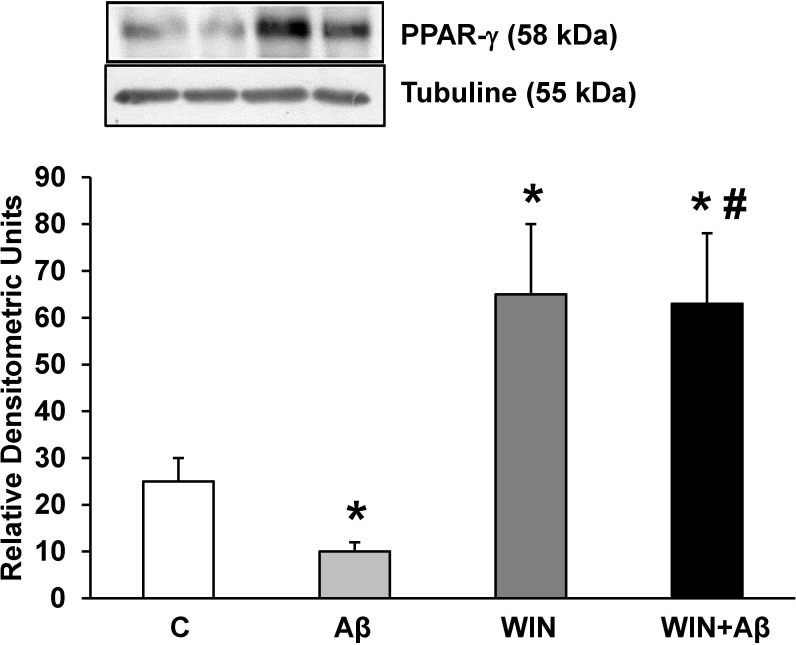
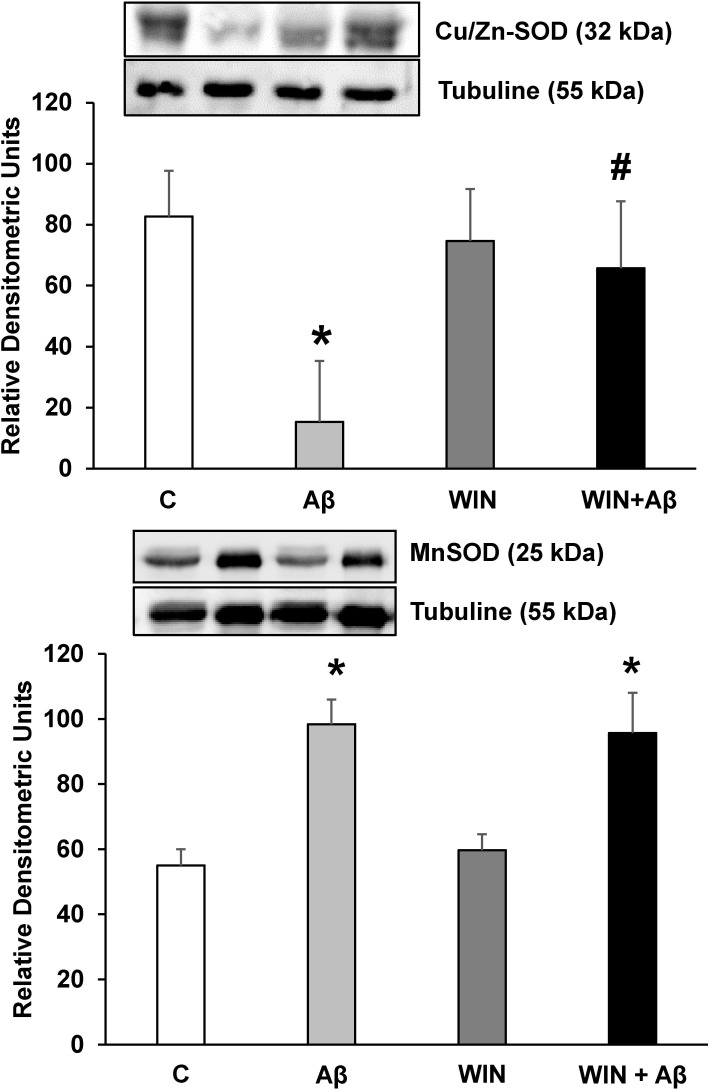
Alzheimer's disease (AD), a neurodegenerative illness involving synaptic dysfunction with extracellular accumulation of Aβ1-42 toxic peptide, glial activation, inflammatory response and oxidative stress, can lead to neuronal death. Endogenous cannabinoid system is implicated in physiological and physiopathological events in central nervous system (CNS), and changes in this system are related to many human diseases, including AD. However, studies on the effects of cannabinoids on astrocytes functions are scarce. In primary cultured astrocytes we studied cellular viability using MTT assay. Inflammatory and oxidative stress mediators were determined by ELISA and Western-blot techniques both in the presence and absence of Aβ1-42 peptide. Effects of WIN 55,212-2 (a synthetic cannabinoid) on cell viability, inflammatory mediators and oxidative stress were also determined. Aβ1-42 diminished astrocytes viability, increased TNF-α and IL-1β levels and p-65, COX-2 and iNOS protein expression while decreased PPAR-γ and antioxidant enzyme Cu/Zn SOD. WIN 55,212-2 pretreatment prevents all effects elicited by Aβ1-42. Furthermore, cannabinoid WIN 55,212-2 also increased cell viability and PPAR-γ expression in control astrocytes. In conclusion cannabinoid WIN 55,212-2 increases cell viability and anti-inflammatory response in cultured astrocytes. Moreover, WIN 55,212-2 increases expression of anti-oxidant Cu/Zn SOD and is able to prevent inflammation induced by Aβ1-42 in cultured astrocytes. Further studies would be needed to assess the possible beneficial effects of cannabinoids in Alzheimer's disease patients.
阿尔茨海默病(AD)是一种神经退行性疾病,涉及突触功能障碍,伴有Aβ1-42毒性肽的细胞外积累、胶质细胞激活、炎症反应和氧化应激,可导致神经元死亡。内源性大麻素系统参与中枢神经系统(CNS)的生理和病理生理过程,该系统的变化与包括AD在内的许多人类疾病有关。然而,关于大麻素对星形胶质细胞功能影响的研究很少。在原代培养的星形胶质细胞中,我们使用MTT法研究细胞活力。在有和没有Aβ1-42肽的情况下,通过ELISA和蛋白质印迹技术测定炎症和氧化应激介质。还测定了WIN 55,212-2(一种合成大麻素)对细胞活力、炎症介质和氧化应激的影响。Aβ1-42降低了星形胶质细胞的活力,增加了TNF-α和IL-1β水平以及p-65、COX-2和iNOS蛋白表达,同时降低了PPAR-γ和抗氧化酶铜/锌超氧化物歧化酶(Cu/Zn SOD)。WIN 55,212-2预处理可预防Aβ1-42引起的所有影响。此外,大麻素WIN 55,212-2还增加了对照星形胶质细胞的细胞活力和PPAR-γ表达。总之,大麻素WIN 55,212-2增加了培养的星形胶质细胞的细胞活力和抗炎反应。此外,WIN 55,212-2增加了抗氧化铜/锌超氧化物歧化酶的表达,并能够预防培养的星形胶质细胞中由Aβ1-42诱导的炎症。需要进一步研究以评估大麻素对阿尔茨海默病患者可能的有益作用。