Römisch Karin
Department of Microbiology, Faculty of Biology, Saarland University, Saarbruecken, Germany.
F1000Res. 2012 Aug 22;1:12. doi: 10.12688/f1000research.1-12.v2. eCollection 2012.
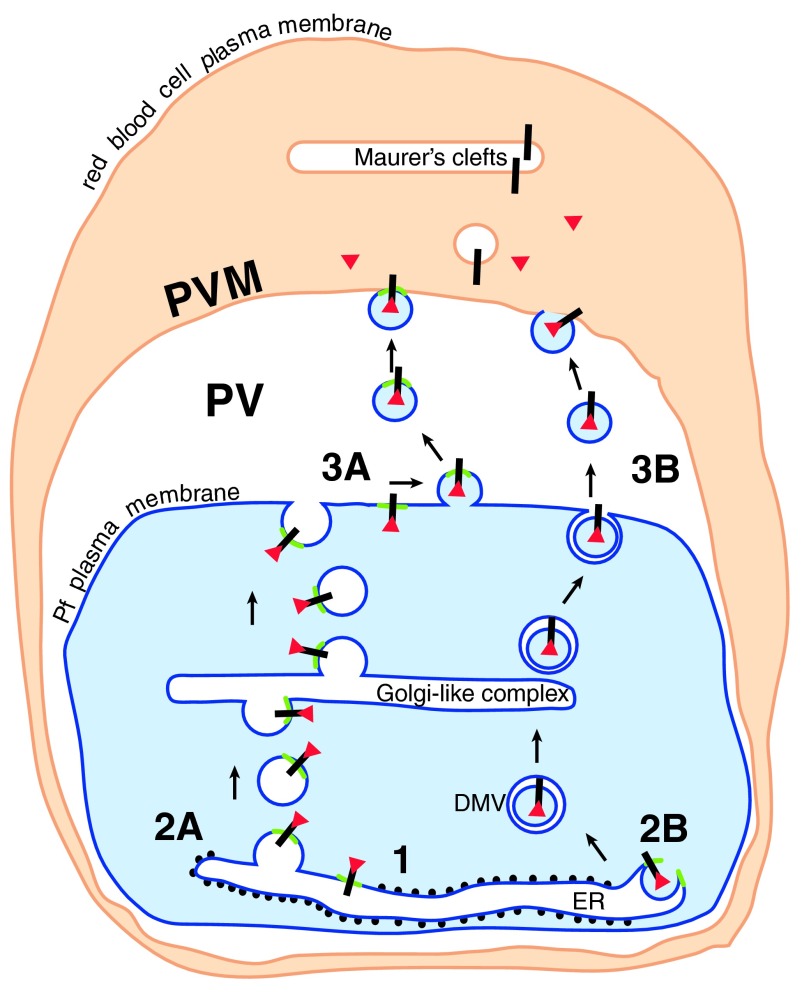
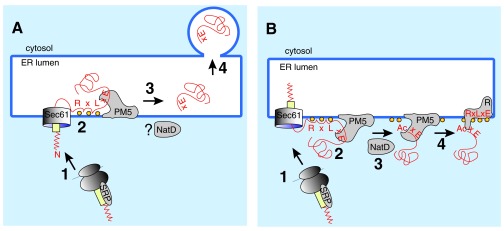
Malaria is caused by parasites which live in host erythrocytes and remodel these cells to provide optimally for the parasites' needs by exporting effector proteins into the host cells. Eight years ago the discovery of a host cell targeting sequence present in both soluble and transmembrane P. falciparum exported proteins generated a starting point for investigating the mechanism of parasite protein transport into infected erythrocytes. Since then many confusing facts about this targeting signal have emerged. In this paper, I try to make sense of them.
疟疾由寄生于宿主红细胞内的寄生虫引起,这些寄生虫通过向宿主细胞输出效应蛋白来重塑这些细胞,以最佳地满足自身需求。八年前,在恶性疟原虫可溶性和跨膜输出蛋白中均发现了一个宿主细胞靶向序列,这为研究寄生虫蛋白转运至受感染红细胞的机制提供了一个起点。从那时起,关于这个靶向信号出现了许多令人困惑的事实。在本文中,我试图理清这些事实。