Morales Rodrigo, Bravo-Alegria Javiera, Duran-Aniotz Claudia, Soto Claudio
Mitchell Center for Alzheimer's Disease and Related Brain Disorders, Department of Neurology, The University of Texas Houston Medical School, Houston, TX 77030.
1] Mitchell Center for Alzheimer's Disease and Related Brain Disorders, Department of Neurology, The University of Texas Houston Medical School, Houston, TX 77030 [2] Universidad de los Andes, Facultad de Medicina, Av. San Carlos de Apoquindo 2200, Las Condes, Santiago, Chile.
Sci Rep. 2015 Mar 23;5:9349. doi: 10.1038/srep09349.
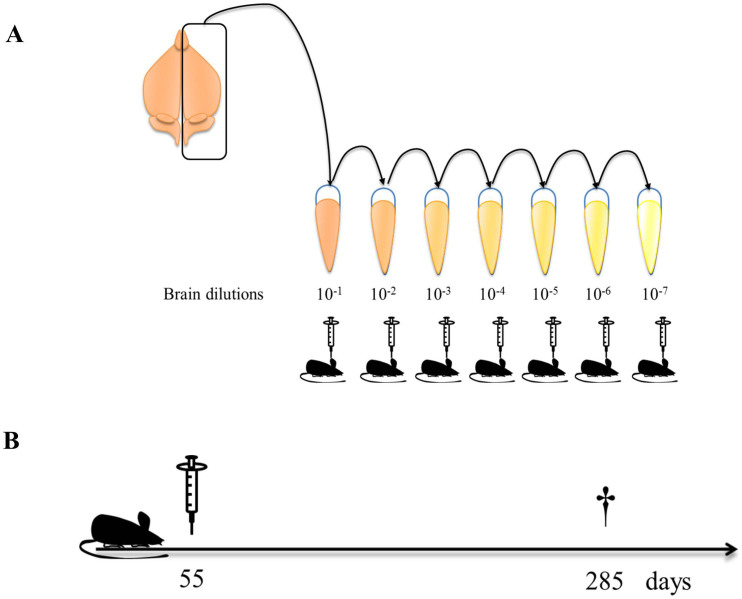
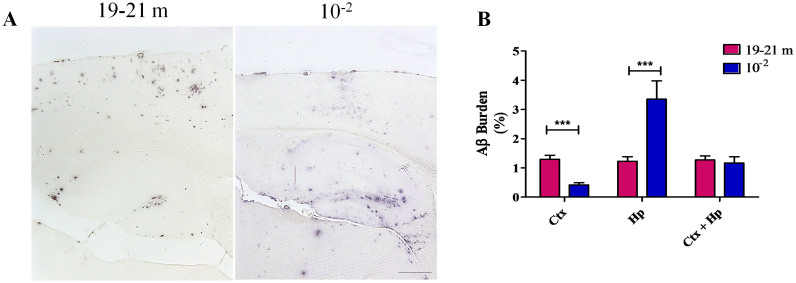
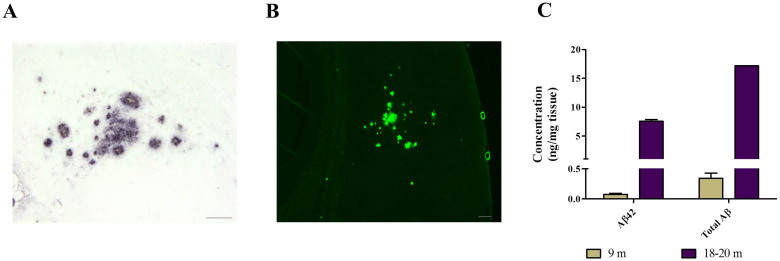
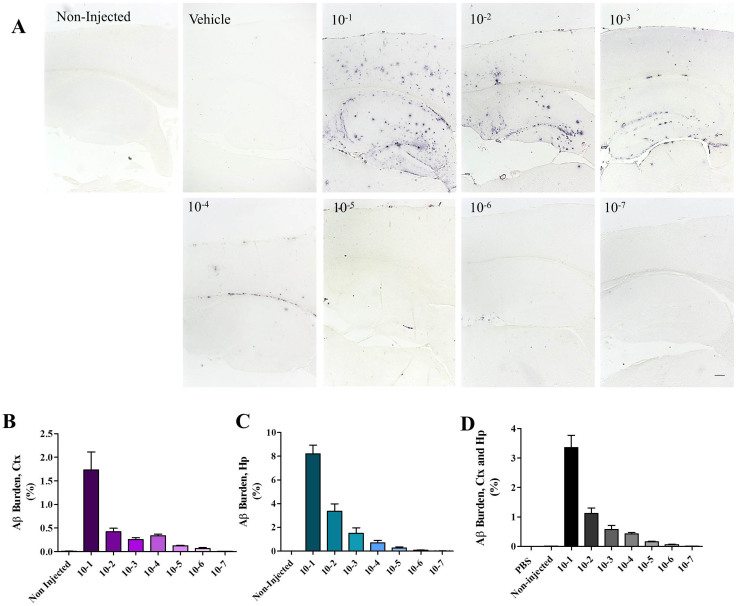
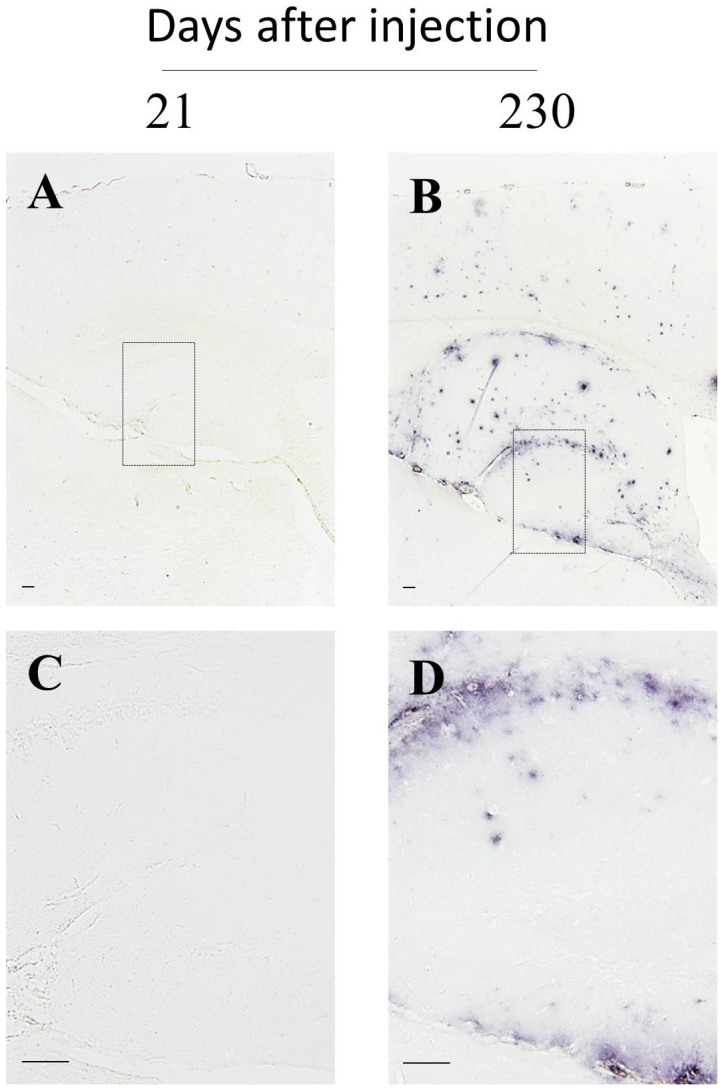
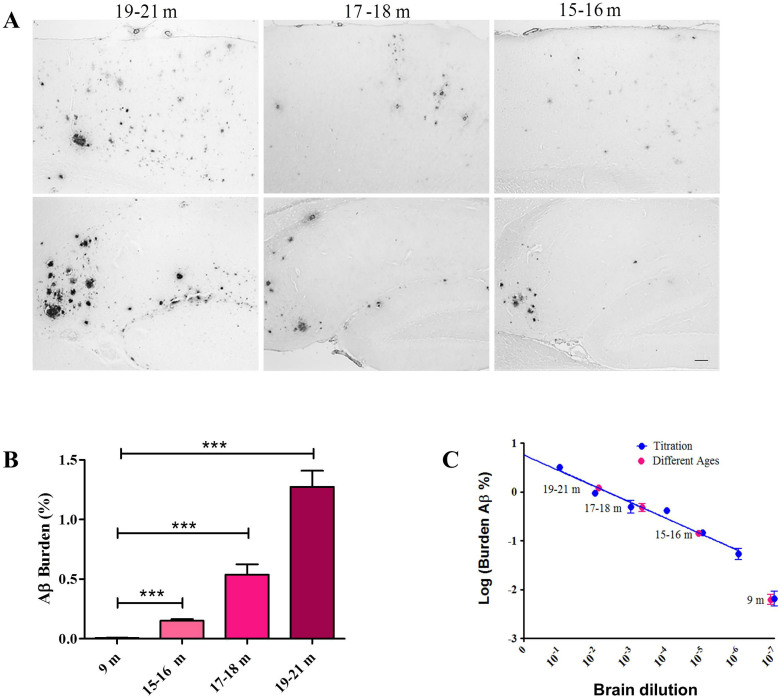
Experimental evidence in animal models suggests that misfolded Amyloid-β (Aβ) spreads in disease following a prion-like mechanism. Several properties characteristics of infectious prions have been shown for the induction of Aβ aggregates. However, a detailed titration of Aβ misfolding transmissibility and estimation of the minimum concentration of biologically active Aβ seeds able to accelerate pathological changes has not yet been performed. In this study, brain extracts from old tg2576 animals were serially diluted and intra-cerebrally injected into young subjects from the same transgenic line. Animals were sacrificed several months after treatment and brain slices were analyzed for amyloid pathology. We observed that administration of misfolded Aβ was able to significantly accelerate amyloid deposition in young mice, even when the original sample was diluted a million times. The titration curve obtained in this experiment was compared to the natural Aβ load spontaneously accumulated by these mice overtime. Our findings suggest that administration of the largest dose of Aβ seeds led to an acceleration of pathology equivalent to over a year. These results show that active Aβ seeds present in the brain can seed amyloidosis in a titratable manner, similarly as observed for infectious prions.
动物模型中的实验证据表明,错误折叠的淀粉样β蛋白(Aβ)在疾病中以朊病毒样机制传播。已证明传染性朊病毒的几个特性可诱导Aβ聚集。然而,尚未对Aβ错误折叠的传染性进行详细滴定,也未估计能够加速病理变化的生物活性Aβ种子的最低浓度。在本研究中,将来自老年tg2576动物的脑提取物进行连续稀释,并脑内注射到同一转基因品系的年轻动物体内。在治疗数月后处死动物,并对脑切片进行淀粉样病理分析。我们观察到,即使原始样品稀释了一百万倍,注射错误折叠的Aβ仍能显著加速年轻小鼠的淀粉样沉积。将本实验获得的滴定曲线与这些小鼠随时间自发积累的天然Aβ负荷进行比较。我们的研究结果表明,给予最大剂量的Aβ种子可导致病理加速,相当于超过一年的时间。这些结果表明,脑中存在的活性Aβ种子可以以可滴定的方式引发淀粉样变性,这与传染性朊病毒的情况类似。