Oh Sang Hoon, Oh Joo Suk, Kim Young-Min, Park Kyu Nam, Choi Seung Pill, Kim Gi Woon, Jeung Kyung Woon, Jang Tae Chang, Park Yoo Seok, Kyong Yeon Young
Department of Emergency Medicine, College of Medicine, The Catholic University of Korea, 222, Banpodaero, Seocho-gu, Seoul, Korea, 137-701.
Department of Emergency Medicine, College of Medicine, Ajou University, 164, World cup-ro, Yeongtong-gu, Suwon-si, Gyeonggi-do, Korea, 443-380.
Crit Care. 2015 Mar 16;19(1):85. doi: 10.1186/s13054-015-0819-7.
Various methods and devices have been described for cooling after cardiac arrest, but the ideal cooling method remains unclear. The aim of this study was to compare the neurological outcomes, efficacies and adverse events of surface and endovascular cooling techniques in cardiac arrest patients.
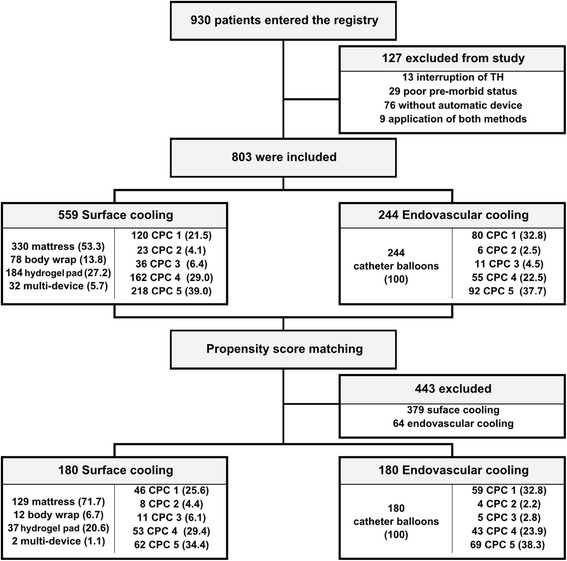
We performed a multicenter, retrospective, registry-based study of adult cardiac arrest patients treated with therapeutic hypothermia presenting to 24 hospitals across South Korea from 2007 to 2012. We included patients who received therapeutic hypothermia using overall surface or endovascular cooling devices and compared the neurological outcomes, efficacies and adverse events of both cooling techniques. To adjust for differences in the baseline characteristics of each cooling method, we performed one-to-one matching by the propensity score.
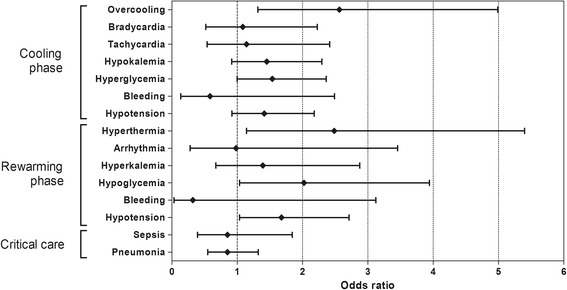
In total, 803 patients were included in the analysis. Of these patients, 559 underwent surface cooling, and the remaining 244 patients underwent endovascular cooling. In the unmatched cohort, a greater number of adverse events occurred in the surface cooling group. Surface cooling was significantly associated with a poor neurological outcome (cerebral performance category 3-5) at hospital discharge (p = 0.01). After propensity score matching, surface cooling was not associated with poor neurological outcome and hospital mortality [odds ratio (OR): 1.26, 95% confidence interval (CI): 0.81-1.96, p = 0.31 and OR: 0.85, 95% CI: 0.55-1.30, p = 0.44, respectively]. Although surface cooling was associated with an increased incidence of adverse events (such as overcooling, rebound hyperthermia, rewarming related hypoglycemia and hypotension) compared with endovascular cooling, these complications were not associated with surface cooling using hydrogel pads.
In the overall matched cohort, no significant difference in neurological outcomes and hospital morality was observed between the surface and endovascular cooling methods.
已经描述了多种心脏骤停后降温的方法和设备,但理想的降温方法仍不明确。本研究的目的是比较心脏骤停患者中体表降温与血管内降温技术的神经学转归、疗效及不良事件。
我们对2007年至2012年在韩国24家医院接受治疗性低温治疗的成年心脏骤停患者进行了一项多中心、回顾性、基于登记的研究。我们纳入了使用全身体表或血管内降温设备进行治疗性低温治疗的患者,并比较了两种降温技术的神经学转归、疗效及不良事件。为了调整每种降温方法基线特征的差异,我们采用倾向评分进行一对一匹配。
总计803例患者纳入分析。其中,559例接受体表降温,其余244例接受血管内降温。在未匹配队列中,体表降温组发生的不良事件更多。体表降温与出院时不良神经学转归(脑功能分级3 - 5级)显著相关(p = 0.01)。倾向评分匹配后,体表降温与不良神经学转归及医院死亡率无关[比值比(OR):1.26,95%置信区间(CI):0.81 - 1.96,p = 0.31;OR:0.85,95% CI:0.55 - 1.30,p = 0.44]。尽管与血管内降温相比,体表降温与不良事件(如过度降温、反弹性高热、复温相关低血糖和低血压)发生率增加相关,但这些并发症与使用水凝胶垫的体表降温无关。
在总体匹配队列中,体表降温与血管内降温方法在神经学转归和医院死亡率方面未观察到显著差异。