Gui Zhifang, Li Shuquan, Liu Xing, Xu Bin, Xu Jian
Medical Technology College, Zhejiang Chinese Medical University, Binwen Road, Binjiang District, Hangzhou, 310053, Zhejiang Province, China.
School of Medicine, Jinggangshan University, Ji'an, 343000, China.
BMC Complement Altern Med. 2015 Apr 14;15:117. doi: 10.1186/s12906-015-0640-5.
Oridonin, an ingredient used in traditional Chinese medicine, has been demonstrated to play an important role in antitumour effects, but the mechanism underlying its antitumour properties is still not clear.
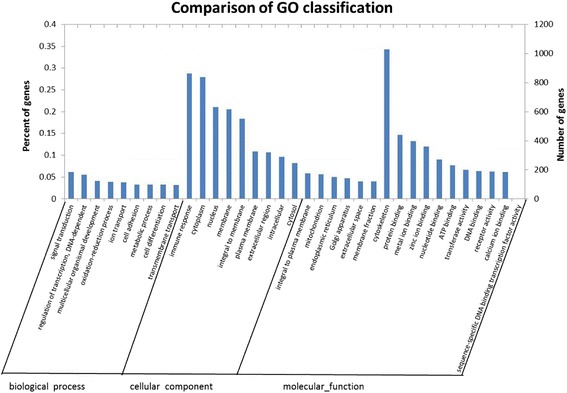
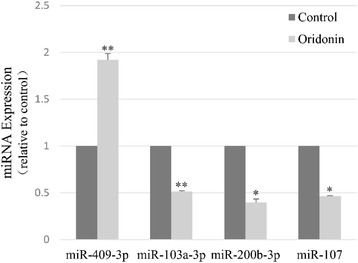
To verify the anti-cancer effects of oridonin via a miRNA-dependent mechanism, comprehensive miRNA expression profiling of oridonin-treated BxPC-3 human pancreatic cancer cells was performed using a miRNA microarray assay based on Sanger miR-Base Release 20, followed by a validation using real-time PCR. MicroRNA target prediction and Gene Ontology and KEGG pathway analysis were performed to investigate possible pathways involved.
The results showed that 105 miRNAs were significantly differentially expressed (signal reading >500, p ≤ 0.01, |Log2-value| ≥1) in oridonin-treated BxPC-3 human pancreatic cancer cells.
Our data indicates that oridonin inhibits BxPC-3 cells probably through regulating the expression of miRNAs. Interruption of miRNA profiling may provide new therapeutic methods for the clinical treatment of pancreatic cancer.
冬凌草甲素是一种中药成分,已被证明在抗肿瘤作用中发挥重要作用,但其抗肿瘤特性的潜在机制仍不清楚。
为了通过依赖miRNA的机制验证冬凌草甲素的抗癌作用,使用基于Sanger miR-Base Release 20的miRNA微阵列分析对经冬凌草甲素处理的BxPC-3人胰腺癌细胞进行了全面的miRNA表达谱分析,随后使用实时PCR进行验证。进行了MicroRNA靶标预测以及基因本体论和KEGG通路分析,以研究可能涉及的途径。
结果表明,在经冬凌草甲素处理的BxPC-3人胰腺癌细胞中,有105个miRNA显著差异表达(信号读数>500,p≤0.01,|Log2值|≥1)。
我们的数据表明,冬凌草甲素可能通过调节miRNA的表达来抑制BxPC-3细胞。miRNA谱的中断可能为胰腺癌的临床治疗提供新的治疗方法。