Liu Lily, Yu Haijia, Huang Xin, Tan Hongzhi, Li Song, Luo Yan, Zhang Li, Jiang Sumei, Jia Huifeng, Xiong Yao, Zhang Ruliang, Huang Yi, Chu Charles C, Tian Wenzhi
Department of Cell Biology, Huabo Biopharm Co Ltd., Shanghai, 201203, China.
Department of Antibody Technology, Huabo Biopharm Co Ltd., Shanghai, 201203, China.
BMC Cancer. 2015 Mar 25;15:170. doi: 10.1186/s12885-015-1140-1.
Relatively poor penetration and retention in tumor tissue has been documented for large molecule drugs including therapeutic antibodies and recombinant immunoglobulin constant region (Fc)-fusion proteins due to their large size, positive charge, and strong target binding affinity. Therefore, when designing a large molecular drug candidate, smaller size, neutral charge, and optimal affinity should be considered.
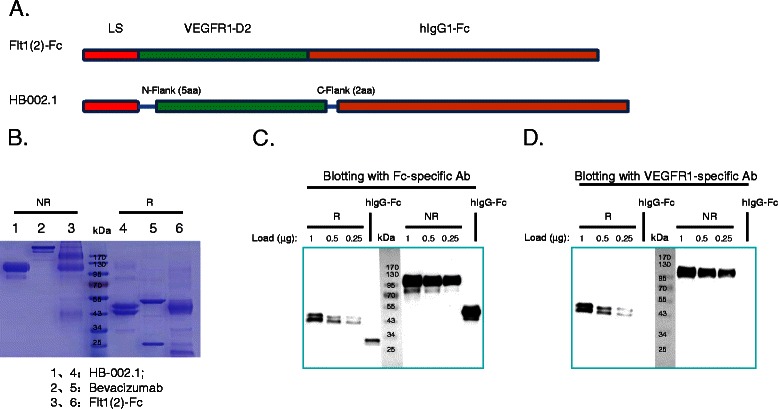
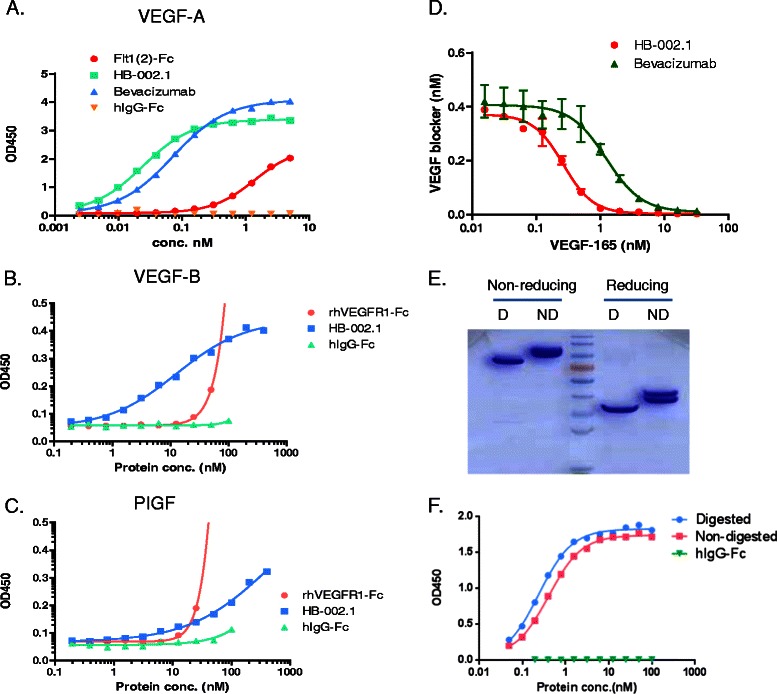
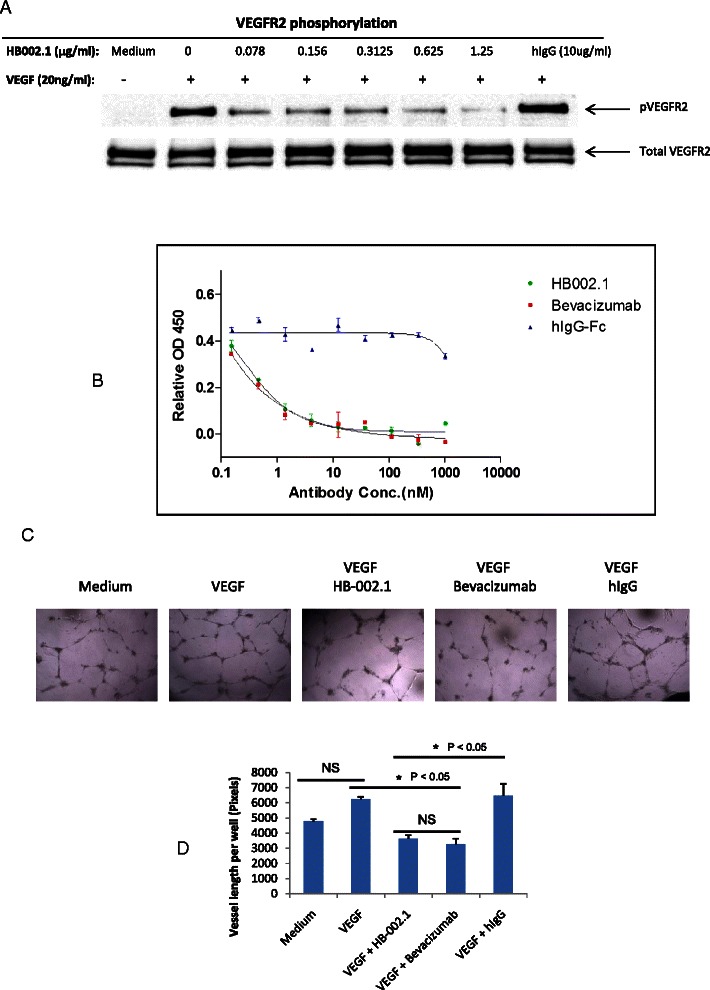
We engineered a recombinant protein by molecular engineering the second domain of VEGFR1 and a few flanking residues fused with the Fc fragment of human IgG1, which we named HB-002.1. This recombinant protein was extensively characterized both in vitro and in vivo for its target-binding and target-blocking activities, pharmacokinetic profile, angiogenesis inhibition activity, and anti-tumor therapeutic efficacy.
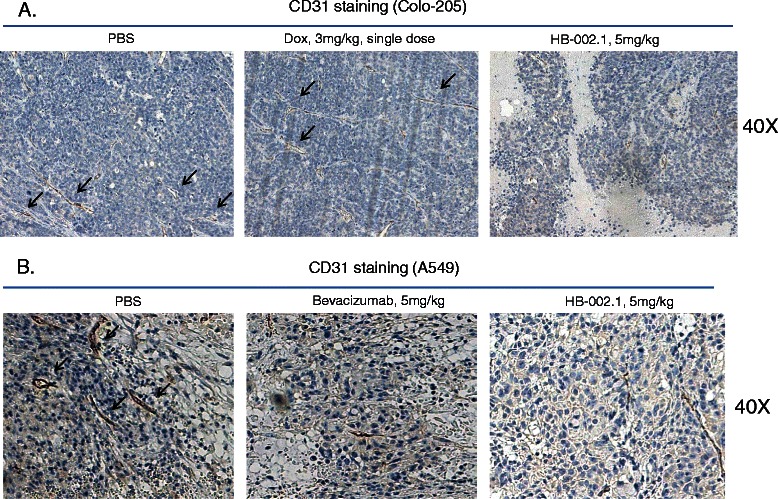
HB-002.1 has a molecular weight of ~80 kDa, isoelectric point of ~6.7, and an optimal target binding affinity of <1 nM. The pharmacokinetic profile was excellent with a half-life of 5 days, maximal concentration of 20.27 μg/ml, and area under the curve of 81.46 μg·days/ml. When tested in a transgenic zebrafish embryonic angiogenesis model, dramatic inhibition in angiogenesis was exhibited by a markedly reduced number of subintestinal vessels. When tested for anti-tumor efficacy, HB-002.1 was confirmed in two xenograft tumor models (A549 and Colo-205) to have a robust tumor killing activity, showing a percentage of inhibition over 90% at the dose of 20 mg/kg. Most promisingly, HB-002.1 showed a superior therapeutic efficacy compared to bevacizumab in the A549 xenograft model (tumor inhibition: 84.7% for HB-002.1 versus 67.6% for bevacizumab, P<0.0001).
HB-002.1 is a strong angiogenesis inhibitor that has the potential to be a novel promising drug for angiogenesis-related diseases such as tumor neoplasms and age-related macular degeneration.
包括治疗性抗体和重组免疫球蛋白恒定区(Fc)融合蛋白在内的大分子药物,因其尺寸大、带正电荷和具有较强的靶标结合亲和力,在肿瘤组织中的穿透性和保留率相对较差。因此,在设计大分子候选药物时,应考虑较小的尺寸、中性电荷和最佳亲和力。
我们通过对血管内皮生长因子受体1(VEGFR1)的第二个结构域和一些侧翼残基进行分子工程改造,并与人IgG1的Fc片段融合,构建了一种重组蛋白,命名为HB-002.1。对该重组蛋白进行了广泛的体外和体内表征,包括其靶标结合和靶标阻断活性、药代动力学特征、血管生成抑制活性和抗肿瘤治疗效果。
HB-002.1的分子量约为80 kDa,等电点约为6.7,最佳靶标结合亲和力小于1 nM。药代动力学特征良好,半衰期为5天,最大浓度为20.27 μg/ml,曲线下面积为81.46 μg·天/ml。在转基因斑马鱼胚胎血管生成模型中进行测试时,肠下血管数量显著减少,显示出对血管生成的显著抑制。在抗肿瘤疗效测试中,HB-002.1在两种异种移植肿瘤模型(A549和Colo-205)中被证实具有强大的肿瘤杀伤活性,在20 mg/kg剂量下抑制率超过90%。最有前景的是,在A549异种移植模型中,HB-002.1显示出比贝伐单抗更好的治疗效果(肿瘤抑制率:HB-002.1为84.7%,贝伐单抗为67.6%,P<0.0001)。
HB-002.1是一种强大的血管生成抑制剂,有潜力成为治疗肿瘤和年龄相关性黄斑变性等血管生成相关疾病的新型有前景药物。