Chang Bill H, Johnson Kara, LaTocha Dorian, Rowley Joelle S J, Bryant Jade, Burke Russell, Smith Rebecca L, Loriaux Marc, Müschen Markus, Mullighan Charles, Druker Brian J, Tyner Jeffrey W
Division of Pediatric Hematology and Oncology, Department of Pediatrics, Oregon Health & Science University, Portland, OR, 97239, USA.
OHSU Knight Cancer Institute, Portland, OR, 97239, USA.
J Hematol Oncol. 2015 Apr 22;8:39. doi: 10.1186/s13045-015-0132-6.
Novel-targeted therapies are in rapid development for the treatment of acute lymphoblastic leukemia (ALL) to overcome resistance and decrease toxicity. Survivin, a member of the inhibitor of apoptosis gene family and chromosome passenger complex, is critical in a variety of human cancers, including ALL. A well-established suppressor of survivin has been the small molecule, YM155. Reports are identifying other mechanisms of action for YM155. Therefore, we sought to investigate the mode of action and role of YM155 for therapeutic use in the context of ALL.
Primary ALL samples and ALL cell lines were interrogated with YM155 to identify drug sensitivity. Ph(+)ALL harboring the BCR-ABL1 oncogene were tested for any interaction with YM155 and the multi-kinase inhibitor dasatinib. Representative ALL cell lines were tested to identify the response to YM155 using standard biochemical assays as well as RNA expression and phosphorylation arrays.
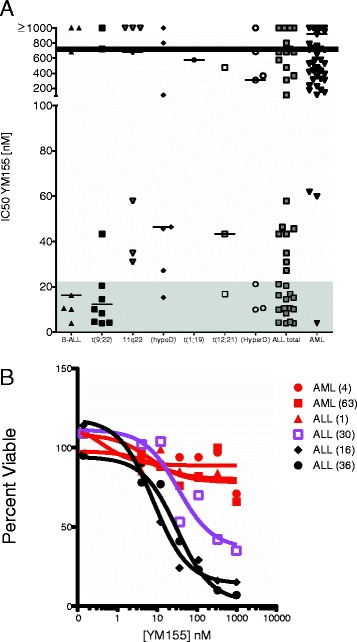
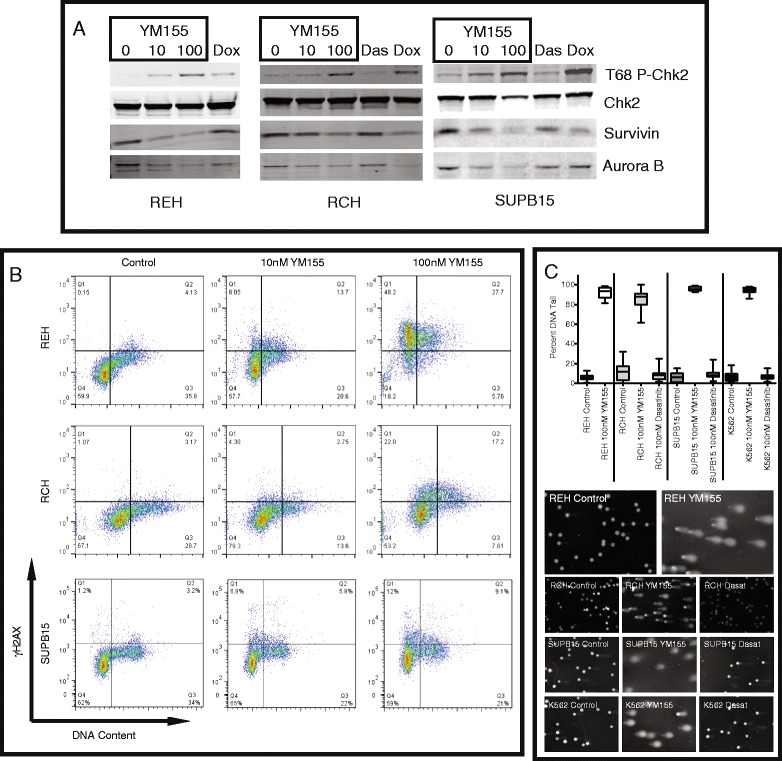
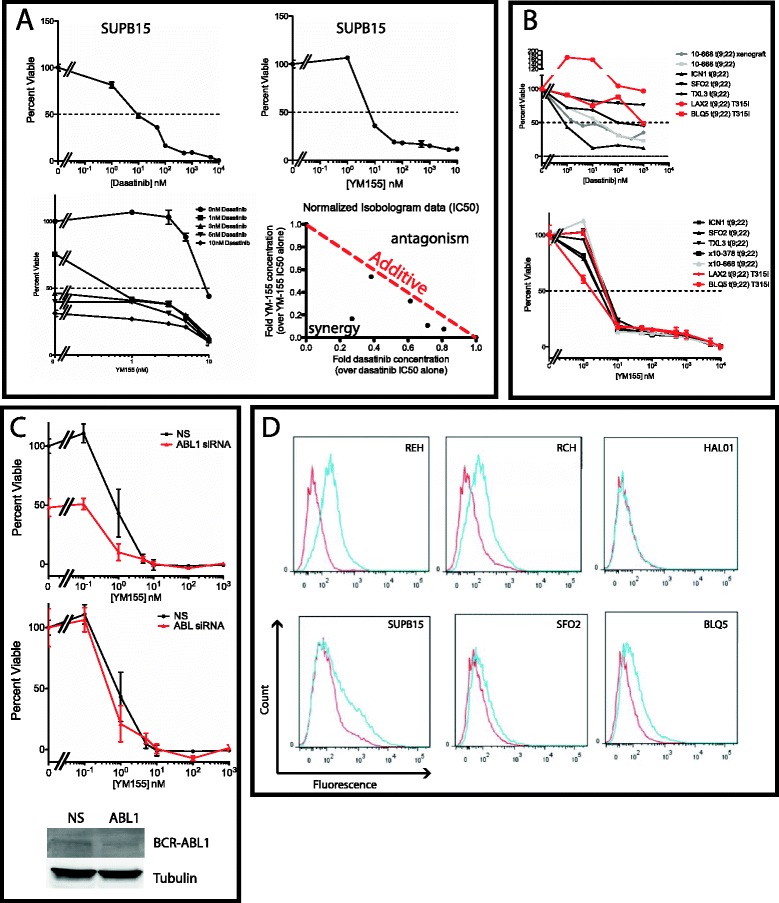
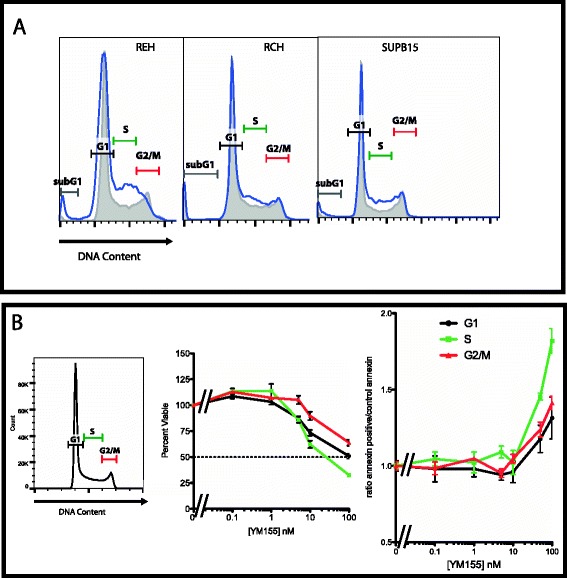
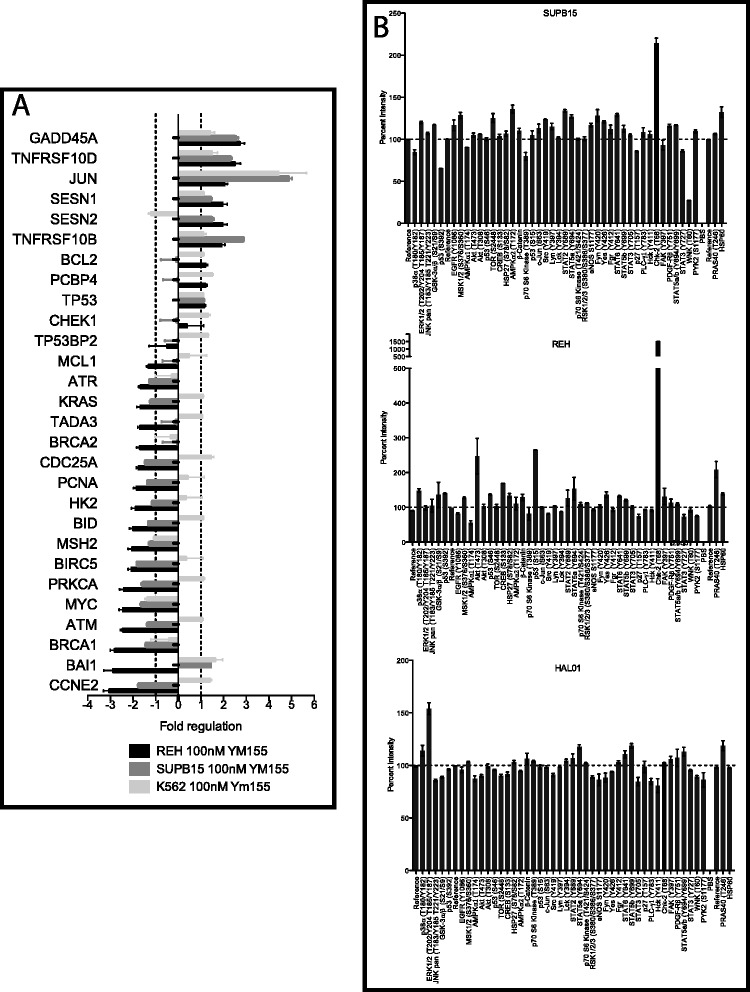
ALL samples exhibited significant sensitivity to YM155, and an additive response was observed with dasatinib in the setting of Ph(+)ALL. ALL cells were more sensitive to YM155 during S phase during DNA replication. YM155 activates the DNA damage pathway leading to phosphorylation of Chk2 and H2AX. Interestingly, screening of primary patient samples identified unique and exquisite YM155 sensitivity in some but not all ALL specimens.
These results are the first to have screened a large number of primary patient leukemic samples to identify individual variations of response to YM155. Our studies further support that YM155 in ALL induces DNA damage leading to S phase arrest. Finally, only subsets of ALL have exquisite sensitivity to YM155 presumably through both suppression of survivin expression and activation of the DNA damage pathway underscoring its potential for therapeutic development.
新型靶向疗法正在迅速发展,用于治疗急性淋巴细胞白血病(ALL),以克服耐药性并降低毒性。生存素是凋亡抑制基因家族和染色体乘客复合体的成员,在包括ALL在内的多种人类癌症中起关键作用。一种成熟的生存素抑制剂是小分子YM155。有报道正在确定YM155的其他作用机制。因此,我们试图研究YM155在ALL背景下的作用方式和治疗用途。
用YM155检测原发性ALL样本和ALL细胞系,以确定药物敏感性。对携带BCR-ABL1癌基因的Ph(+)ALL检测其与YM155和多激酶抑制剂达沙替尼的任何相互作用。使用标准生化分析以及RNA表达和磷酸化阵列,对代表性ALL细胞系进行检测,以确定对YM155的反应。
ALL样本对YM155表现出显著敏感性,在Ph(+)ALL情况下,与达沙替尼联合观察到相加反应。ALL细胞在DNA复制的S期对YM155更敏感。YM155激活DNA损伤途径,导致Chk2和H2AX磷酸化。有趣的是,对原发性患者样本的筛查发现,部分但并非所有ALL标本对YM155具有独特且极高的敏感性。
这些结果首次对大量原发性患者白血病样本进行了筛查,以确定对YM155反应的个体差异。我们的研究进一步支持,ALL中的YM155诱导DNA损伤导致S期停滞。最后,只有ALL的亚组对YM155具有极高的敏感性,可能是通过抑制生存素表达和激活DNA损伤途径,这突出了其治疗开发的潜力。