El-Sayed Wael S, Ibrahim Reda A
Biology Department, Faculty of Science, Taibah University, Almadinah Almunawarah, 344, Saudi Arabia.
Microbiology Department, Faculty of Science, Ain Shams University, Cairo, 11566, Egypt.
BMC Microbiol. 2015 Apr 22;15:88. doi: 10.1186/s12866-015-0422-8.
The date palm root borer Oryctes agamemnon (Coleoptera: Scarabaeidae) is one of the major pests of palms. In Saudi Arabia, both larvae and adults of Oryctes are particularly troublesome, especially during the establishment of young date palm orchards. Endosymbiotic bacteria are known to have a key role in food digestion and insecticide resistance mechanisms, and therefore are essential to their host insect. Identification of these bacteria in their insect host can lead to development of new insect pest control strategies.
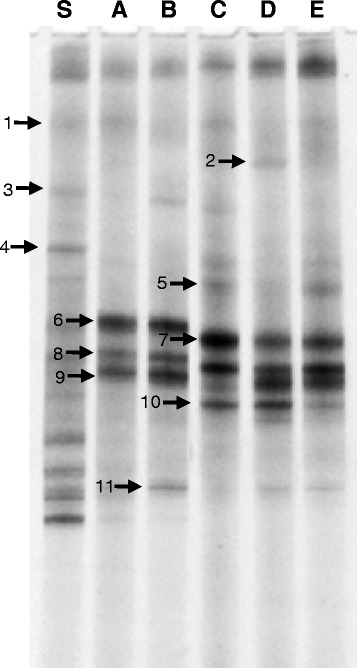
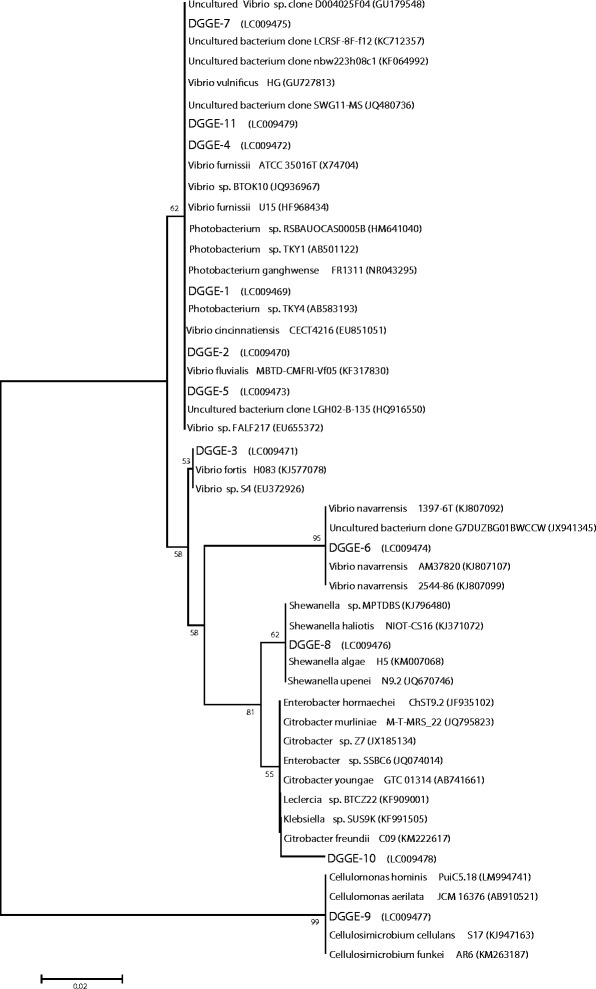
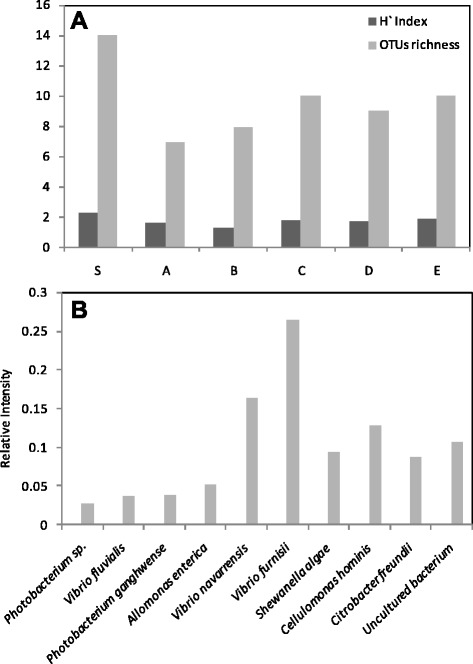
Metagenomic DNA from larval midgut of the date palm root borer, O. agamemnon, was analyzed for endosymbiotic bacterial communities using denatured gradient gel electrophoresis (DGGE) utilizing 16S rRNA genes. The DGGE fingerprints with metagenomic DNA showed predominance of eleven major operational taxonomic units (OTUs) identified as members of Photobacterium, Vibrio, Allomonas, Shewanella, Cellulomonas, and Citrobacter, as well as uncultured bacteria, including some uncultured Vibrio members. DGGE profiles also showed shifts in the dominant bacterial populations of the original soil compared with those that existed in the larval midguts. The endosymbiotic bacterial community was dominated by members of the family Vibrionaceae (54.5%), followed by uncultured bacteria (18.2%), Enterobacteriaceae (9.1%), Shewanellaceae (9.1%), and Cellulomonadaceae (9.1%). Phylogenetic studies confirmed the affiliation of the dominant OTUs into specified families revealed by clustering of each phylotype to its corresponding clade. Relative frequency of each phylotype in larval midguts revealed predominance of Vibrio furnisii and Vibrio navarrensis, followed by uncultured bacterial spp., then Cellulomonas hominis, Shewanella algae, and Citrobacter freundii.
Analysis of metagenomic DNA for endosymbiotic bacterial communities from the midgut of Oryctes larvae showed strong selection of specific bacterial populations that may have a key role in digestion, as well as other benefits to the larvae of O. agamemnon. Determination of the distinct endosymbiotic community structure and its possible biological functions within the insect could provide us with basic information for future pest control research.
椰枣根蛀虫阿伽门农犀金龟(鞘翅目:金龟科)是棕榈树的主要害虫之一。在沙特阿拉伯,阿伽门农犀金龟的幼虫和成虫都特别麻烦,尤其是在幼龄椰枣园的建立期间。已知内共生细菌在食物消化和抗杀虫剂机制中起关键作用,因此对其宿主昆虫至关重要。鉴定昆虫宿主中的这些细菌可导致开发新的害虫控制策略。
利用变性梯度凝胶电泳(DGGE),使用16S rRNA基因分析了椰枣根蛀虫阿伽门农犀金龟幼虫中肠的宏基因组DNA中的内共生细菌群落。宏基因组DNA的DGGE指纹图谱显示,11个主要的操作分类单元(OTU)占优势,这些单元被鉴定为发光杆菌属、弧菌属、嗜冷单细胞菌属、希瓦氏菌属、纤维单胞菌属和柠檬酸杆菌属的成员,以及未培养细菌,包括一些未培养的弧菌属成员。DGGE图谱还显示,与幼虫中肠中存在的细菌种群相比,原始土壤中优势细菌种群发生了变化。内共生细菌群落以弧菌科成员为主(54.5%),其次是未培养细菌(18.2%)、肠杆菌科(9.1%)、希瓦氏菌科(9.1%)和纤维单胞菌科(9.1%)。系统发育研究证实,通过将每个系统型聚类到其相应的进化枝,优势OTU隶属于特定的科。幼虫中肠中每个系统型的相对频率显示,弗氏弧菌和纳瓦伦弧菌占优势,其次是未培养的细菌种类,然后是人类纤维单胞菌、海藻希瓦氏菌和弗氏柠檬酸杆菌。
对阿伽门农犀金龟幼虫中肠内共生细菌群落进行宏基因组DNA分析,结果表明特定细菌种群受到强烈选择,这些细菌可能在消化中起关键作用,对阿伽门农犀金龟幼虫还有其他益处。确定昆虫体内独特的内共生群落结构及其可能的生物学功能可为未来的害虫控制研究提供基础信息。