Saito Shoji, Tampe Björn, Müller Gerhard A, Zeisberg Michael
Department of Nephrology and Rheumatology, Göttingen University Medical Center, Georg August University, Robert-Koch Str. 40, 37075 Göttingen, Germany.
Fibrogenesis Tissue Repair. 2015 Apr 16;8:6. doi: 10.1186/s13069-015-0024-y. eCollection 2015.
While kidney injury is associated with re-expression of numerous Wnt ligands and receptors, molecular mechanisms which underlie regulation of distinct Wnt signaling pathways and ensuing biological consequences remain incompletely understood. Primary cilia are increasingly being recognized as cellular 'antennae' which sense and transduce signals from the microenvironment, particularly through Wnt signaling. Here, we explored the role of cilia as modulators of canonical and non-canonical Wnt signaling activities involving tubular epithelial cells in the injured kidney.
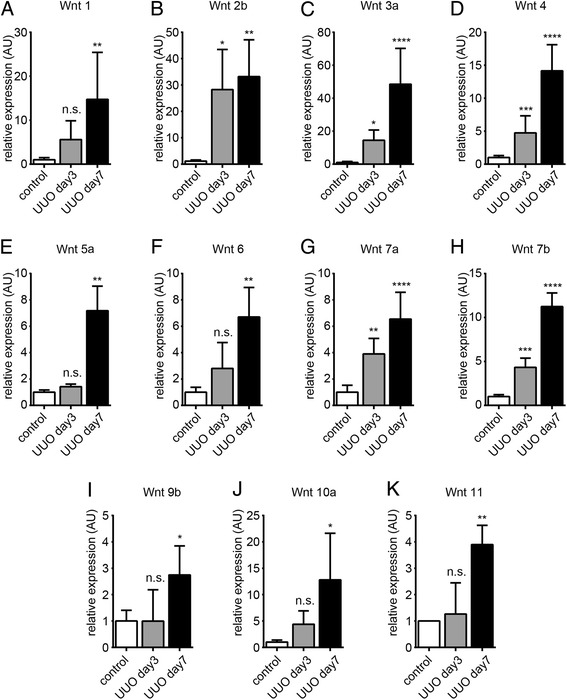
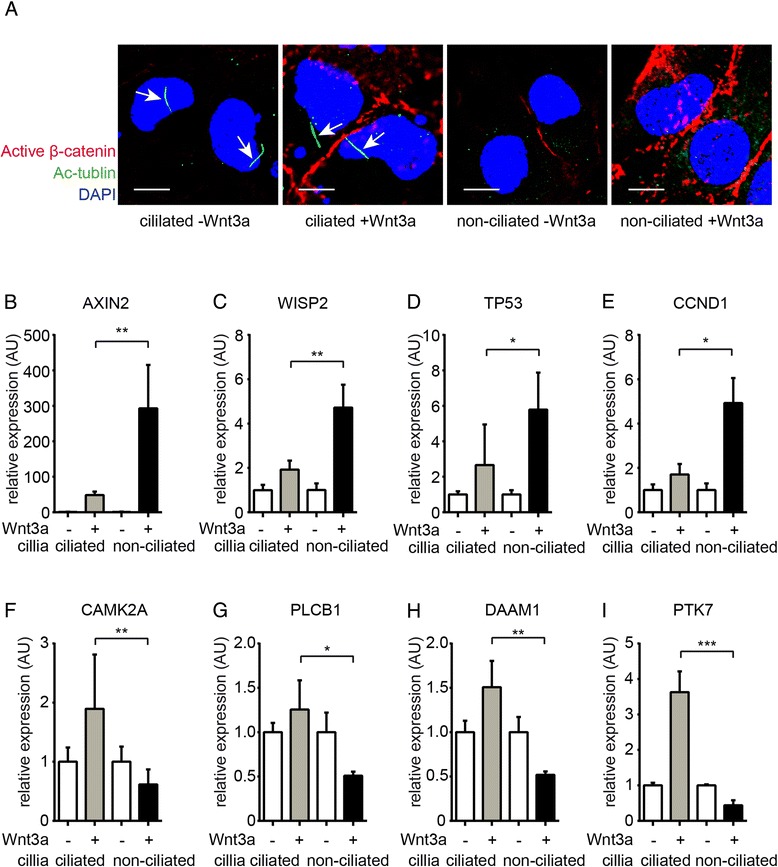
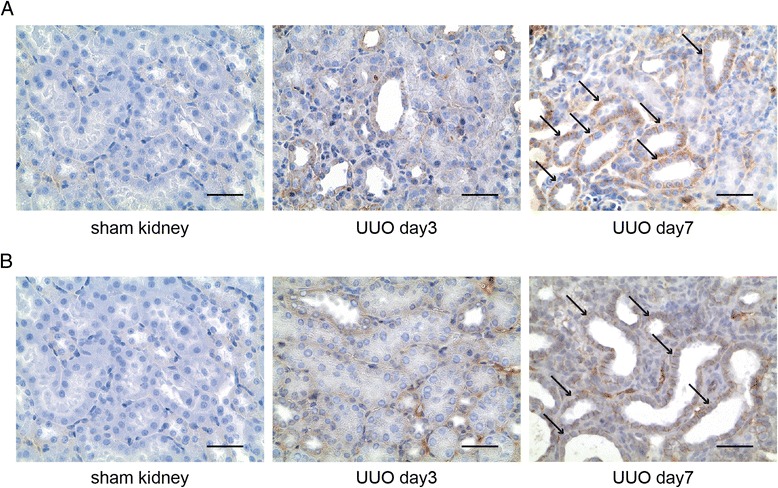
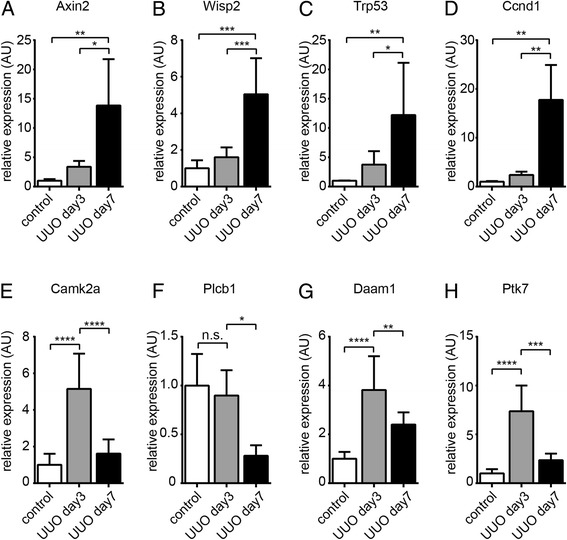
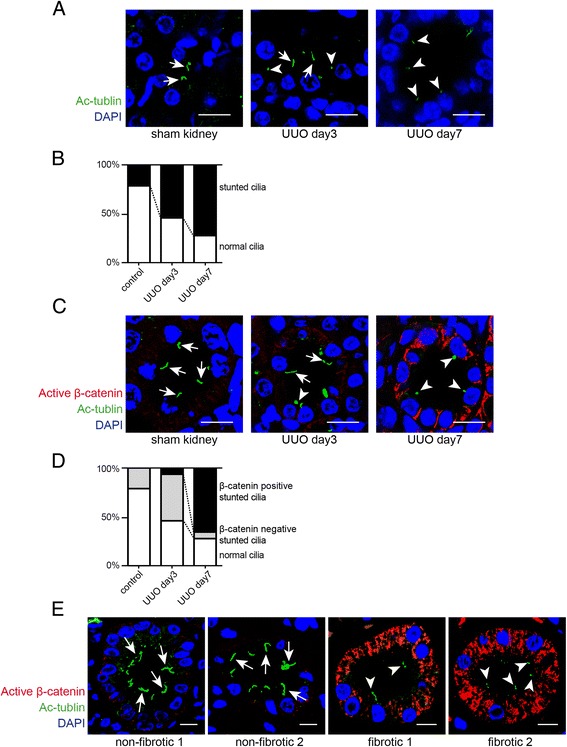
We demonstrate that in the mouse model of unilateral ureter obstruction, progression of kidney injury correlates with increased expression of numerous Wnt ligands, and that increased expression of Wnt ligands corresponded with over-activation of canonical Wnt signaling. In contrast, non-canonical Wnt signaling dropped significantly during the course of kidney injury despite gradually increased expression of typical non-canonical and intermediate Wnt signaling ligands. We further demonstrate that in cultured tubular epithelial cells, cilia modulate balance between canonical and non-canonical signaling responses upon exposure to Wnt ligands.
We provide evidence that in the context of renal injury, primary cilia act as molecular switches between canonical and non-canonical Wnt signaling activity, possibly determining between regenerative and pro-fibrotic effects of Wnt re-expression in the injured kidney.
虽然肾损伤与多种Wnt配体和受体的重新表达有关,但不同Wnt信号通路调控的分子机制及其后续生物学后果仍未完全明确。原发性纤毛越来越被认为是细胞的“天线”,可感知并转导来自微环境的信号,特别是通过Wnt信号。在此,我们探讨了纤毛作为损伤肾脏中涉及肾小管上皮细胞的经典和非经典Wnt信号活动调节剂的作用。
我们证明,在单侧输尿管梗阻的小鼠模型中,肾损伤的进展与多种Wnt配体表达增加相关,且Wnt配体表达增加与经典Wnt信号的过度激活相对应。相比之下,尽管典型的非经典和中间Wnt信号配体表达逐渐增加,但在肾损伤过程中非经典Wnt信号显著下降。我们进一步证明,在培养的肾小管上皮细胞中,纤毛在暴露于Wnt配体时调节经典和非经典信号反应之间的平衡。
我们提供的证据表明,在肾损伤的情况下,原发性纤毛作为经典和非经典Wnt信号活动之间的分子开关,可能决定了Wnt在损伤肾脏中重新表达的再生和促纤维化作用。