Clennin Morgan N, Payne Jonathan P W, Rienzi Edgardo G, Lavie Carl J, Blair Steven N, Pate Russell R, Sui Xuemei
Department of Exercise Science, Arnold School of Public Health, University of South Carolina, Columbia, South Carolina, United States.
Especialista en Medicina del Deporte, Centro Calidad de Vida, Asociación Española, Montevideo, Uruguay.
PLoS One. 2015 Apr 22;10(4):e0123989. doi: 10.1371/journal.pone.0123989. eCollection 2015.
To examine the association between objectively measured CRF and physical and mental components of HRQoL in a Uruguayan cohort at risk for developing CVD.
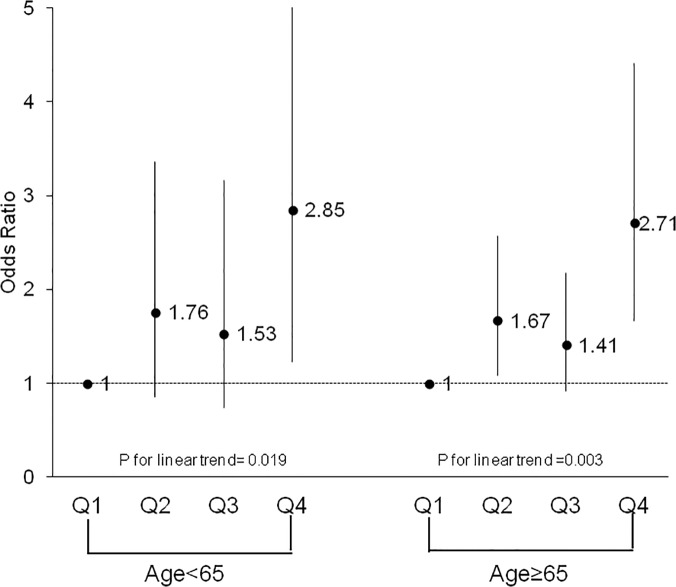
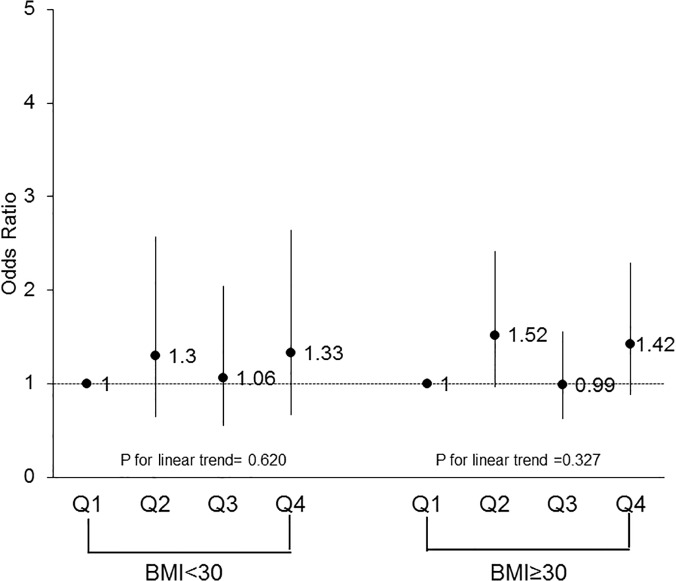
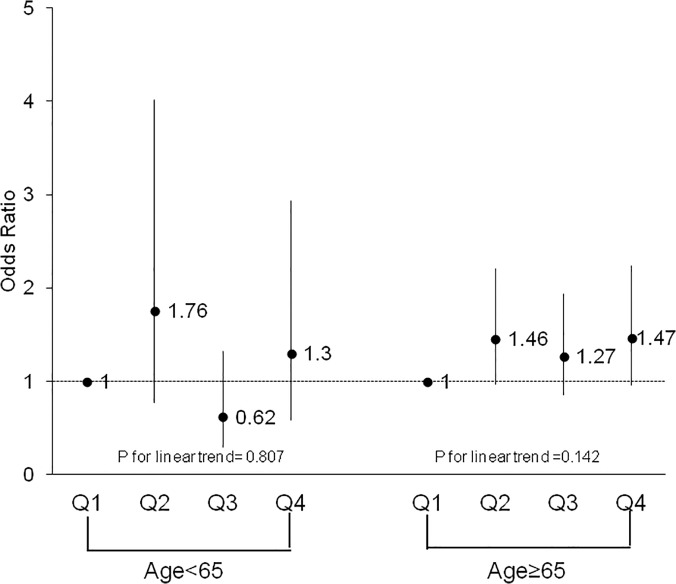
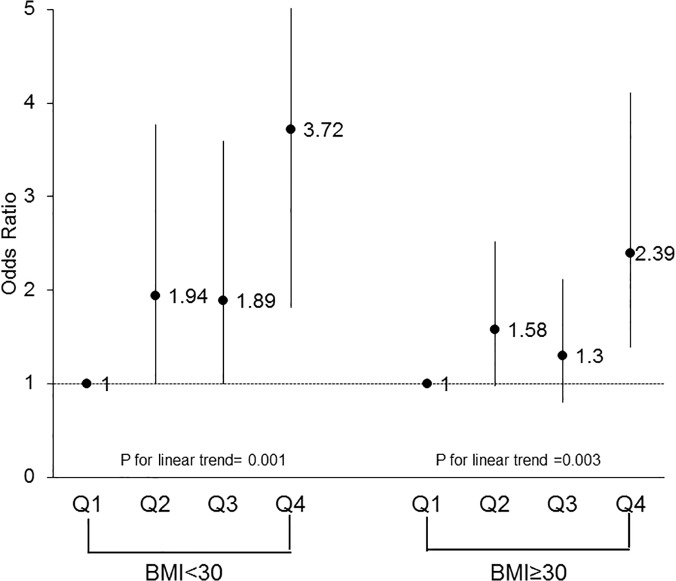
Patient data records from 2002-2012 at the Calidad de Vida Center were examined. To assess CRF, participants performed a submaximal exercise test. During the evaluation, participants also completed the SF-36, a HRQoL measure comprised of eight dimensions that are summarized by physical and mental component scores (PCS and MCS, respectively). ANCOVA was used to examine the relationship between HRQoL dimensions and CRF. Logistic regression was then used to compare the odds of having a HRQoL component score above the norm across CRF. All analyses were performed separately for males and females with additional stratified analyses across age and BMI conducted among significant trends.
A total of 2,302 subjects were included in the analysis. Among females, a significant relationship was observed between CRF and vitality, physical functioning, physical role, bodily pain, and general health dimensions. However, for males the only dimension found to be significantly associated with CRF was physical health. After adjusting for potential confounders, a significant linear trend (p<0.001) for PCS scores above the norm across CRF levels was observed for females only.
Among females with one or more risk factors for developing CVD, higher levels of CRF were positively associated with the vitality and physical dimensions of HRQoL, as well as the overall PCS. However, among males the only dimension associated with CRF was physical functioning. Future studies should examine this relationship among populations at risk for developing CVD in more detail and over time.
在乌拉圭一个有患心血管疾病风险的队列中,研究客观测量的心肺适能(CRF)与健康相关生活质量(HRQoL)的身体和心理组成部分之间的关联。
对2002年至2012年在生活质量中心的患者数据记录进行了检查。为评估CRF,参与者进行了次极量运动测试。在评估过程中,参与者还完成了SF-36,这是一种HRQoL测量工具,由八个维度组成,分别通过身体和心理组成部分得分(PCS和MCS)进行汇总。采用协方差分析来研究HRQoL维度与CRF之间的关系。然后使用逻辑回归来比较在不同CRF水平下HRQoL组成部分得分高于正常水平的几率。所有分析分别针对男性和女性进行,并在显著趋势中对年龄和体重指数进行了额外的分层分析。
共有2302名受试者纳入分析。在女性中,观察到CRF与活力、身体功能、身体角色、身体疼痛和总体健康维度之间存在显著关系。然而,对于男性,发现与CRF显著相关的唯一维度是身体健康。在调整潜在混杂因素后,仅在女性中观察到CRF水平上PCS得分高于正常水平的显著线性趋势(p<0.001)。
在有一个或多个患心血管疾病风险因素的女性中,较高水平的CRF与HRQoL的活力和身体维度以及总体PCS呈正相关。然而,在男性中,与CRF相关的唯一维度是身体功能。未来的研究应更详细地研究有患心血管疾病风险人群中这种关系,并随时间进行观察。