Xu Honghai, Liu Cong, Sun Zhengming, Guo Xiong, Zhang Yuelin, Liu Mengting, Li Peng
Department of Orthopaedics, The Third Affiliated Hospital (Shaanxi Provincial People's Hospital), Medical College of Xi'an Jiaotong University, Xi'an, Shaanxi 710061, P.R. China.
Xi'an Medical College, Xi'an, Shaanxi 710061, P.R. China.
Int J Mol Med. 2015 Jul;36(1):123-9. doi: 10.3892/ijmm.2015.2190. Epub 2015 Apr 21.
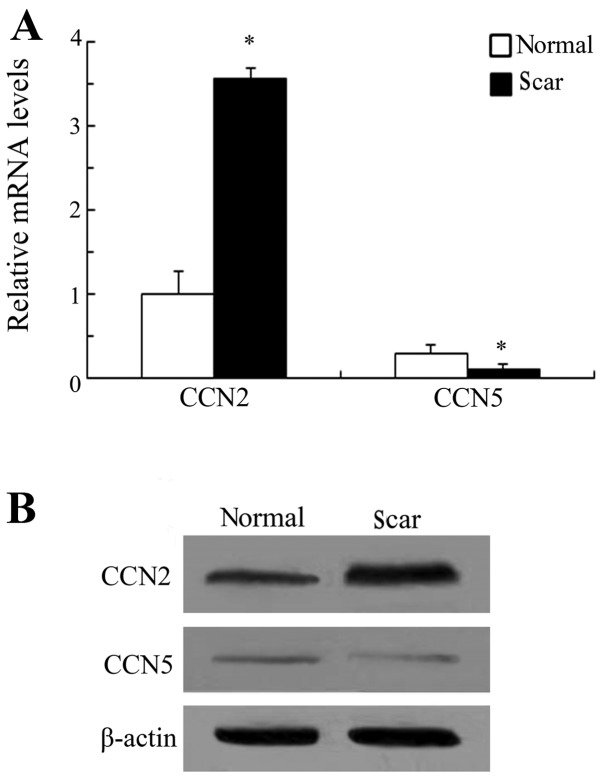
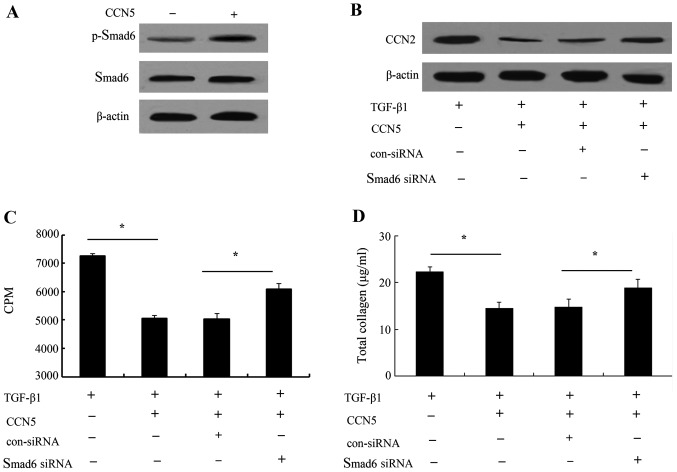
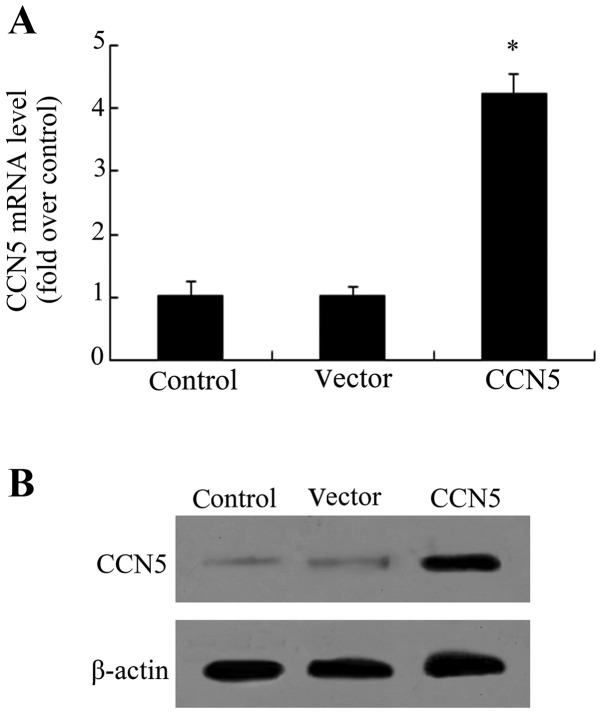
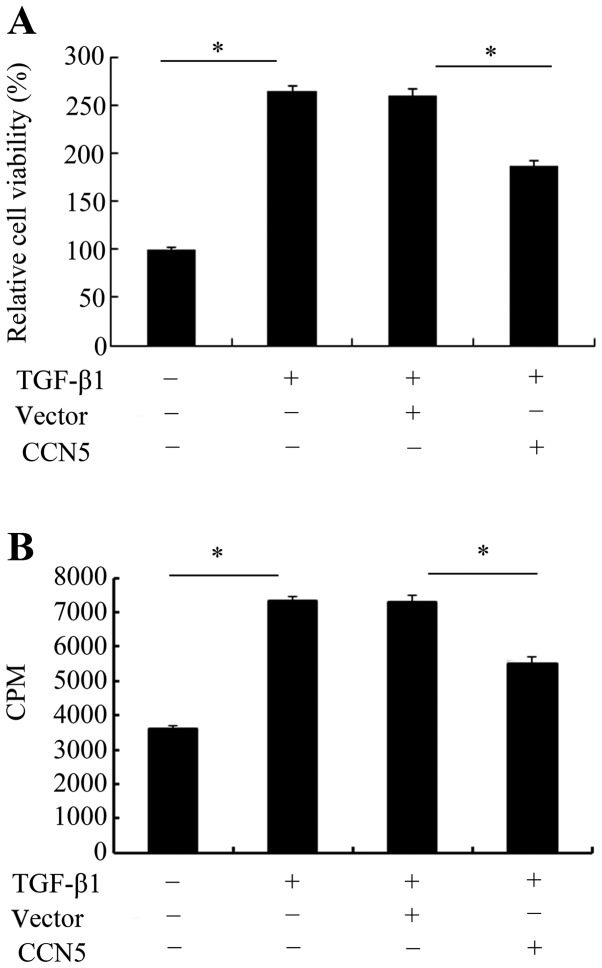
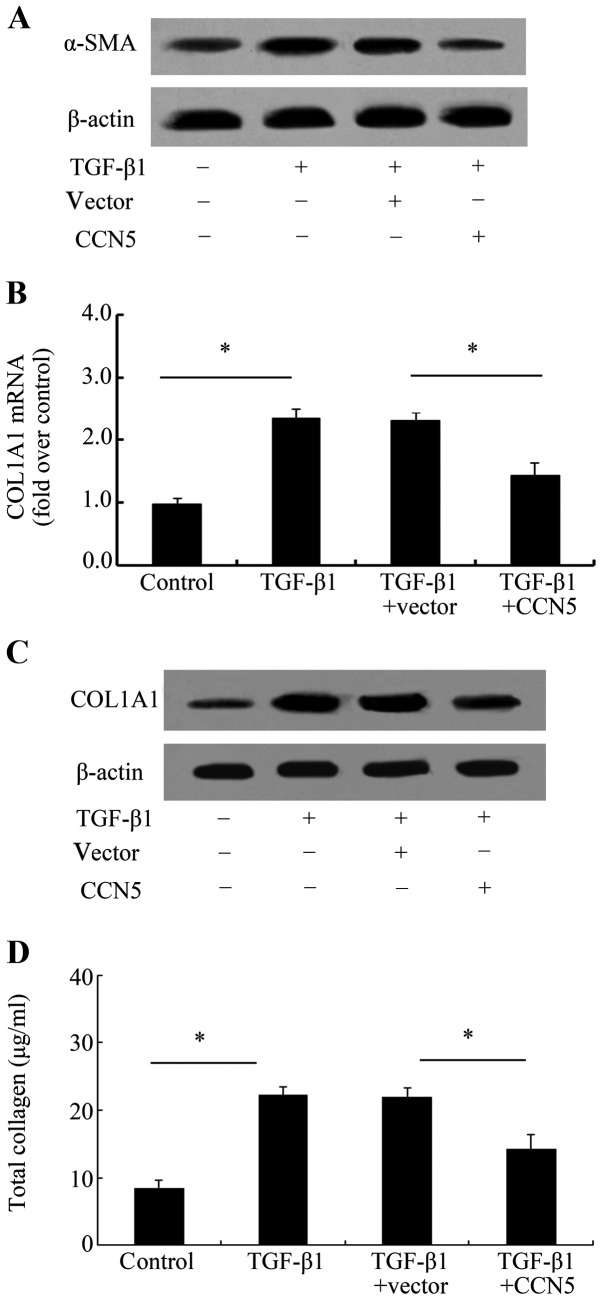
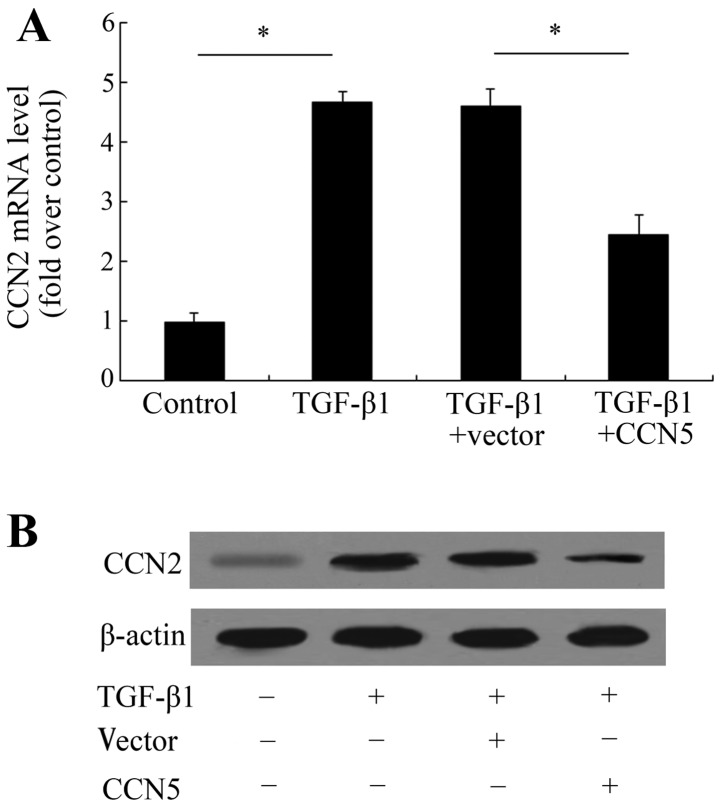
Epidural fibrosis is characterized by the development of dense and thick scar tissue adjacent to the dural mater and ranked as the major contributor for post-operative pain recurrence after laminectomy or discectomy. Recently, CCN5 exhibited an inhibitory effect on connective tissue growth factor (CTGF)/CCN2 (a critical regulator for fibrotic disease)‑mediated fibrogenesis. However, its function in epidural fibrosis and the underlying mechanisms involved remain to be determined. In this study, an obvious downregulation of CCN5 was observed in scar tissues from laminectomized rats, concomitant with a marked upregulation of CCN2, suggesting a potential negative regulatory role of CCN5 in fibrogenesis. Furthermore, CCN5 overexpression notably mitigated transforming growth factor‑β1-enhanced fibroblast viability and proliferation. Of note, CCN5 upregulation inhibited the switch of fibroblasts into myofibroblasts as its overexpression abrogated the expression of the myofibroblast marker, α-smooth muscle actin (α-SMA). CCN5 upregulation also reduced an increase in collagen type I, α1 (COL1A1) and total collagen concentrations. Additionally, CCN5 over-expression decreased CCN2 expression and increased Smad6 phosphorylation. Mechanism analysis revealed that blocking Smad6 signaling significantly ameliorated the inhibitory effect of CCN5 on the CCN2 levels, accompanied by the reduction in cell proliferation and collagen production. These results confirm that CCN5 exerts an anti-fibrotic function by regulating the Smad6-CCN2 pathway, thereby indicating a potential approach for ameliorating epidural fibrosis after laminectomy.
硬膜外纤维化的特征是在硬脊膜附近形成致密且增厚的瘢痕组织,是椎板切除术或椎间盘切除术后疼痛复发的主要原因。最近,CCN5对结缔组织生长因子(CTGF)/CCN2(纤维化疾病的关键调节因子)介导的纤维化形成具有抑制作用。然而,其在硬膜外纤维化中的功能及潜在机制仍有待确定。在本研究中,观察到椎板切除大鼠瘢痕组织中CCN5明显下调,同时CCN2显著上调,提示CCN5在纤维化形成中可能具有负调控作用。此外,CCN5过表达显著减轻了转化生长因子-β1增强的成纤维细胞活力和增殖。值得注意的是,CCN5上调抑制了成纤维细胞向肌成纤维细胞的转变,因为其过表达消除了肌成纤维细胞标志物α-平滑肌肌动蛋白(α-SMA)的表达。CCN5上调还降低了I型胶原α1(COL1A1)和总胶原浓度的增加。此外,CCN5过表达降低了CCN2表达并增加了Smad6磷酸化。机制分析表明,阻断Smad6信号通路可显著改善CCN5对CCN2水平的抑制作用,并伴有细胞增殖和胶原产生的减少。这些结果证实CCN5通过调节Smad6-CCN2途径发挥抗纤维化功能,从而为改善椎板切除术后的硬膜外纤维化指明了一种潜在方法。