Joo Soo-Hyun, Pi Dong-Hai, Setyawan Albertus Deny Heri, Kato Hidemi, Janecek Milos, Kim Yong Chan, Lee Sunghak, Kim Hyoung Seop
Center for Aerospace Materials, Pohang University of Science and Technology, Pohang 790-784, South Korea.
Department of Materials Science and Engineering, Pohang University of Science and Technology, Pohang 790-784, South Korea.
Sci Rep. 2015 Apr 23;5:9660. doi: 10.1038/srep09660.
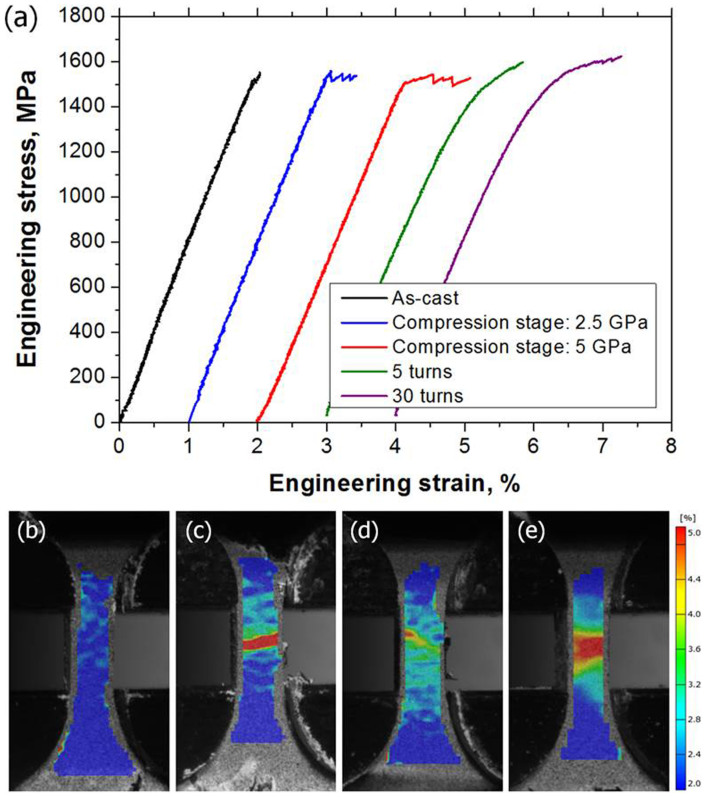
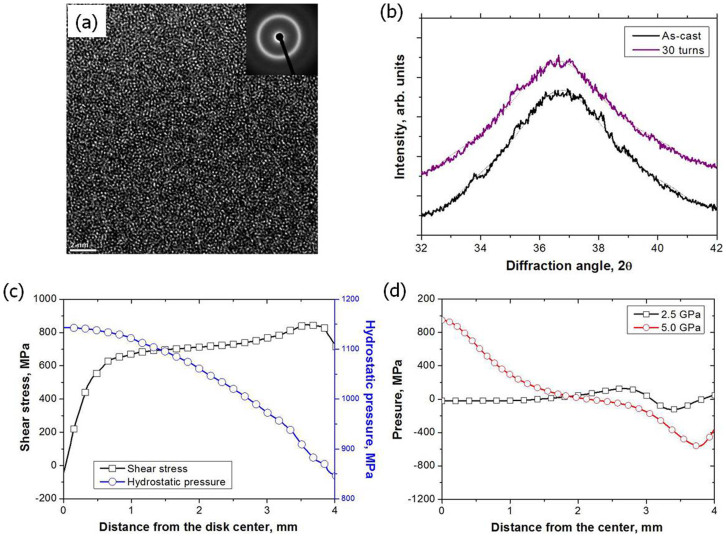
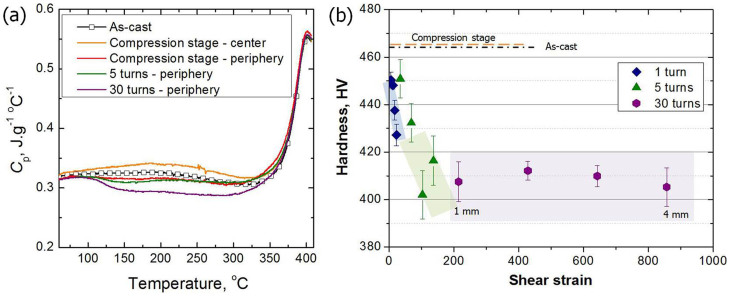
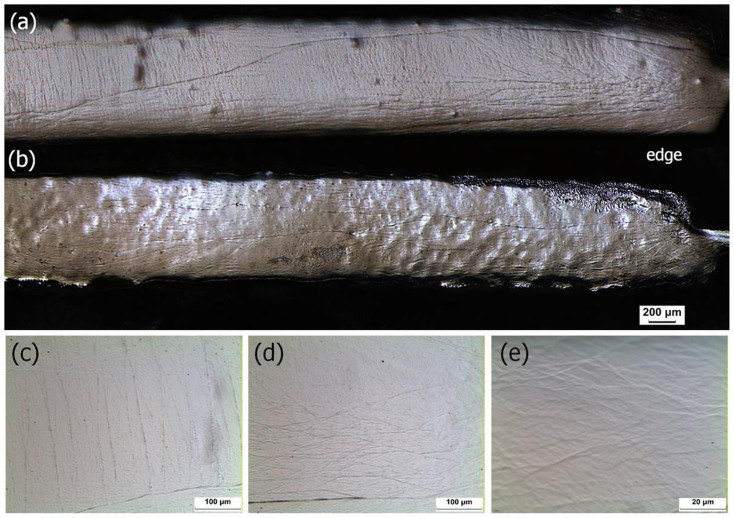
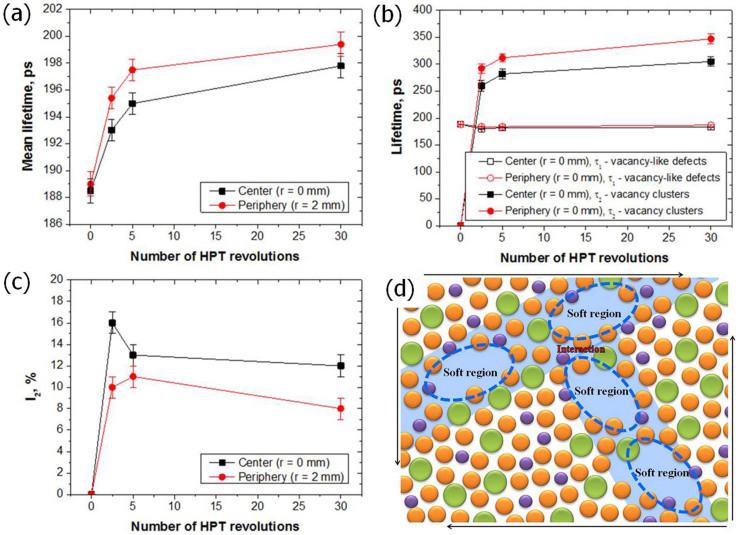
The mechanical properties of engineering materials are key for ensuring safety and reliability. However, the plastic deformation of BMGs is confined to narrow regions in shear bands, which usually result in limited ductilities and catastrophic failures at low homologous temperatures. The quasi-brittle failure and lack of tensile ductility undercut the potential applications of BMGs. In this report, we present clear tensile ductility in a Zr-based BMG via a high-pressure torsion (HPT) process. Enhanced tensile ductility and work-hardening behavior after the HPT process were investigated, focusing on the microstructure, particularly the changed free volume, which affects deformation mechanisms (i.e., initiation, propagation, and obstruction of shear bands). Our results provide insights into the basic functions of hydrostatic pressure and shear strain in the microstructure and mechanical properties of HPT-processed BMGs.
工程材料的力学性能是确保安全性和可靠性的关键。然而,块体金属玻璃(BMGs)的塑性变形局限于剪切带中的狭窄区域,这通常导致在低同源温度下延展性有限和灾难性失效。准脆性失效和缺乏拉伸延展性削弱了BMGs的潜在应用。在本报告中,我们通过高压扭转(HPT)工艺在一种锆基BMG中展现出了明显的拉伸延展性。研究了HPT工艺后的增强拉伸延展性和加工硬化行为,重点关注微观结构,特别是变化的自由体积,其影响变形机制(即剪切带的起始、扩展和阻碍)。我们的结果为静水压力和剪切应变在HPT处理的BMGs微观结构和力学性能中的基本作用提供了见解。