Putranto Riza-Arief, Duan Cuifang, Chaidamsari Tetty, Rio Maryannick, Piyatrakul Piyanuch, Herlinawati Eva, Pirrello Julien, Dessailly Florence, Leclercq Julie, Bonnot François, Tang Chaorong, Hu Songnian, Montoro Pascal
CIRAD, UMR DAP, Montpellier, France; IBRIEC, Bogor, Indonesia.
CIRAD, UMR DAP, Montpellier, France; RRI, CATAS, Danzhou, Hainan, China.
PLoS One. 2015 Apr 23;10(4):e0123618. doi: 10.1371/journal.pone.0123618. eCollection 2015.
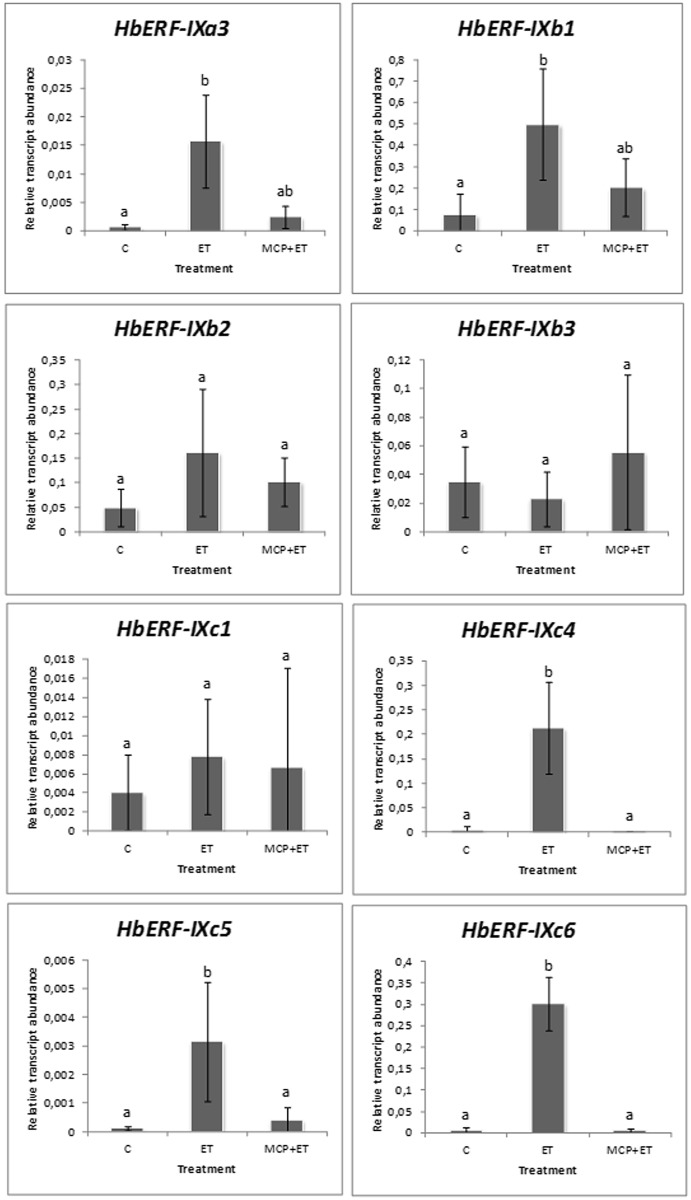
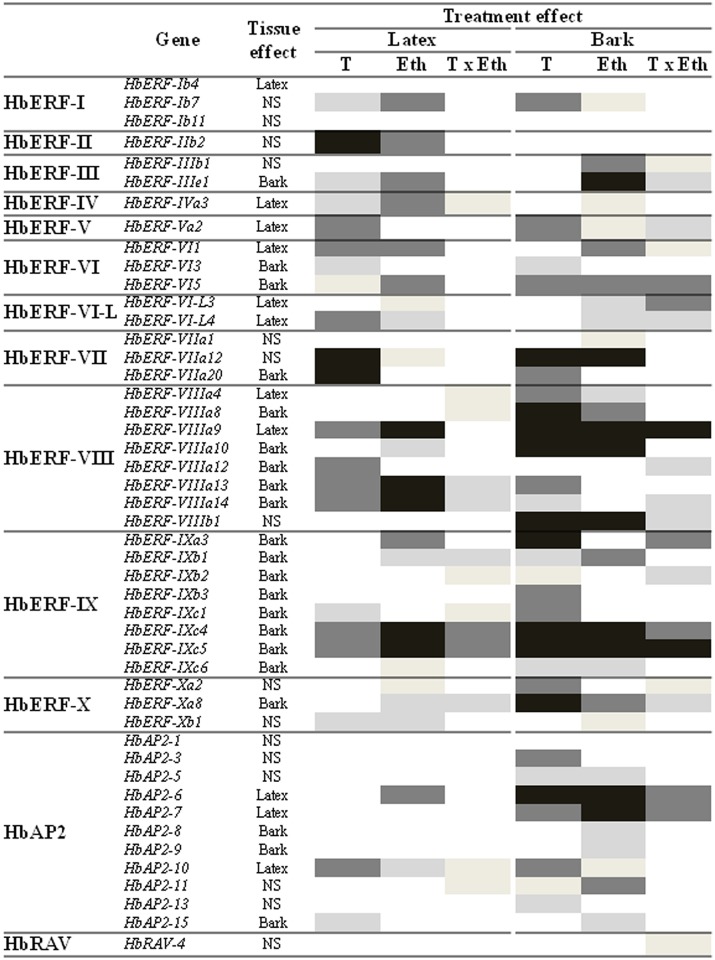
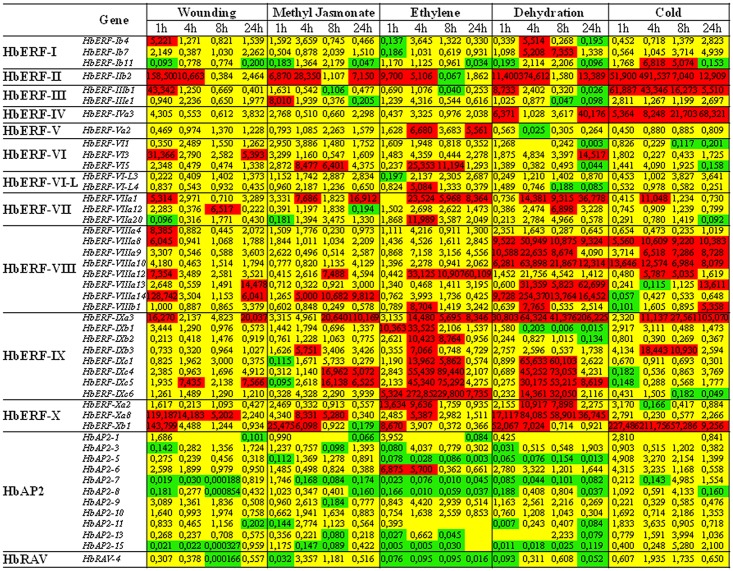
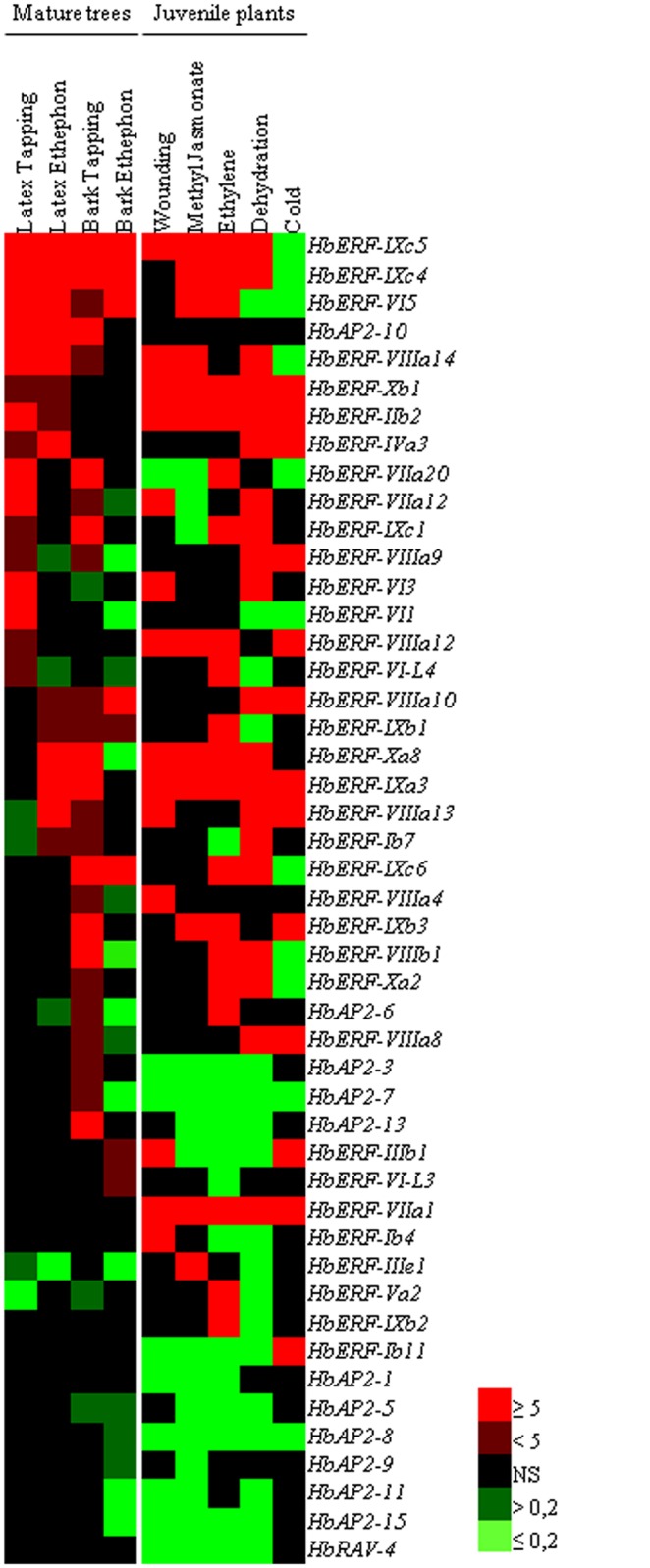
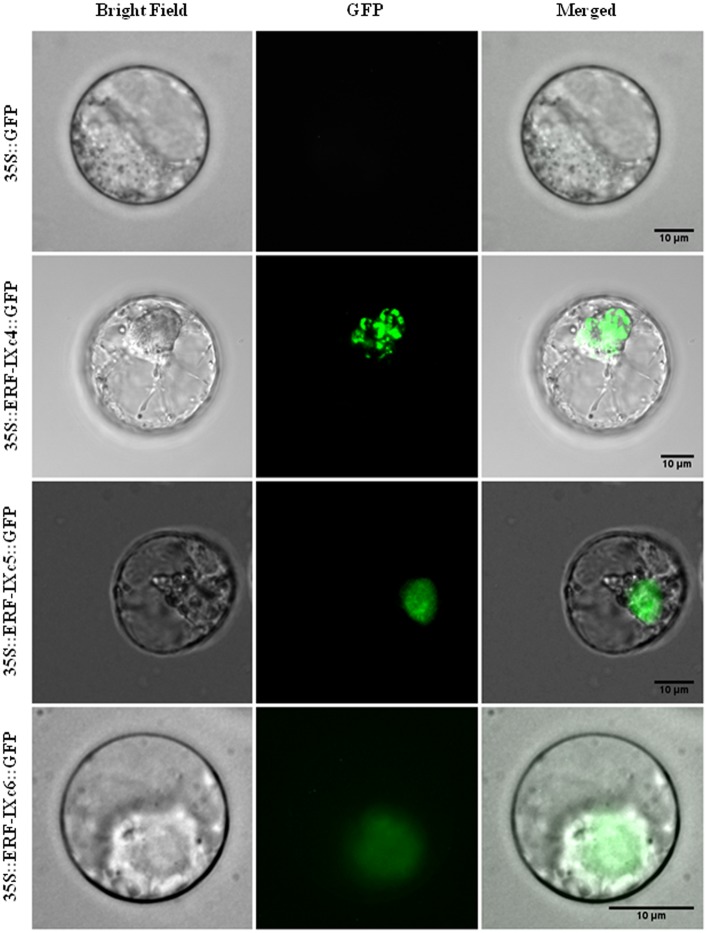
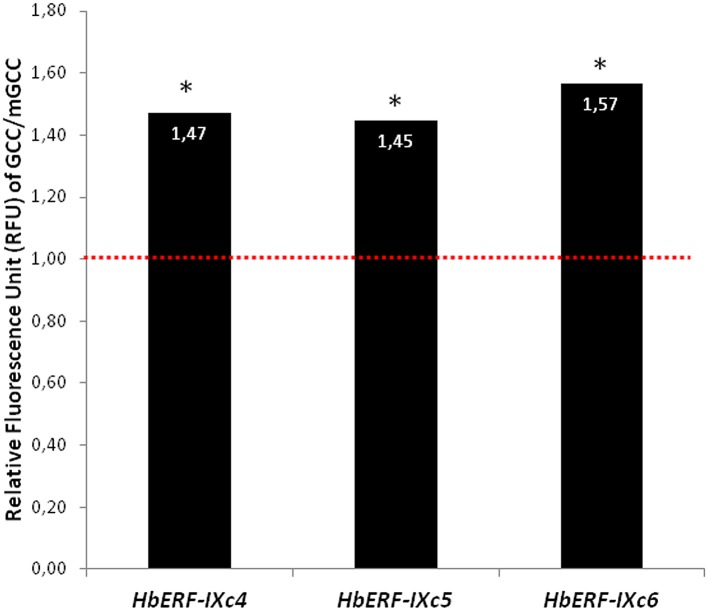
Tolerance of recurrent mechanical wounding and exogenous ethylene is a feature of the rubber tree. Latex harvesting involves tapping of the tree bark and ethephon is applied to increase latex flow. Ethylene is an essential element in controlling latex production. The ethylene signalling pathway leads to the activation of Ethylene Response Factor (ERF) transcription factors. This family has been identified in Hevea brasiliensis. This study set out to understand the regulation of ERF genes during latex harvesting in relation to abiotic stress and hormonal treatments. Analyses of the relative transcript abundance were carried out for 35 HbERF genes in latex, in bark from mature trees and in leaves from juvenile plants under multiple abiotic stresses. Twenty-one HbERF genes were regulated by harvesting stress in laticifers, revealing an overrepresentation of genes in group IX. Transcripts of three HbERF-IX genes from HbERF-IXc4, HbERF-IXc5 and HbERF-IXc6 were dramatically accumulated by combining wounding, methyl jasmonate and ethylene treatments. When an ethylene inhibitor was used, the transcript accumulation for these three genes was halted, showing ethylene-dependent induction. Subcellular localization and transactivation experiments confirmed that several members of HbERF-IX are activator-type transcription factors. This study suggested that latex harvesting induces mechanisms developed for the response to abiotic stress. These mechanisms probably depend on various hormonal signalling pathways. Several members of HbERF-IX could be essential integrators of complex hormonal signalling pathways in Hevea.
对反复机械损伤和外源乙烯的耐受性是橡胶树的一个特性。乳胶采集涉及割破树皮,并且施用乙烯利以增加乳胶产量。乙烯是控制乳胶生产的关键要素。乙烯信号通路会导致乙烯响应因子(ERF)转录因子的激活。该家族已在巴西橡胶树中得到鉴定。本研究旨在了解在乳胶采集过程中,ERF基因与非生物胁迫和激素处理相关的调控情况。对35个HbERF基因在多种非生物胁迫下的乳胶、成熟树树皮和幼龄植物叶片中的相对转录丰度进行了分析。21个HbERF基因在乳管中受采集胁迫调控,揭示了IX组中基因的过度富集。通过组合伤口处理、茉莉酸甲酯和乙烯处理,来自HbERF-IXc4、HbERF-IXc5和HbERF-IXc6的三个HbERF-IX基因的转录本大量积累。当使用乙烯抑制剂时,这三个基因的转录本积累停止,表明是乙烯依赖性诱导。亚细胞定位和反式激活实验证实,HbERF-IX的几个成员是激活型转录因子。本研究表明,乳胶采集诱导了针对非生物胁迫响应而形成的机制。这些机制可能依赖于各种激素信号通路。HbERF-IX的几个成员可能是巴西橡胶树复杂激素信号通路的重要整合者。