Zeng Chunxian, Wang Yun-Long, Xie Chen, Sang Ye, Li Tuan-Jie, Zhang Min, Wang Ruizhi, Zhang Qi, Zheng Limin, Zhuang Shi-Mei
Key Laboratory of Gene Engineering of The Ministry of Education, State Key Laboratory of Biocontrol, Collaborative Innovation Center for Cancer Medicine, School of Life Sciences, Sun Yat-sen University, Guangzhou, P.R. China.
Key Laboratory of Liver Disease of Guangdong Province, The Third Affiliated Hospital, Sun Yat-sen University, Guangzhou, P.R. China.
Oncotarget. 2015 May 20;6(14):12224-33. doi: 10.18632/oncotarget.3652.
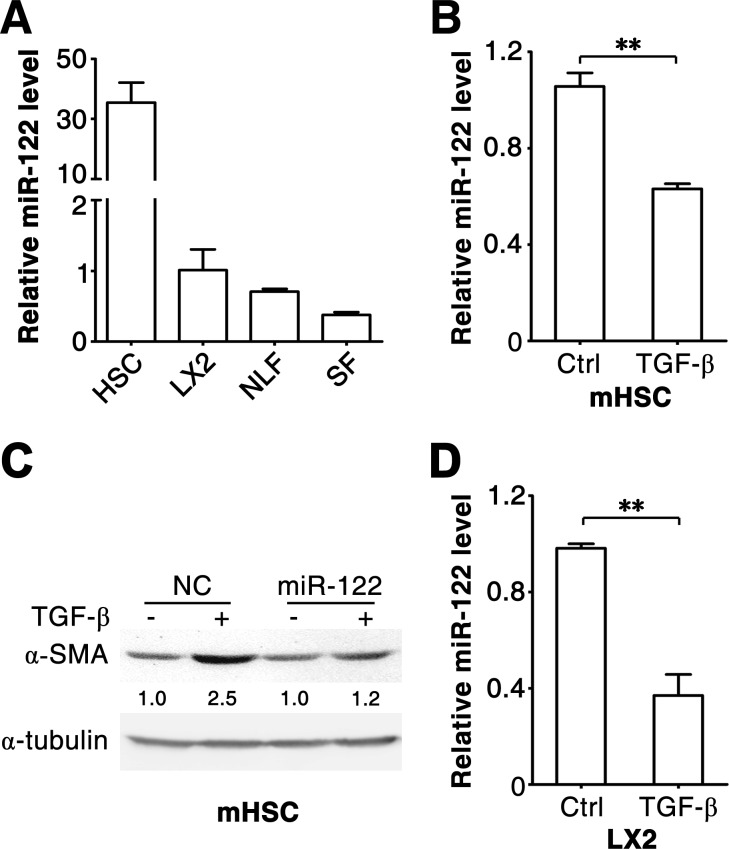
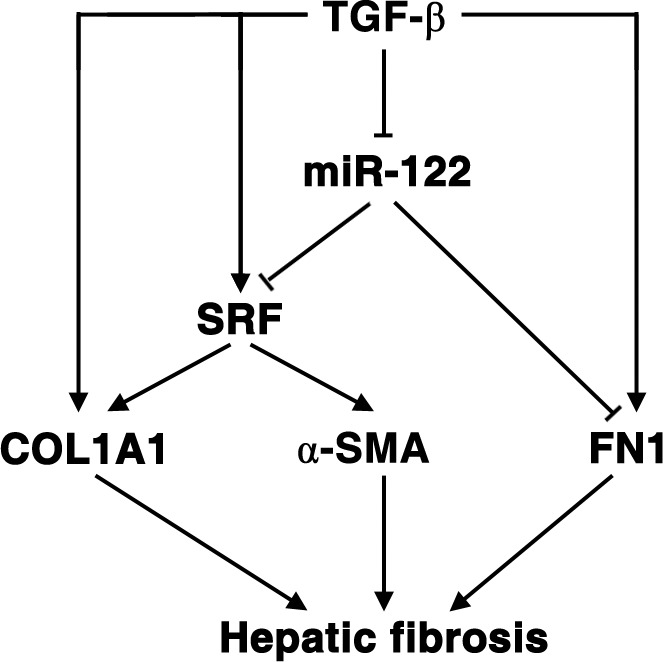
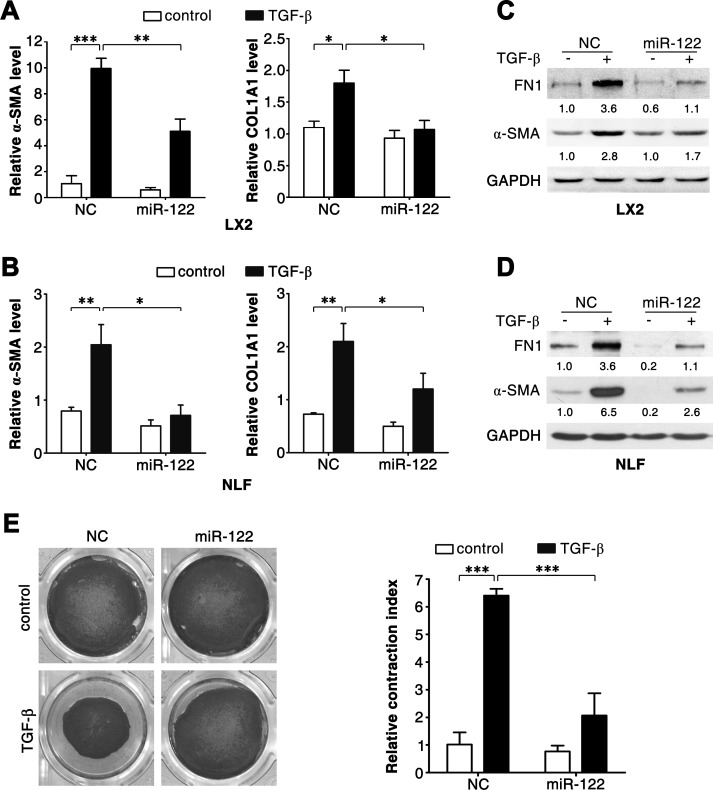
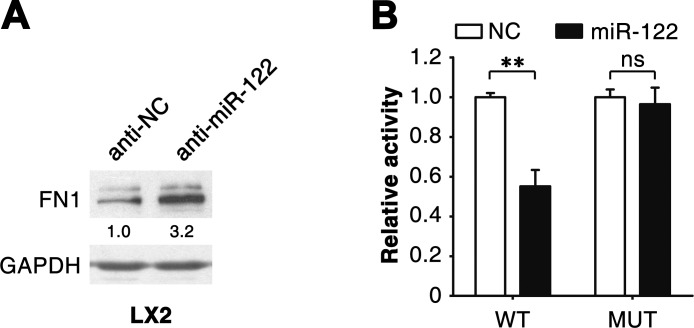
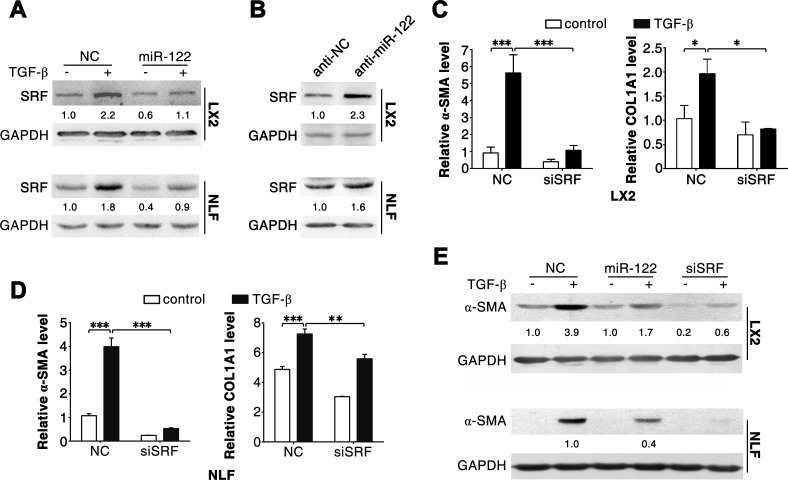
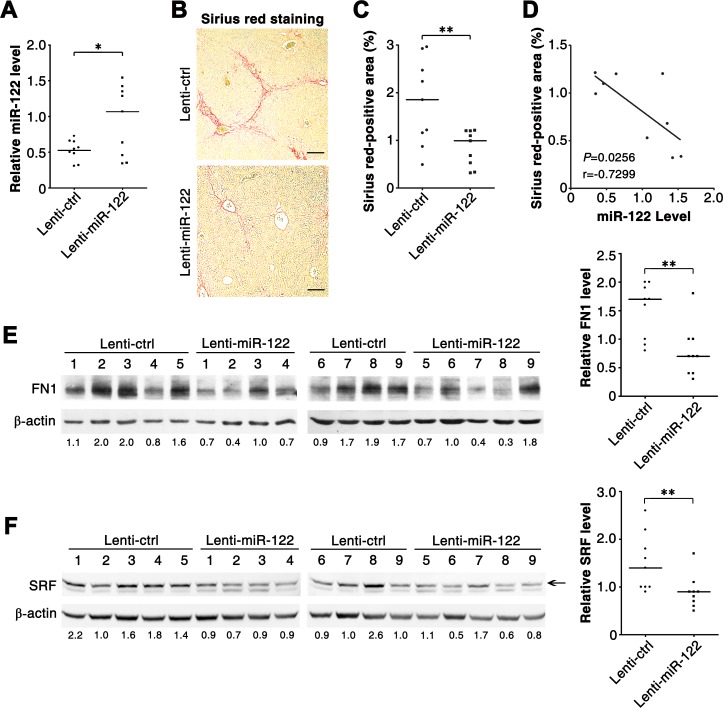
Transforming growth factor-β (TGF-β) is a potent cytokine that promotes the development of fibrogenic cells, stimulates the expression of fibrosis-related genes, and consequently results in hepatic fibrogenesis. The involvement of miRNAs in this process remains largely unknown. We showed that miR-122 was substantially expressed in hepatic stellate cells (HSCs) and fibroblasts, the major sources of fibrogenic cells in liver tissues. Notably, exposure to TGF-β led to significant downregulation of miR-122. Furthermore, reintroduction of miR-122 suppressed TGF-β-induced expression of fibrosis-related genes, including alpha smooth muscle actin (α-SMA), fibronectin 1 (FN1) and α1 type I collagen (COL1A1), in HSCs and fibroblasts. Subsequent mechanism investigations revealed that miR-122 directly inhibited FN1 expression by binding to its 3'-untranslated region and indirectly reduced the transcription of α-SMA and COL1A1 by inhibiting the expression of serum response factor (SRF), a key transcription factor that mediated the activation of fibrogenic cells. Further in vivo studies disclosed that intravenous injection of miR-122-expressing lentivirus successfully increased miR-122 level and reduced the amount of collagen fibrils, FN1 and SRF in the livers of CCl4-treated mice. These findings disclose a novel TGF-β-miR-122-FN1/SRF signaling cascade and its implication in hepatic fibrogenesis, and suggest miR-122 as a promising molecular target for anti-fibrosis therapy.
转化生长因子-β(TGF-β)是一种强效细胞因子,可促进纤维化细胞的发育,刺激纤维化相关基因的表达,从而导致肝纤维化。miRNA在这一过程中的作用仍 largely未知。我们发现miR-122在肝星状细胞(HSCs)和成纤维细胞中大量表达,而这两种细胞是肝组织中纤维化细胞的主要来源。值得注意的是,暴露于TGF-β会导致miR-122显著下调。此外,重新引入miR-122可抑制TGF-β诱导的HSCs和成纤维细胞中纤维化相关基因的表达,包括α平滑肌肌动蛋白(α-SMA)、纤连蛋白1(FN1)和α1 I型胶原(COL1A1)。随后的机制研究表明,miR-122通过与FN1的3'-非翻译区结合直接抑制其表达,并通过抑制血清反应因子(SRF)的表达间接降低α-SMA和COL1A1的转录,SRF是介导纤维化细胞活化的关键转录因子。进一步的体内研究表明,静脉注射表达miR-122的慢病毒成功提高了miR-122水平,并减少了CCl4处理小鼠肝脏中胶原纤维、FN1和SRF的含量。这些发现揭示了一种新的TGF-β-miR-122-FN1/SRF信号级联及其在肝纤维化中的作用,并表明miR-122是抗纤维化治疗的一个有前景的分子靶点。