Duthie A Bradley, Reid Jane M
Institute of Biological and Environmental Sciences, School of Biological Sciences, University of Aberdeen, Aberdeen, United Kingdom.
PLoS One. 2015 Apr 24;10(4):e0125140. doi: 10.1371/journal.pone.0125140. eCollection 2015.
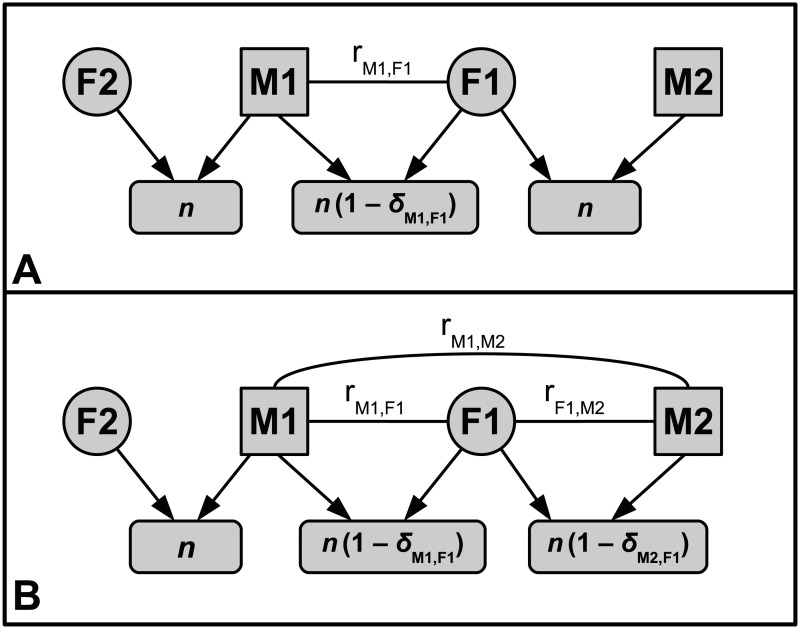
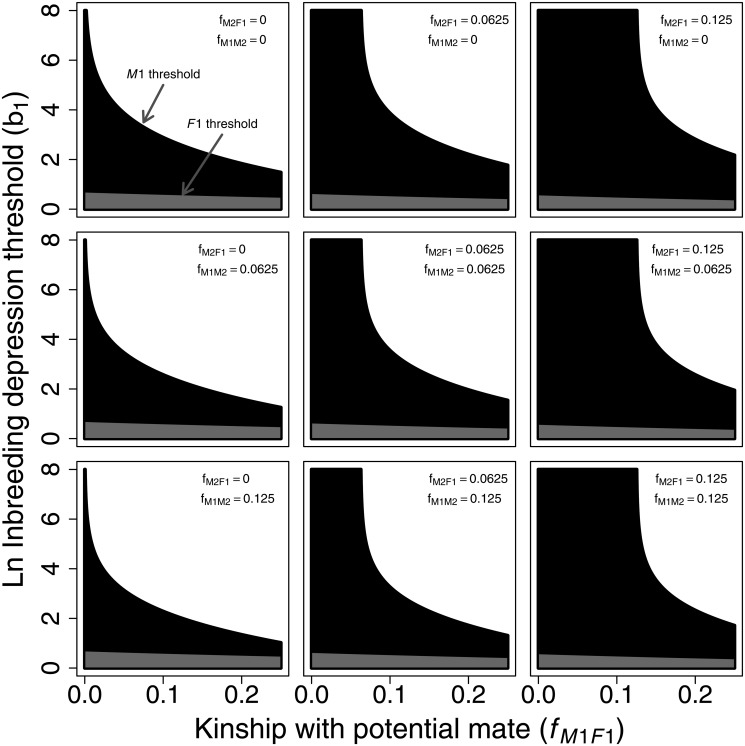
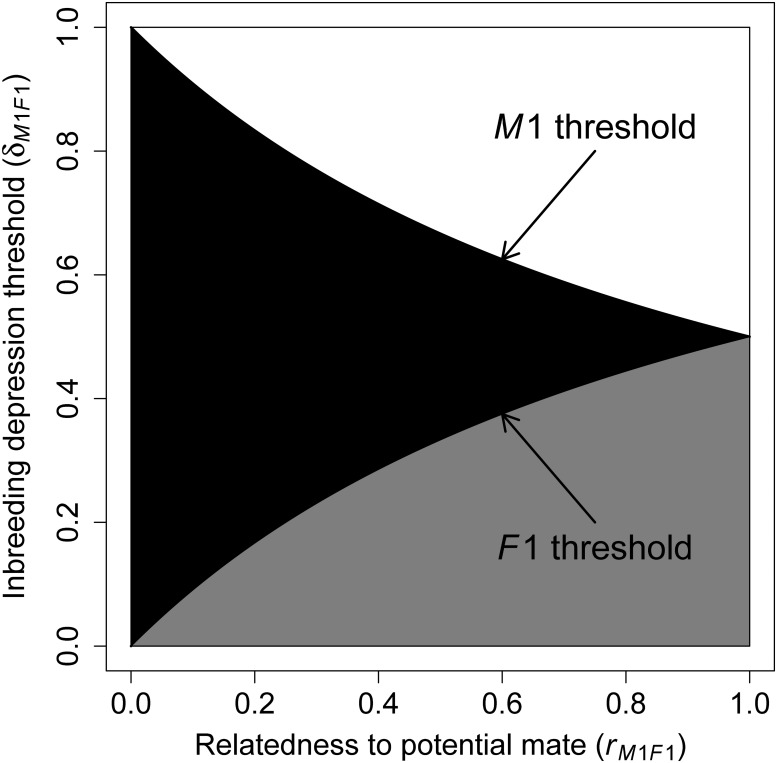
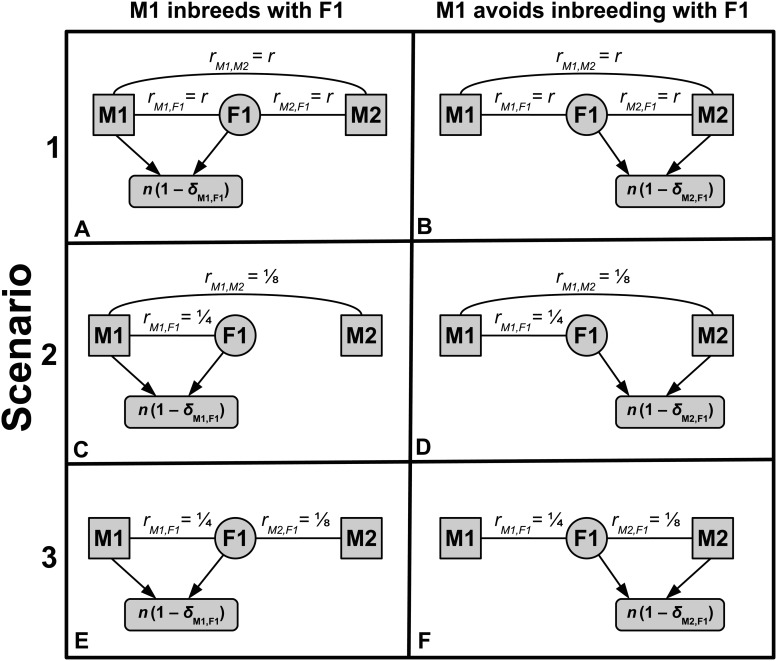
Avoiding inbreeding, and therefore avoiding inbreeding depression in offspring fitness, is widely assumed to be adaptive in systems with biparental reproduction. However, inbreeding can also confer an inclusive fitness benefit stemming from increased relatedness between parents and inbred offspring. Whether or not inbreeding or avoiding inbreeding is adaptive therefore depends on a balance between inbreeding depression and increased parent-offspring relatedness. Existing models of biparental inbreeding predict threshold values of inbreeding depression above which males and females should avoid inbreeding, and predict sexual conflict over inbreeding because these thresholds diverge. However, these models implicitly assume that if a focal individual avoids inbreeding, then both it and its rejected relative will subsequently outbreed. We show that relaxing this assumption of reciprocal outbreeding, and the assumption that focal individuals are themselves outbred, can substantially alter the predicted thresholds for inbreeding avoidance for focal males. Specifically, the magnitude of inbreeding depression below which inbreeding increases a focal male's inclusive fitness increases with increasing depression in the offspring of a focal female and her alternative mate, and it decreases with increasing relatedness between a focal male and a focal female's alternative mate, thereby altering the predicted zone of sexual conflict. Furthermore, a focal male's inclusive fitness gain from avoiding inbreeding is reduced by indirect opportunity costs if his rejected relative breeds with another relative of his. By demonstrating that variation in relatedness and inbreeding can affect intra- and inter-sexual conflict over inbreeding, our models lead to novel predictions for family dynamics. Specifically, parent-offspring conflict over inbreeding might depend on the alternative mates of rejected relatives, and male-male competition over inbreeding might lead to mixed inbreeding strategies. Making testable quantitative predictions regarding inbreeding strategies occurring in nature will therefore require new models that explicitly capture variation in relatedness and inbreeding among interacting population members.
在双亲繁殖系统中,人们普遍认为避免近亲繁殖,从而避免后代适应性出现近亲繁殖衰退,具有适应性。然而,近亲繁殖也能带来一种广义适合度益处,源于双亲与近亲繁殖后代之间亲缘关系的增加。因此,近亲繁殖或避免近亲繁殖是否具有适应性,取决于近亲繁殖衰退与双亲 - 后代亲缘关系增加之间的平衡。现有的双亲近亲繁殖模型预测了近亲繁殖衰退的阈值,高于该阈值时雄性和雌性应避免近亲繁殖,并预测了关于近亲繁殖的性冲突,因为这些阈值存在差异。然而,这些模型隐含地假设,如果一个焦点个体避免近亲繁殖,那么它和其被拒绝的亲属随后都会进行远交。我们表明,放宽这种相互远交的假设,以及焦点个体本身是远交的假设,会显著改变预测的焦点雄性避免近亲繁殖的阈值。具体而言,近亲繁殖衰退的程度低于该程度时近亲繁殖会增加焦点雄性的广义适合度,随着焦点雌性与其替代配偶后代中衰退程度的增加而增加,并且随着焦点雄性与焦点雌性替代配偶之间亲缘关系的增加而降低,从而改变预测的性冲突区域。此外,如果焦点雄性被拒绝的亲属与他的另一个亲属繁殖,那么焦点雄性因避免近亲繁殖而获得的广义适合度收益会因间接机会成本而降低。通过证明亲缘关系和近亲繁殖的变化会影响关于近亲繁殖的性别内和性别间冲突,我们的模型对家庭动态产生了新的预测。具体而言,关于近亲繁殖的亲子冲突可能取决于被拒绝亲属的替代配偶,并且关于近亲繁殖的雄性间竞争可能导致混合的近亲繁殖策略。因此,要对自然界中出现的近亲繁殖策略做出可检验的定量预测,将需要新的模型,这些模型要明确捕捉相互作用的种群成员之间亲缘关系和近亲繁殖的变化。