Chen Wei, He Zhang, Ji Xiao-Li, Tang Si-Ting, Hu Hao-Yuan
Key Laboratory of Biotic Environment and Ecological Safety in Anhui Province, College of Life Sciences, Anhui Normal University, Wuhu, Anhui, P. R. China.
PLoS One. 2015 Apr 24;10(4):e0124305. doi: 10.1371/journal.pone.0124305. eCollection 2015.
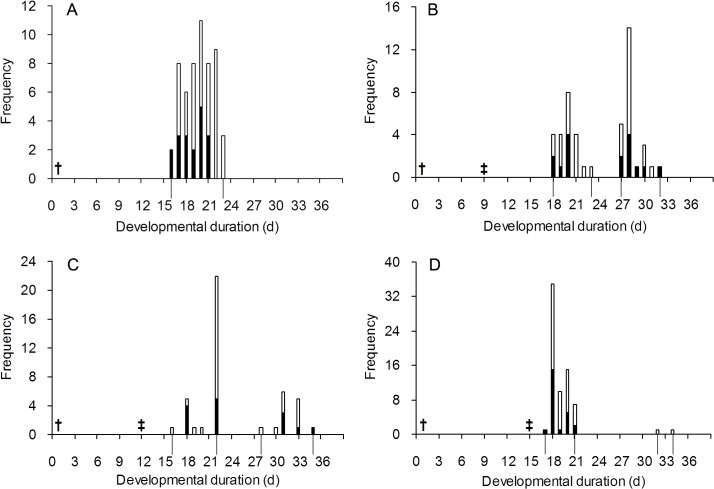
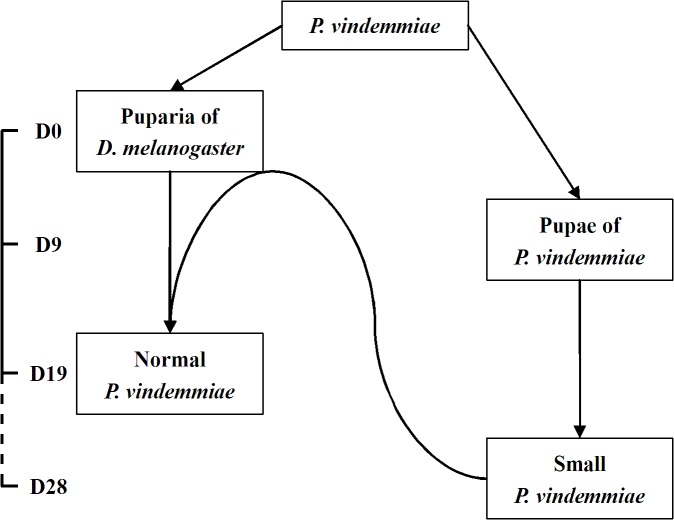
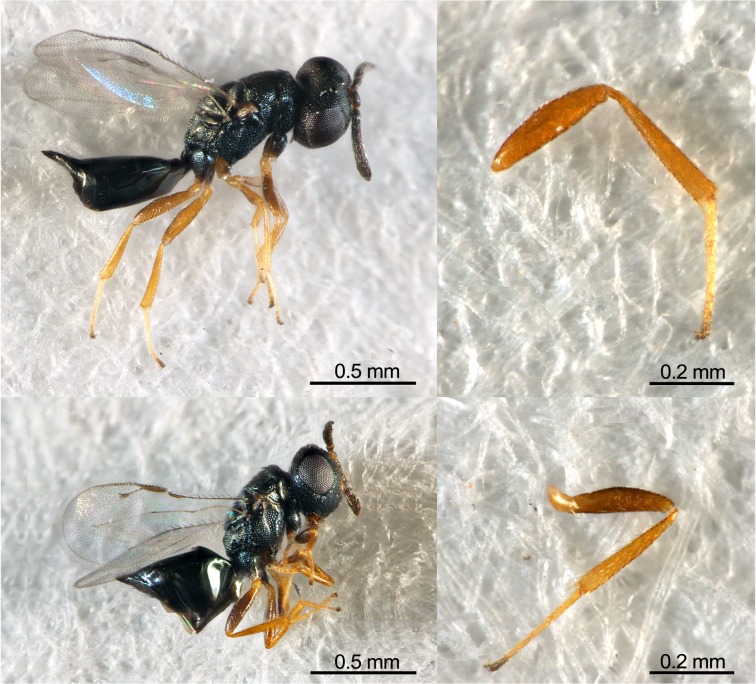
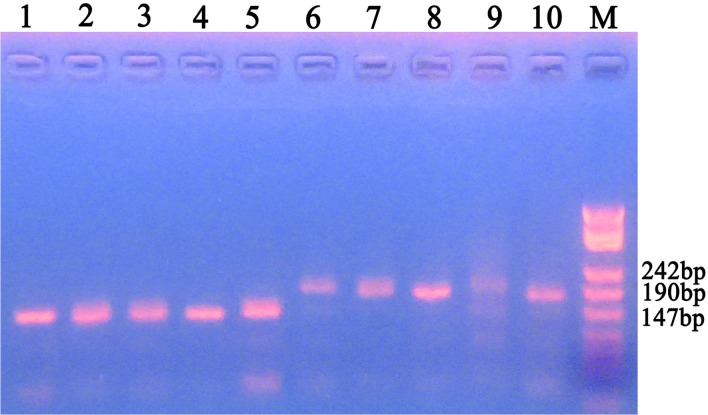
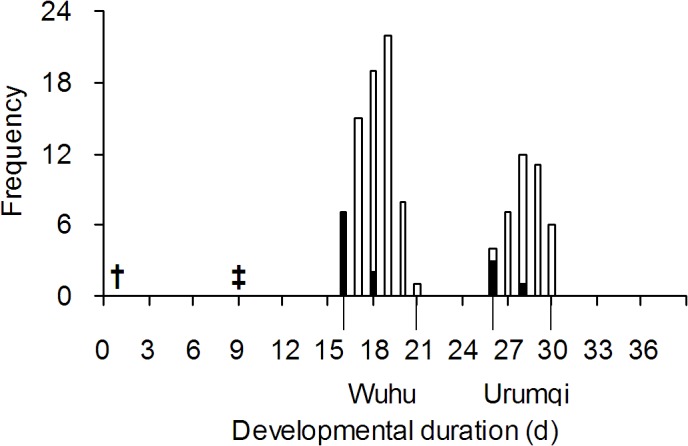
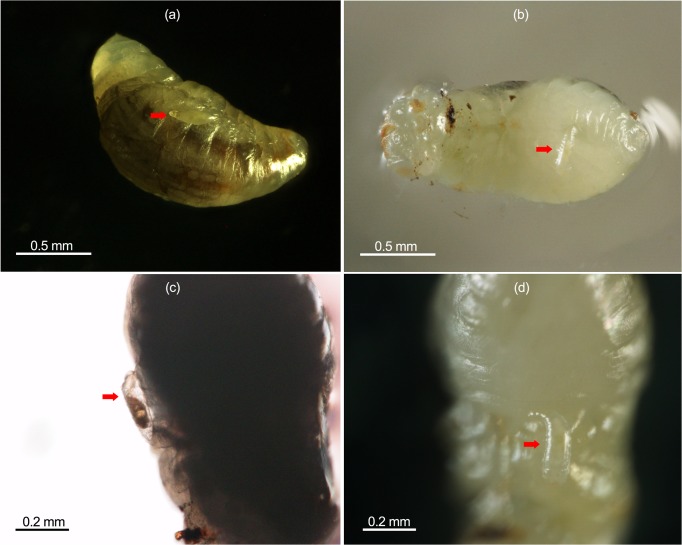
Hyperparasitism is a normal behavior of parasitoids, which often happens among species. Conspecific hyperparasitism, such as some kinds of heteronomous hyperparasitic behaviors, has been only reported in some species belonging to Aphelinidae. In this article, the conspecific hyperparasitism of Pachycrepoideus vindemmiae (Pteromalidae) is reported, with Drosophila puparia as hosts. Hosts were exposed to P. vindemmiae females twice to parasitism with nine, twelve, and fifteen day intervals between the two exposures. None of the infested hosts emerged more than one offspring, and emergence of parasitoid offspring occurred in two obvious events, synchronously with the exposure time intervals, which suggested that offspring emerging during the first and second events would come from the primary and secondary parasitoids, respectively, and the inference with the developmental duration of offspring also indicated this. With two P. vindemmiae strains that could be identified by a simple sequence repeat marker, the above speculation of the origin of those offspring emerging during the two events was confirmed. Dissection of hosts exposed twice revealed a cannibalism behavior of larvae from the secondary foundresses on the primary conspecific pupae. Our results suggested a conspecific hyperparasitism behavior of the secondary parasitoids on the primary conspecifics. Measures showed a reduced body size for the adults from the conspecific hyperparasitism. Foundresses from the conspecific hyperparasitism had less fitness variables than those from primary parasitism, with shorter longevity, less life time fecundity, lower values of infestation degree, and lower success rate of parasitism. However, when the parasitoids from the conspecific hyperparasitism met healthy Drosophila puparia, their offspring would recover to normal size. Frequency of the conspecific hyperparasitism behavior enhanced with the decreasing of proportion of healthy hosts in the oviposition patch. The conspecific hyperparasitism of P. vindemmiae on the primary conspecifics would be helpful to last the population when healthy hosts are absent in the oviposition patch.
重寄生是寄生蜂的一种正常行为,这种行为在物种间经常发生。同种重寄生,比如某些类型的异主重寄生行为,仅在一些蚜小蜂科物种中有报道。在本文中,报道了以果蝇蛹为寄主的米象金小蜂(金小蜂科)的同种重寄生现象。将寄主果蝇蛹分两次暴露于米象金小蜂雌蜂下进行寄生,两次暴露之间的间隔时间分别为9天、12天和15天。没有一个被寄生的寄主羽化出多于一只后代,并且寄生蜂后代的羽化发生在两个明显的阶段,与暴露时间间隔同步,这表明在第一阶段和第二阶段羽化出的后代分别来自初次寄生蜂和二次寄生蜂,对后代发育时长的推断也证实了这一点。利用两种可通过简单序列重复标记进行区分的米象金小蜂品系,证实了上述关于两个阶段羽化出的后代来源的推测。解剖经两次暴露的寄主发现,二次寄生雌蜂的幼虫存在取食初次寄生同种蛹的行为。我们的结果表明二次寄生蜂对初次寄生同种个体存在同种重寄生行为。测量结果显示,经历同种重寄生的成虫体型变小。经历同种重寄生的雌蜂在适合度变量方面比初次寄生的雌蜂少,包括寿命更短、一生繁殖力更低、侵染程度值更低以及寄生成功率更低。然而,当经历同种重寄生的寄生蜂遇到健康的果蝇蛹时,它们的后代体型会恢复正常。同种重寄生行为的频率随着产卵区域中健康寄主比例的降低而增加。当产卵区域没有健康寄主时,米象金小蜂对初次寄生同种个体的同种重寄生行为有助于种群延续。