Fernández-Vizarra Erika, Zeviani Massimo
Mitochondrial Biology Unit, Medical Research Council Cambridge, UK.
Front Genet. 2015 Apr 9;6:134. doi: 10.3389/fgene.2015.00134. eCollection 2015.
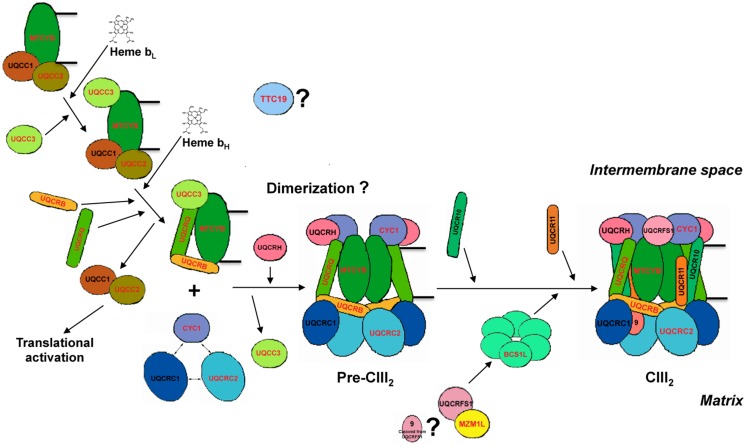
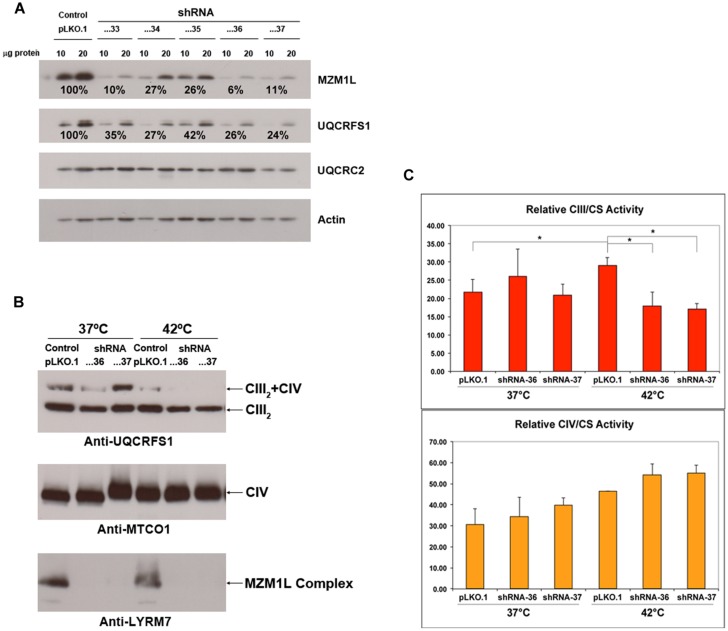
Complex III (CIII) deficiency is one of the least common oxidative phosphorylation defects associated to mitochondrial disease. CIII constitutes the center of the mitochondrial respiratory chain, as well as a crossroad for several other metabolic pathways. For more than 10 years, of all the potential candidate genes encoding structural subunits and assembly factors, only three were known to be associated to CIII defects in human pathology. Thus, leaving many of these cases unresolved. These first identified genes were MT-CYB, the only CIII subunit encoded in the mitochondrial DNA; BCS1L, encoding an assembly factor, and UQCRB, a nuclear-encoded structural subunit. Nowadays, thanks to the fast progress that has taken place in the last 3-4 years, pathological changes in seven more genes are known to be associated to these conditions. This review will focus on the strategies that have permitted the latest discovery of mutations in factors that are necessary for a correct CIII assembly and activity, in relation with their function. In addition, new data further establishing the molecular role of LYRM7/MZM1L as a chaperone involved in CIII biogenesis are provided.
复合物III(CIII)缺乏症是与线粒体疾病相关的最不常见的氧化磷酸化缺陷之一。CIII构成线粒体呼吸链的中心,也是其他几种代谢途径的交叉点。十多年来,在所有编码结构亚基和装配因子的潜在候选基因中,只有三个已知与人类病理学中的CIII缺陷相关。因此,许多此类病例仍未得到解决。这些最早确定的基因是MT-CYB,它是线粒体DNA中编码的唯一CIII亚基;BCS1L,编码一种装配因子;以及UQCRB,一种核编码的结构亚基。如今,由于过去三到四年取得的快速进展,已知还有另外七个基因的病理变化与这些病症相关。本综述将重点关注与功能相关的策略,这些策略使得最近发现了正确的CIII装配和活性所必需的因子中的突变。此外,还提供了新的数据,进一步确立了LYRM7/MZM1L作为参与CIII生物发生的伴侣分子的分子作用。