Salm Fabiana, Dimitrova Valeriya, von Bueren André O, Ćwiek Paulina, Rehrauer Hubert, Djonov Valentin, Anderle Pascale, Arcaro Alexandre
Department of Clinical Research, Division of Pediatric Hematology/Oncology, University of Bern, Bern, Switzerland.
Department of Pediatrics and Department of Pediatric Hematology and Oncology, Georg August University Goettingen, Goettingen, Germany.
PLoS One. 2015 Apr 27;10(4):e0123958. doi: 10.1371/journal.pone.0123958. eCollection 2015.
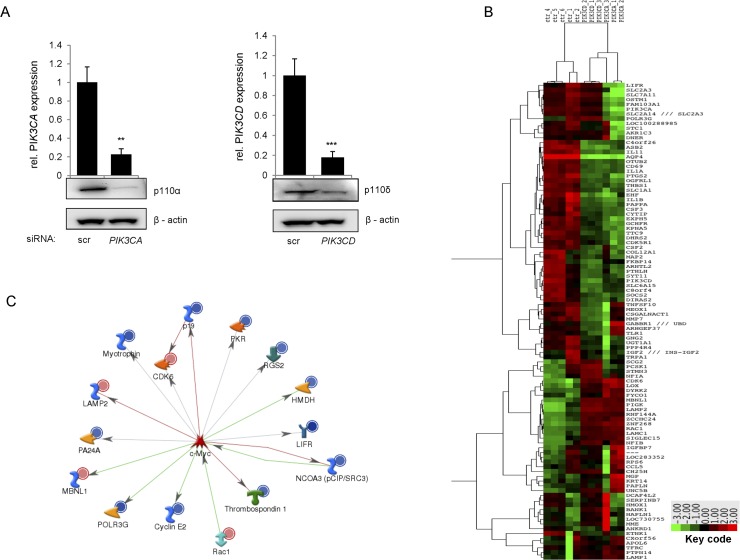
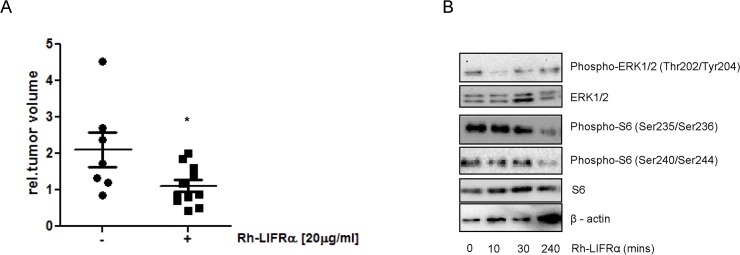
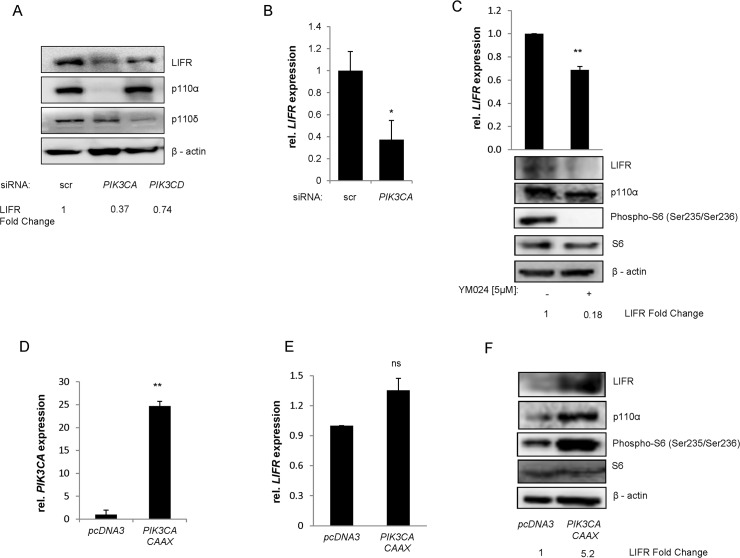
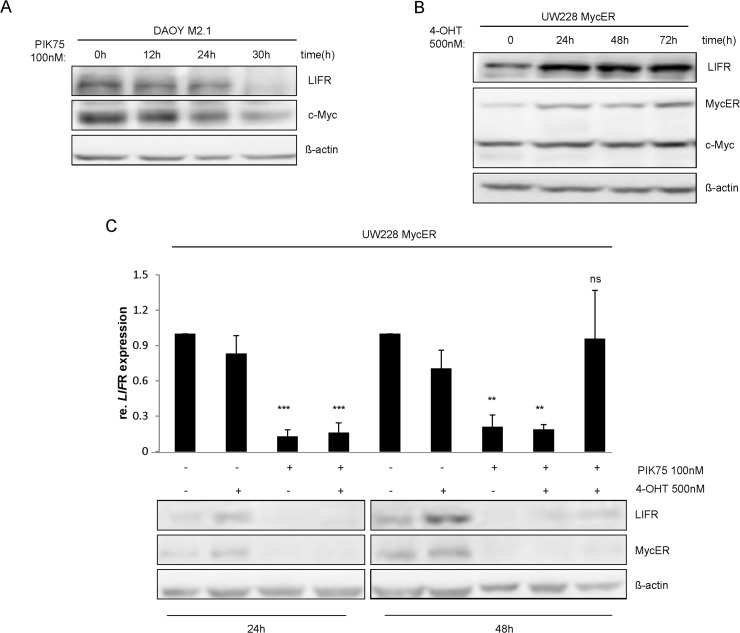
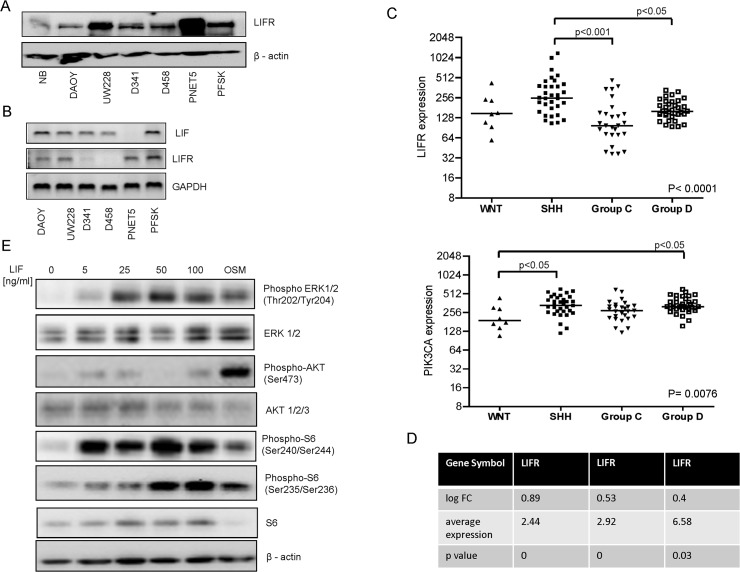
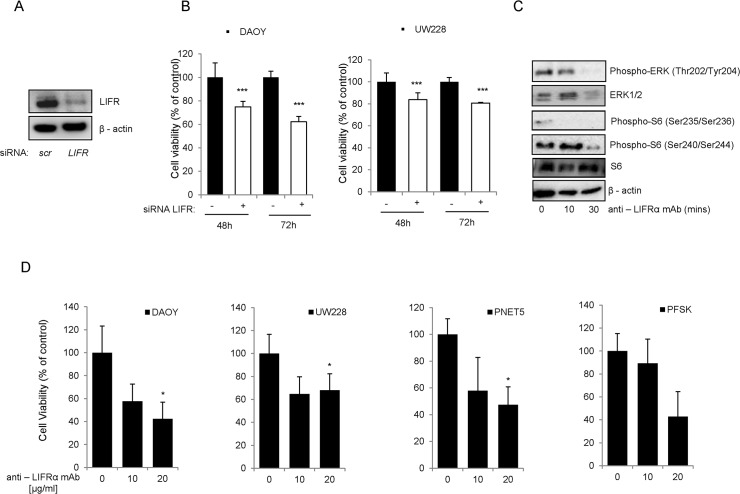
Medulloblastoma (MB) is the most common malignant brain tumor in childhood and represents the main cause of cancer-related death in this age group. The phosphoinositide 3-kinase (PI3K) pathway has been shown to play an important role in the regulation of medulloblastoma cell survival and proliferation, but the molecular mechanisms and downstream effectors underlying PI3K signaling still remain elusive. The impact of RNA interference (RNAi)-mediated silencing of PI3K isoforms p110α and p110δ on global gene expression was investigated by DNA microarray analysis in medulloblastoma cell lines. A subset of genes with selectively altered expression upon p110α silencing in comparison to silencing of the closely related p110δ isoform was revealed. Among these genes, the leukemia inhibitory factor receptor α (LIFR α) was validated as a novel p110α target in medulloblastoma. A network involving c-Myc and miR-125b was shown to be involved in the control of LIFRα expression downstream of p110α. Targeting the LIFRα by RNAi, or by using neutralizing reagents impaired medulloblastoma cell proliferation in vitro and induced a tumor volume reduction in vivo. An analysis of primary tumors revealed that LIFRα and p110α expression were elevated in the sonic hedgehog (SHH) subgroup of medulloblastoma, indicating its clinical relevance. Together, these data reveal a novel molecular signaling network, in which PI3K isoform p110α controls the expression of LIFRα via c-Myc and miR-125b to promote MB cell proliferation.
髓母细胞瘤(MB)是儿童期最常见的恶性脑肿瘤,也是该年龄组癌症相关死亡的主要原因。磷酸肌醇3激酶(PI3K)通路已被证明在髓母细胞瘤细胞存活和增殖的调控中起重要作用,但PI3K信号传导的分子机制和下游效应器仍不清楚。通过DNA微阵列分析,研究了RNA干扰(RNAi)介导的PI3K亚型p110α和p110δ沉默对髓母细胞瘤细胞系中全局基因表达的影响。与密切相关的p110δ亚型沉默相比,揭示了一组在p110α沉默后表达有选择性改变的基因。在这些基因中,白血病抑制因子受体α(LIFRα)被证实是髓母细胞瘤中一种新的p110α靶点。一个涉及c-Myc和miR-125b的网络被证明参与了p110α下游LIFRα表达的控制。通过RNAi或使用中和试剂靶向LIFRα可损害体外髓母细胞瘤细胞的增殖,并在体内诱导肿瘤体积减小。对原发性肿瘤的分析表明,LIFRα和p110α在髓母细胞瘤的音猬因子(SHH)亚组中表达升高,表明其具有临床相关性。总之,这些数据揭示了一个新的分子信号网络,其中PI3K亚型p110α通过c-Myc和miR-125b控制LIFRα的表达,以促进MB细胞增殖。