Liu Chang, Peng Jia, Matzuk Martin M, Yao Humphrey H-C
1] Department of Animal Sciences, University of Illinois at Urbana-Champaign, Urbana Illinois, USA [2] Reproductive and Developmental Biology Laboratory, National Institute of Environmental Health Sciences, Durham, North Carolina, USA.
1] Departments of Pathology &Immunology, and Molecular and Human Genetics, Baylor College of Medicine, Houston, Texas 77030, USA [2] Centers for Drug Discovery and Reproductive Medicine, Baylor College of Medicine, Houston, Texas 77030, USA.
Nat Commun. 2015 Apr 28;6:6934. doi: 10.1038/ncomms7934.
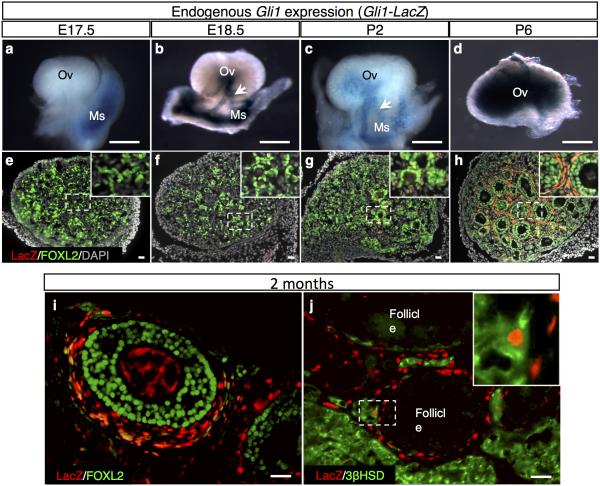
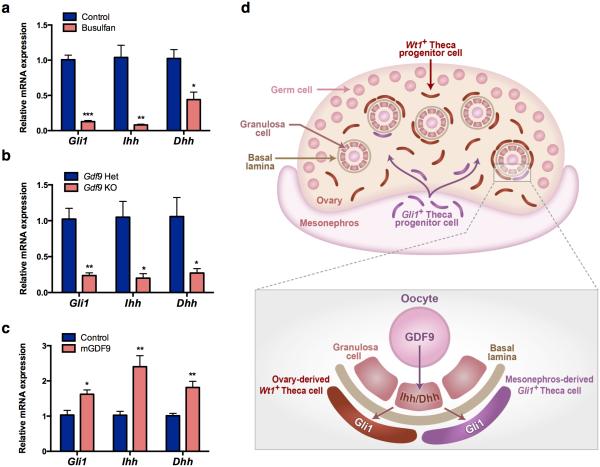
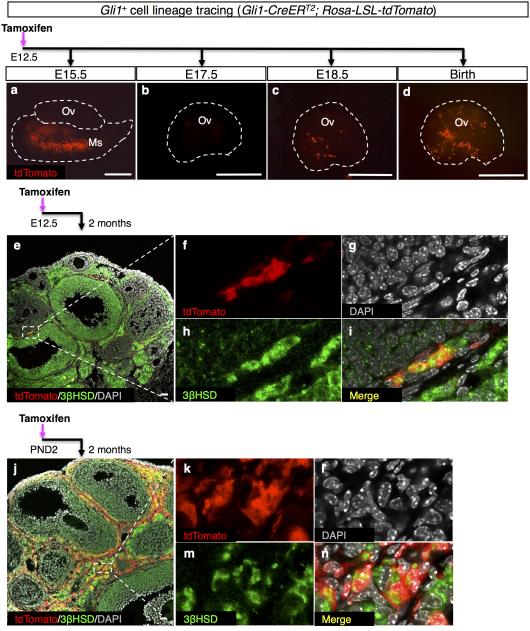
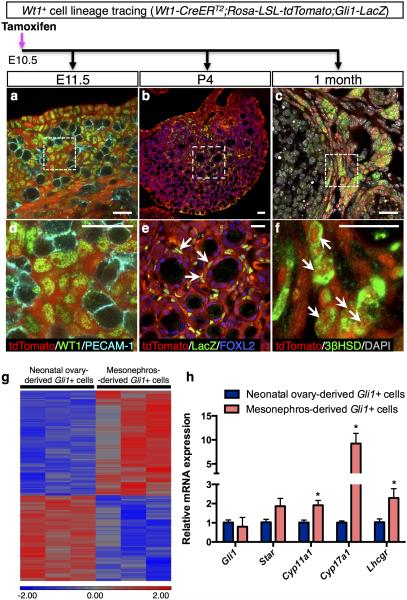
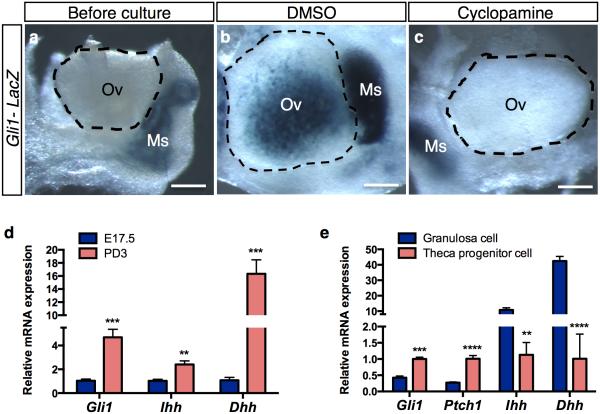
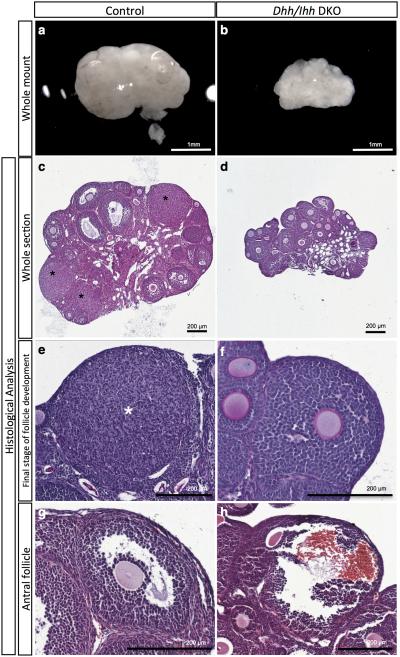
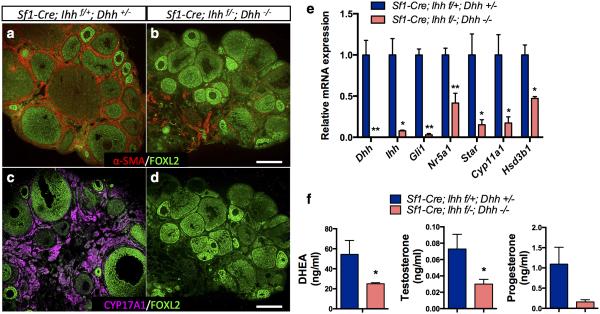
Organogenesis of the ovary is a highly orchestrated process involving multiple lineage determination of ovarian surface epithelium, granulosa cells and theca cells. Although the sources of ovarian surface epithelium and granulosa cells are known, the origin(s) of theca progenitor cells have not been definitively identified. Here we show that theca cells derive from two sources: Wt1(+) cells indigenous to the ovary and Gli1(+) mesenchymal cells that migrate from the mesonephros. These progenitors acquire theca lineage marker Gli1 in response to paracrine signals Desert hedgehog (Dhh) and Indian hedgehog (Ihh) from granulosa cells. Ovaries lacking Dhh/Ihh exhibit theca layer loss, blunted steroid production, arrested folliculogenesis and failure to form corpora lutea. Production of Dhh/Ihh in granulosa cells requires growth differentiation factor 9 (GDF9) from the oocyte. Our studies provide the first genetic evidence for the origins of theca cells and reveal a multicellular interaction critical for the formation of a functional theca.
卵巢的器官发生是一个高度协调的过程,涉及卵巢表面上皮、颗粒细胞和卵泡膜细胞的多种谱系决定。虽然卵巢表面上皮和颗粒细胞的来源已知,但卵泡膜祖细胞的起源尚未明确确定。在这里,我们表明卵泡膜细胞来自两个来源:卵巢内源性的Wt1(+)细胞和从中肾迁移而来的Gli1(+)间充质细胞。这些祖细胞响应来自颗粒细胞的旁分泌信号沙漠刺猬因子(Dhh)和印度刺猬因子(Ihh)而获得卵泡膜谱系标记物Gli1。缺乏Dhh/Ihh的卵巢表现出卵泡膜层缺失、类固醇生成减弱、卵泡发生停滞以及无法形成黄体。颗粒细胞中Dhh/Ihh的产生需要卵母细胞分泌的生长分化因子9(GDF9)。我们的研究为卵泡膜细胞的起源提供了首个遗传学证据,并揭示了对功能性卵泡膜形成至关重要的多细胞相互作用。