Arshad Muhammad Nauman, Nisar Muhammad Atif, Khurshid Mohsin, Hussain Syed Zajif, Maqsood Umer, Asghar Muhammad Tahir, Nazir Jawad
Department of Biological Sciences, Forman Christian College, Lahore, Pakistan.
Department of Microbiology, Government College University, Faisalabad, Pakistan;
Libyan J Med. 2015 Apr 27;10(1):26875. doi: 10.3402/ljm.v10.26875. eCollection 2015.
Rapid industrialization is discharging toxic heavy metals into the environment, disturbing human health in many ways and causing various neurologic, cardiovascular, and dermatologic abnormalities and certain types of cancer. The presence of arsenic in drinking water from different urban and rural areas of the major cities of Pakistan, for example, Lahore, Faisalabad, and Kasur, was found to be beyond the permissible limit of 10 parts per billion set by the World Health Organization. Therefore the present study was initiated to examine the effects of arsenite (As(+3)) on DNA biosynthesis and cell death.
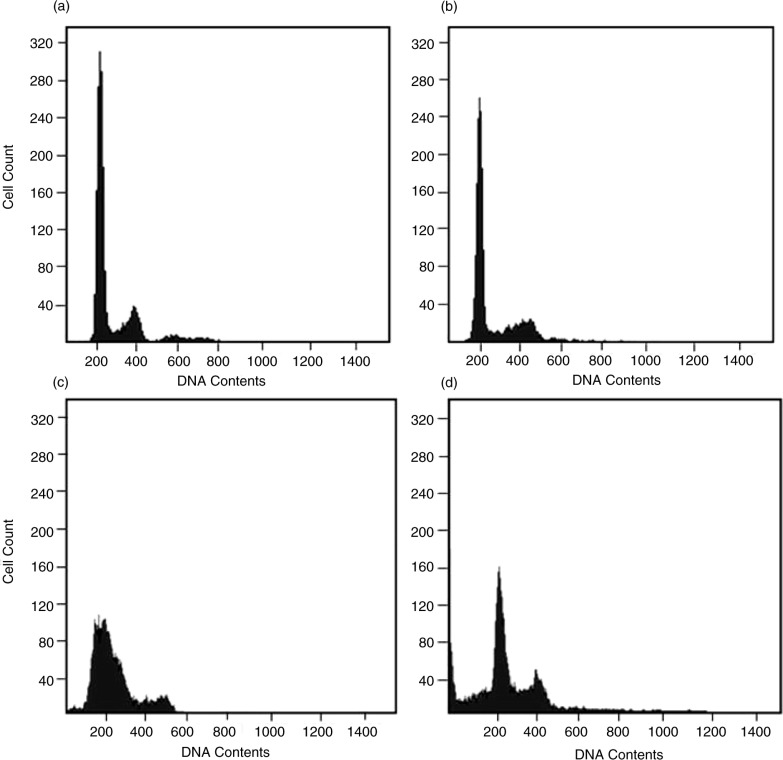
After performing cytotoxic assays on a human epithelial carcinoma cell line, expression analysis was done by quantitative polymerase chain reaction, western blotting, and flow cytometry.
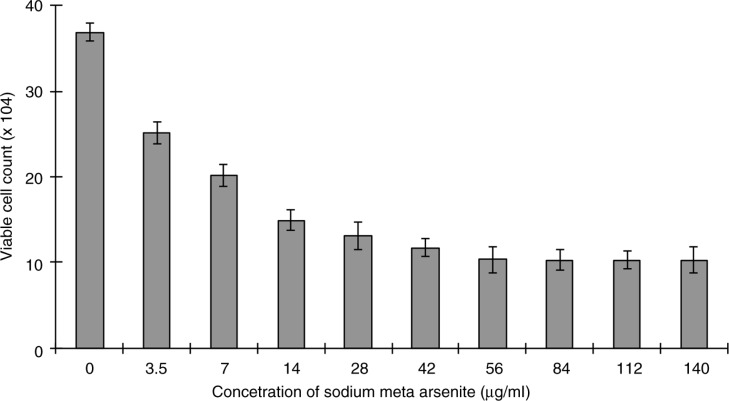
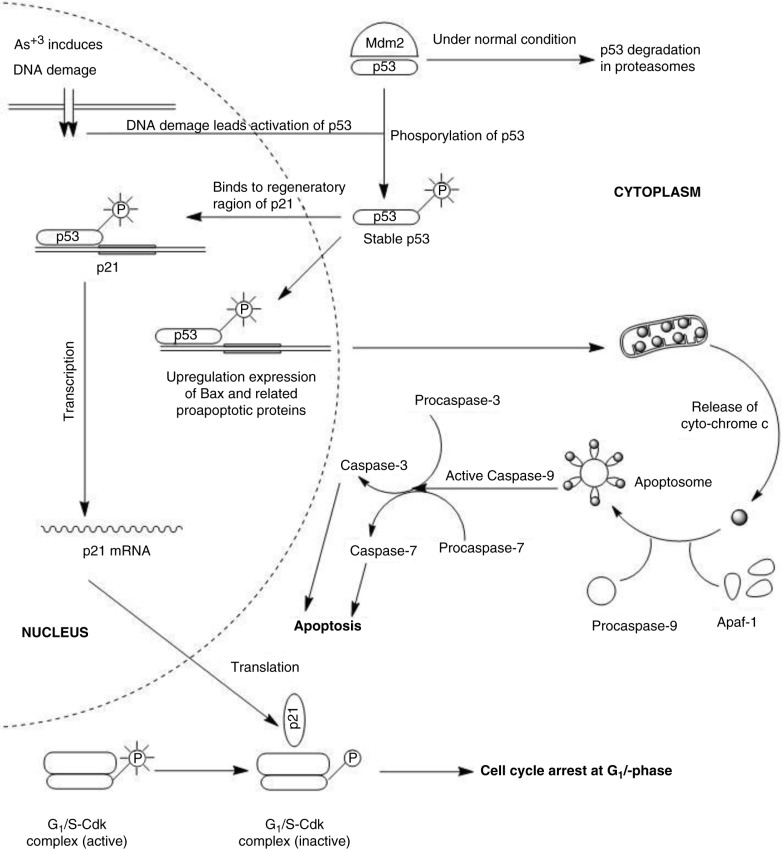
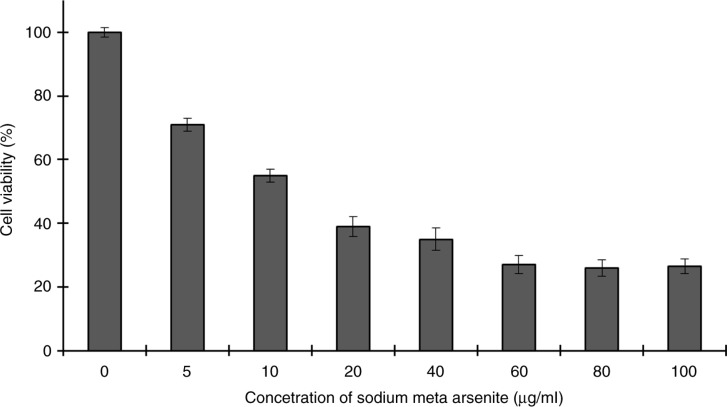
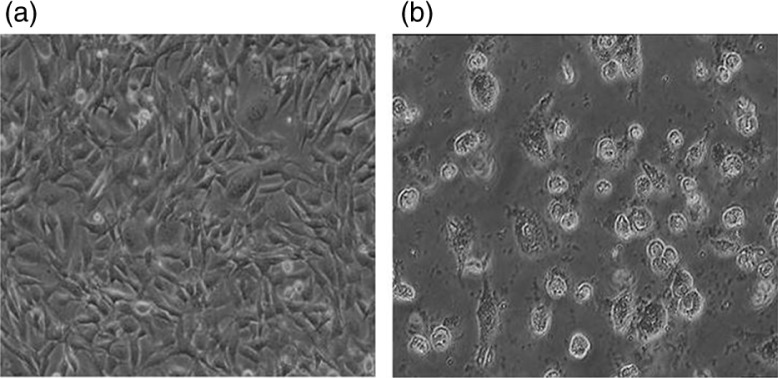
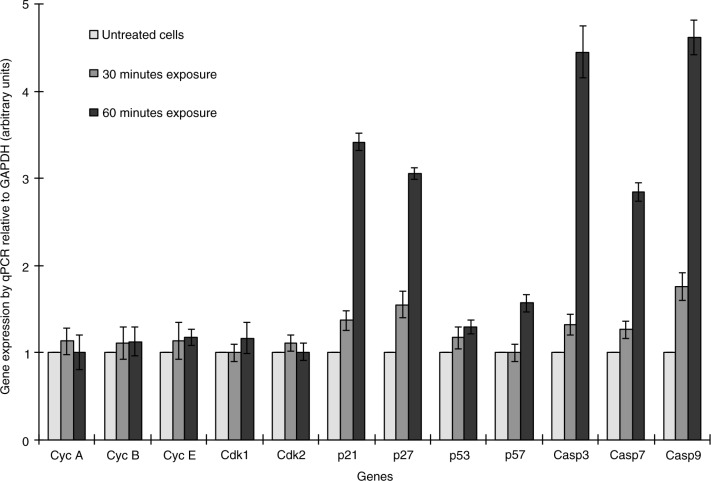
We show that As(+3) ions have a dose- and time-dependent cytotoxic effect through the activation of the caspase-dependent apoptotic pathway. In contrast to previous research, the present study was designed to explore the early cytotoxic effects produced in human cells during exposure to heavy dosage of As(+3) (7.5 µg/ml). Even treatment for 1 h significantly increased the mRNA levels of p21 and p27 and caspases 3, 7, and 9. It was interesting that there was no change in the expression levels of p53, which plays an important role in G2/M phase cell cycle arrest.
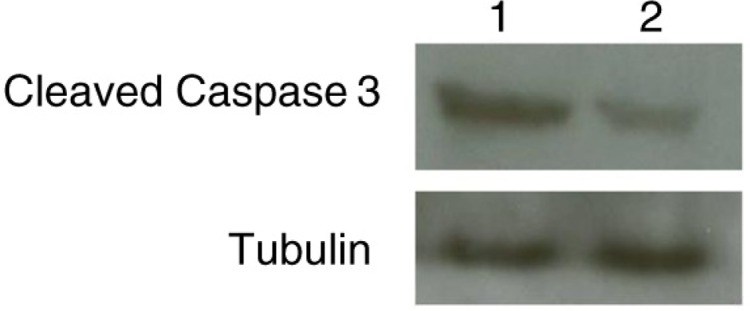
Our results indicate that sudden exposure of cells to arsenite (As(+3)) resulted in cytotoxicity and mitochondrial-mediated apoptosis resulting from up-regulation of caspases.
快速工业化正将有毒重金属排放到环境中,在许多方面干扰人类健康,导致各种神经、心血管和皮肤异常以及某些类型的癌症。例如,在巴基斯坦主要城市拉合尔、费萨拉巴德和卡苏尔的不同城乡地区,饮用水中砷的含量被发现超过了世界卫生组织规定的十亿分之十的允许限量。因此,开展本研究以检测亚砷酸盐(As(+3))对DNA生物合成和细胞死亡的影响。
在对一种人上皮癌细胞系进行细胞毒性测定后,通过定量聚合酶链反应、蛋白质免疫印迹法和流式细胞术进行表达分析。
我们发现,As(+3)离子通过激活半胱天冬酶依赖性凋亡途径产生剂量和时间依赖性的细胞毒性作用。与先前的研究不同,本研究旨在探索在高剂量As(+3)(7.5微克/毫升)暴露期间人细胞产生的早期细胞毒性作用。即使处理1小时也显著增加了p21和p27以及半胱天冬酶3、7和9的mRNA水平。有趣的是,在G2/M期细胞周期阻滞中起重要作用的p53的表达水平没有变化。
我们的结果表明,细胞突然暴露于亚砷酸盐(As(+3))会导致细胞毒性和线粒体介导的凋亡,这是由半胱天冬酶的上调引起的。