Malik Shivani, Villanova Lidia, Tanaka Shinji, Aonuma Misato, Roy Nilotpal, Berber Elisabeth, Pollack Jonathan R, Michishita-Kioi Eriko, Chua Katrin F
1] Department of Medicine, Division of Endocrinology, Gerontology and Metabolism, School of Medicine, Stanford University, Stanford, California 94305, USA [2] Geriatric Research, Education, and Clinical Center, VA Palo Alto Health Care System, Palo Alto, California 94304, USA.
1] Department of Medicine, Division of Endocrinology, Gerontology and Metabolism, School of Medicine, Stanford University, Stanford, California 94305, USA [2] Geriatric Research, Education, and Clinical Center, VA Palo Alto Health Care System, Palo Alto, California 94304, USA [3] Department of Experimental Medicine, Sapienza University, Rome, Italy.
Sci Rep. 2015 Apr 29;5:9841. doi: 10.1038/srep09841.
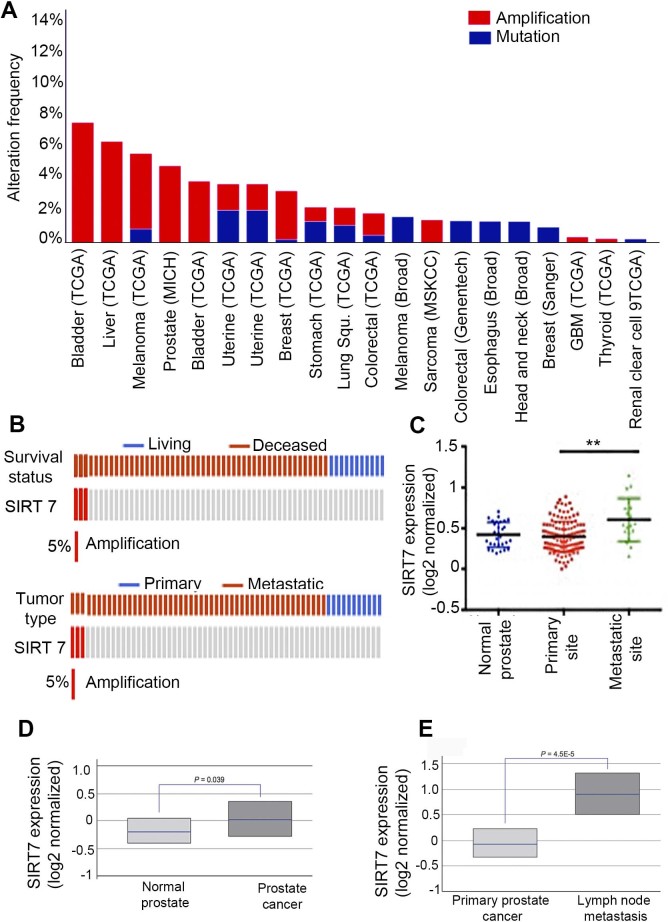
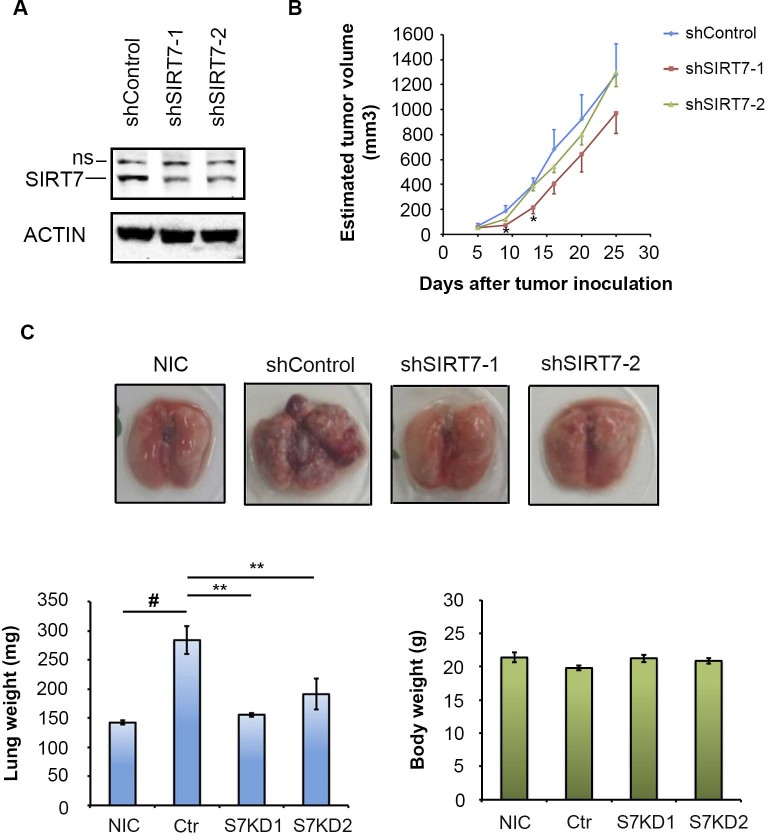
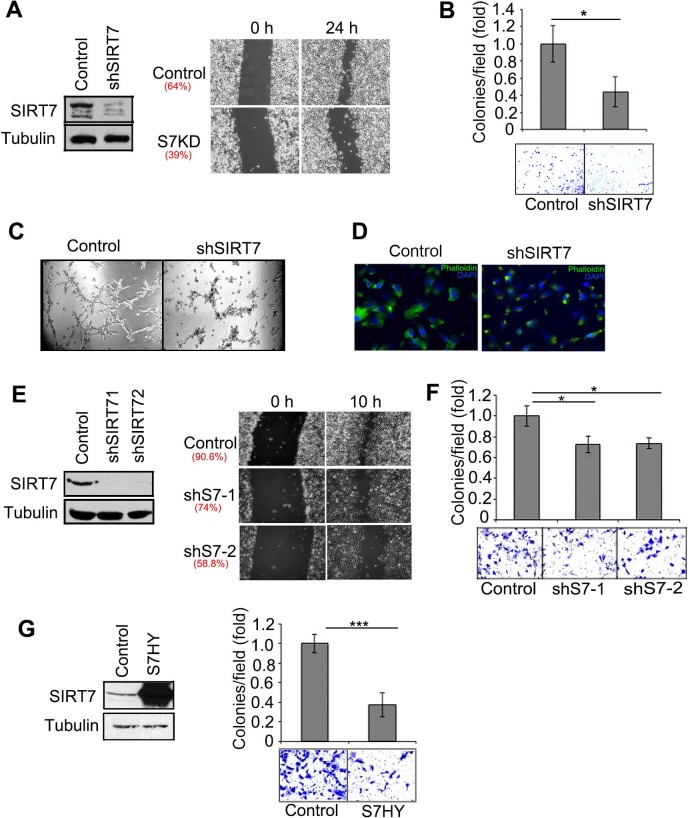
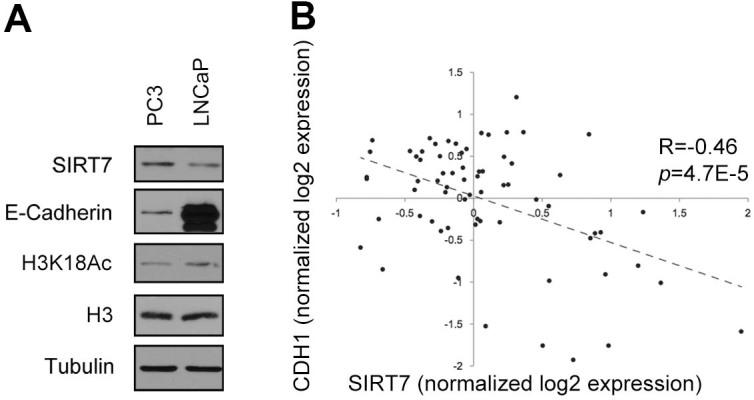
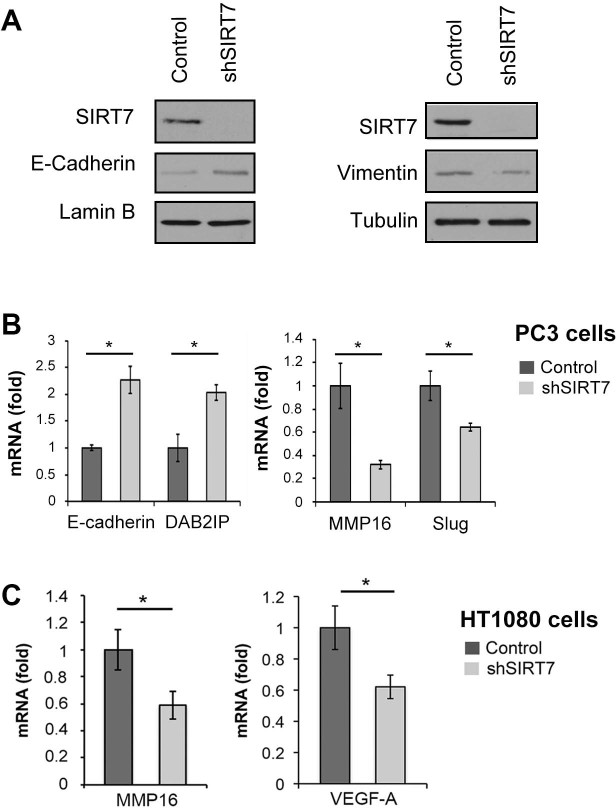
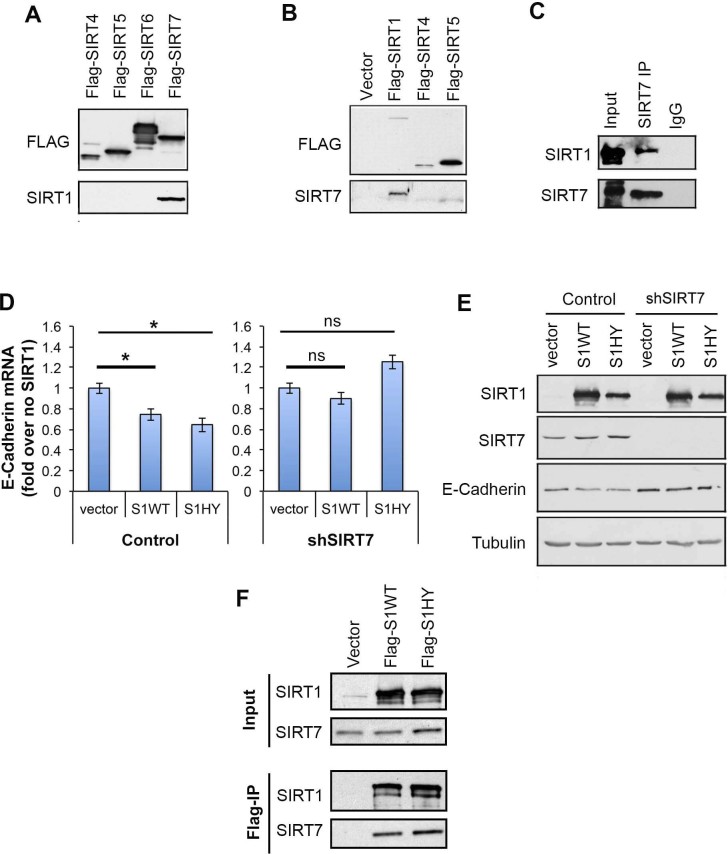
Metastasis is responsible for over 90% of cancer-associated mortality. In epithelial carcinomas, a key process in metastatic progression is the epigenetic reprogramming of an epithelial-to-mesenchymal transition-like (EMT) change towards invasive cellular phenotypes. In non-epithelial cancers, different mechanisms must underlie metastatic change, but relatively little is known about the factors involved. Here, we identify the chromatin regulatory Sirtuin factor SIRT7 as a key regulator of metastatic phenotypes in both epithelial and mesenchymal cancer cells. In epithelial prostate carcinomas, high SIRT7 levels are associated with aggressive cancer phenotypes, metastatic disease, and poor patient prognosis, and depletion of SIRT7 can reprogram these cells to a less aggressive phenotype. Interestingly, SIRT7 is also important for maintaining the invasiveness and metastatic potential of non-epithelial sarcoma cells. Moreover, SIRT7 inactivation dramatically suppresses cancer cell metastasis in vivo, independent of changes in primary tumor growth. Mechanistically, we also uncover a novel link between SIRT7 and its family member SIRT1, providing the first demonstration of direct interaction and functional interplay between two mammalian sirtuins. Together with previous work, our findings highlight the broad role of SIRT7 in maintaining the metastatic cellular phenotype in diverse cancers.
转移是导致90%以上癌症相关死亡的原因。在上皮癌中,转移进展的一个关键过程是上皮向间充质转化样(EMT)变化的表观遗传重编程,这种变化会导致侵袭性细胞表型。在非上皮癌中,转移变化必定有不同的机制,但对于其中涉及的因素我们了解相对较少。在这里,我们确定染色质调节沉默调节蛋白因子SIRT7是上皮和间充质癌细胞转移表型的关键调节因子。在上皮性前列腺癌中,高SIRT7水平与侵袭性癌症表型、转移性疾病及患者预后不良相关,而SIRT7的缺失可将这些细胞重编程为侵袭性较低的表型。有趣的是,SIRT7对于维持非上皮性肉瘤细胞的侵袭性和转移潜能也很重要。此外,SIRT7失活在体内可显著抑制癌细胞转移,且与原发肿瘤生长的变化无关。从机制上讲,我们还发现了SIRT7与其家族成员SIRT1之间的新联系,首次证明了两种哺乳动物沉默调节蛋白之间的直接相互作用和功能相互作用。与之前的研究一起,我们的发现突出了SIRT7在维持多种癌症转移细胞表型方面的广泛作用。